NewsXR News Now
Friday, October 23, 2026
Good morning, America. From the overnight developments to the stories taking shape today, here’s what’s happening in our world.
It’s Friday, and we’re heading into the final weekend of October with plenty to talk about. The war involving Iran continues to threaten international shipping and energy supplies, a humanitarian breakthrough may be coming for civilians trapped in Ukraine, and Washington is dealing with another investigation involving a prominent political figure. We’re also beginning our special coverage of the November midterm elections, introducing a new feature that takes us back exactly 100 years, and bringing you some encouraging news about working Americans getting money they’re owed.
There’s a lot happening, so grab your coffee and let’s get caught up.
NOW: TOP STORY
Iran War: Strait of Hormuz Attacks Intensify as Washington and Israel Consider Further Military Action
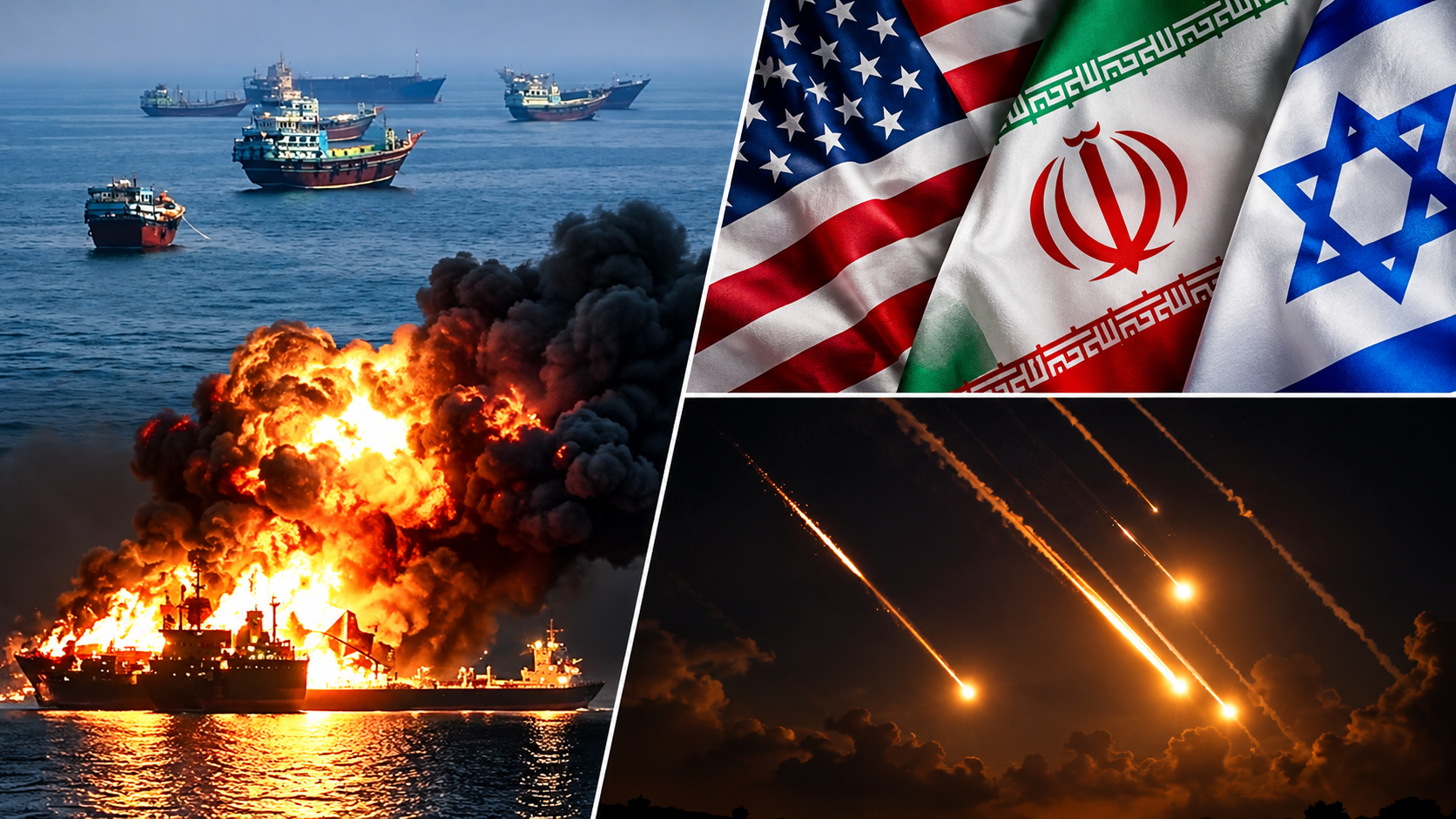
The conflict involving Iran remains one of the most consequential developments in our world this morning, with international shipping under continued threat and the possibility of renewed large-scale American and Israeli attacks hanging over an already dangerous region.
The Strait of Hormuz, the narrow waterway connecting the Persian Gulf to international shipping routes, remains central to the crisis. Iran’s military has reported additional attacks on commercial vessels, including incidents involving fast-attack craft and naval mines. Independent reporting has documented the severe disruption to shipping through the region, where vessels carrying oil, natural gas, and commercial goods face substantial security risks.
For Americans watching gasoline, diesel, heating oil, and grocery prices, this is much more than a distant military confrontation. Energy markets respond to the possibility of disrupted supplies, and higher transportation costs can eventually reach households through the prices of everyday products.
The war, which began with American and Israeli military operations against Iran on February 28, has already caused extensive regional disruption. Iran has threatened retaliation against American military installations and regional interests if its territory faces additional strikes.
Washington and Israel Examine Renewed Strike Options
American and Israeli officials have been developing plans for possible renewed attacks on Iranian military and strategic infrastructure, according to reporting on the administration’s deliberations. Potential targets reportedly include missile production facilities and other military capabilities.
The timing of additional military action has become entangled with American domestic politics as the November 3 midterm elections approach. The administration is weighing military objectives against the risk of further disruption to global energy supplies and the American economy.
Reports describing post-election strike planning should not be mistaken for confirmation that a final attack order has been issued. Military contingency planning establishes possible courses of action, while the decision to execute them remains separate.
Meanwhile, diplomatic contacts continue without a comprehensive settlement.
Iran’s leadership is facing military pressure, economic disruption, and the consequences of a prolonged confrontation. American policymakers must determine whether additional force would improve negotiating conditions or expand a conflict that has already affected international commerce.
The situation matters well beyond the Middle East. Every additional disruption to shipping increases pressure on energy markets, and every military escalation creates the possibility of a broader confrontation.
For now, the Strait of Hormuz remains a critical international security concern.
NOW: WORLD NEWS
Melania Trump Helps Negotiate Humanitarian Ceasefire in Ukrainian City
There is a potentially important humanitarian development this morning from Ukraine.
The White House announced Friday that First Lady Melania Trump helped negotiate a temporary ceasefire between Russia and Ukraine in Oleshky, a Russian-occupied city in southern Ukraine where civilians have endured devastating conditions.
The agreement is scheduled to take effect October 29 and is intended to permit humanitarian aid deliveries and civilian evacuations.
According to the White House, the First Lady and a representative worked directly with Russian and Ukrainian leadership to establish the arrangement.
Oleshky has been under Russian occupation since 2022. Years of fighting, flooding, damaged infrastructure, and restrictions on movement have left remaining residents struggling to obtain food, medicine, clean water, and reliable electricity.
The situation has become particularly dangerous for elderly residents and others unable to escape. Roads are threatened by mines and drone attacks, making even ordinary movement potentially deadly.
The announcement offers the possibility of relief, but the ceasefire has not yet begun. Neither the Russian nor Ukrainian government had immediately provided independent public confirmation of the arrangement when the White House announcement was reported.
If successfully implemented, the agreement could allow humanitarian workers to reach people who have been isolated for months.
For those families, the important question is whether food, medicine, and safe passage actually arrive.
Ukraine Still Waiting for Critical American Military Support
Ukrainian President Volodymyr Zelenskyy says his country continues to experience restrictions affecting Starlink and Starshield satellite services while awaiting American Patriot missile interceptors.
Satellite communications have become essential to Ukrainian military operations, particularly in a war heavily dependent on drones, intelligence sharing, and electronic battlefield coordination.
Patriot interceptors are also a critical component of Ukraine’s defenses against Russian ballistic missiles.
The unresolved supply issues come amid continued Russian military operations and uncertainty surrounding the Trump administration’s approach to Moscow.
President Trump has also waived portions of newly enacted sanctions targeting Russia, a decision Zelenskyy has publicly criticized.
The combination of military supply questions, sanctions policy, and diplomatic negotiations illustrates the increasingly complicated relationship between Washington and Kyiv.
European Researchers Estimate More Than 50,000 Summer Heat Deaths
A major new scientific study is raising concerns about the deadly consequences of extreme summer heat.
Researchers from the London School of Hygiene & Tropical Medicine and Imperial College London estimate that more than 50,000 heat-related deaths occurred across 854 European urban areas during the summer of 2026.
Their analysis attributes approximately two-thirds of those deaths to human-caused climate change.
The researchers examined temperature patterns and estimated mortality across cities representing roughly 40 percent of the population in the countries studied.
These are statistical mortality estimates rather than individually confirmed death certificates. Nevertheless, the findings point to a substantial public health burden, particularly among older people and residents without access to adequate cooling.
Heat-related deaths often receive less public attention than fatalities associated with hurricanes, floods, and other disasters because many occur individually, inside homes or care facilities.
The study reinforces the importance of heat emergency planning, reliable cooling, public health outreach, and protecting people who live alone.
NOW: NATIONAL NEWS
Justice Department Investigates Former DHS Adviser Corey Lewandowski
A federal investigation is examining allegations involving Corey Lewandowski, a longtime political ally of President Donald Trump who served as a senior adviser to former Homeland Security Secretary Kristi Noem.
The Justice Department inquiry follows a referral from the Department of Homeland Security’s Office of Inspector General.
Investigators are reviewing allegations that Lewandowski may have improperly benefited financially from his position and examining contracting activities conducted during his time at the department.
Lewandowski occupied an unusual role within DHS, serving as a special government employee while reportedly exercising substantial influence over departmental decisions.
The investigation has raised questions about contracting oversight and the authority exercised by political advisers inside federal agencies.
Lewandowski has not been charged with a crime.
His attorney, Adam Trigg, has denied wrongdoing and said his client had not been contacted by federal prosecutors concerning the investigation.
President Trump acknowledged hearing reports about the inquiry and said he expects people serving his administration to act honestly.
The investigation remains in its early stages. No criminal finding has been established, and Lewandowski is presumed innocent of any criminal wrongdoing.
Tom Skerritt, Beloved Actor of Film and Television, Dies at 93
Hollywood is remembering actor Tom Skerritt, whose career extended across more than six decades.
Skerritt died Wednesday at age 93, according to his family. His death was attributed to natural causes.
Movie audiences remember him as Captain Dallas in the original Alien, as Mike “Viper” Metcalf in Top Gun, and for his performances in Steel Magnolias and A River Runs Through It.
Television viewers knew him as Sheriff Jimmy Brock in the CBS drama Picket Fences, a role that earned him an Emmy Award in 1993.
Skerritt built his career playing characters who often carried quiet authority, warmth, and unmistakable humanity.
His work became part of the entertainment memories of several generations of Americans.
Other notable losses reported this week include former New York Rangers player Ron Duguay, country music performer John Anderson, and former Cincinnati Reds first baseman Todd Benzinger.
NOW: COURT BEAT
Supreme Court Blocks Immediate Restrictions on Medical Care for Transgender Federal Prisoners
The Supreme Court has rejected an emergency request from the Trump administration seeking permission to immediately enforce restrictions on gender-affirming medical treatment and related accommodations for transgender prisoners in federal custody.
The October 21 decision leaves an existing lower-court injunction in place while litigation continues.
The dispute involves changes to Federal Bureau of Prisons policy following an executive order issued by President Trump.
U.S. District Judge Royce Lamberth previously determined that prison officials had likely violated federal administrative law by reversing established medical policies without adequately considering the agency’s own evidence.
The D.C. Circuit Court of Appeals upheld the injunction before the administration sought emergency relief from the Supreme Court.
The high court declined that request without providing a detailed explanation. Justices Clarence Thomas and Samuel Alito dissented.
The ruling does not permanently resolve the underlying lawsuit. It means the challenged restrictions cannot immediately take effect while the litigation proceeds under the existing court order.
Supreme Court Allows New Hampshire Student ID Voting Restrictions
In another consequential decision, the Supreme Court has cleared the way for New Hampshire to prohibit the use of student identification cards as proof of identity at the polls during the November midterm elections.
The emergency order, issued Thursday, reverses a lower-court restriction on the state’s implementation of its identification requirements.
State officials argued that the law provides consistent identification standards and reduces uncertainty for election workers.
Voting rights advocates challenged the restrictions, arguing that prohibiting student identification could create obstacles for eligible voters.
The Supreme Court cited the longstanding principle that federal courts should generally avoid changing election procedures immediately before an election.
Justice Ketanji Brown Jackson publicly dissented.
The practical result is that New Hampshire voters cannot rely on student identification cards under the challenged procedures.
With Election Day approaching, voters should consult the state’s current official identification requirements before going to the polls.
Federal Judge Orders Trump Deposition in BBC Lawsuit
A federal judge has ordered President Donald Trump to sit for a deposition by December 11 in connection with his $10 billion defamation lawsuit against the BBC.
The order follows concerns raised by the broadcaster’s attorneys about delays in obtaining testimony from the president, who initiated the lawsuit.
The ruling concerns the discovery process and does not determine whether Trump’s underlying defamation allegations have merit.
Both sides remain engaged in pretrial proceedings.
NOW: WHITE HOUSE
Administration Expands Restrictions on Sensitive American Technology Investments Abroad
The Treasury Department is proposing additional restrictions on American investments in advanced technologies involving countries designated as national security concerns.
The proposal covers sensitive sectors including artificial intelligence, advanced computing, and other technologies that could support foreign military capabilities.
Countries affected by the broader investment security framework include China, Russia, Iran, and North Korea.
The proposal builds upon earlier federal restrictions intended to prevent American investment capital and technical expertise from strengthening potentially adversarial military systems.
For American technology companies and investors, the rules could affect financing decisions, international partnerships, and access to certain overseas markets.
The new restrictions remain proposals requiring further administrative action. They should not be confused with regulations already fully implemented.
Russia Sanctions Waiver Raises Questions About Administration Priorities
President Trump’s decision to waive portions of newly enacted sanctions against Russia continues to draw scrutiny.
The administration has linked elements of its Russia policy to broader energy and diplomatic considerations, while Ukrainian officials have criticized the suspension of restrictions intended to pressure Moscow.
The waiver does not repeal the underlying legislation.
Instead, it temporarily suspends specified requirements under authority granted by the law.
The distinction matters because Congress established the sanctions framework, while the administration is exercising powers governing its implementation.
NOW: CAPITOL
Congressional Campaigns Intensify as November Elections Approach
Congressional attention is increasingly concentrated on the November 3 elections.
Members of the House and Senate are campaigning in competitive states and districts as voters prepare to decide the composition of the next Congress.
The stakes extend beyond individual candidates.
Control of the House and Senate will affect congressional oversight, federal spending negotiations, confirmation proceedings, and the administration’s ability to advance legislation.
Campaign advertising and outside political spending are also intensifying as candidates compete for the attention of voters who have not yet made their decisions.
Although many lawmakers are away from Washington, the legislative consequences of this election will extend into the next congressional session.
Treasury Investment Restrictions Highlight Continuing Congressional Oversight Questions
Federal restrictions involving technology investment abroad are also raising questions about the division of responsibility between Congress and the executive branch.
Congress has expanded the statutory framework for reviewing investments in sensitive technology sectors.
The Treasury Department is now responsible for developing regulations that carry out those requirements.
Lawmakers will retain oversight responsibilities concerning how broadly the rules are enforced and whether they achieve their stated national security objectives.
SPECIAL FEATURE: MIDTERM COVERAGE
America Votes November 3: The Battle for Congress Enters Its Final Days
We’re introducing a new daily NewsXR feature this morning.
With Election Day approaching, we’ll follow the races, candidates, campaign developments, and voting rules that matter to Americans across the country.
The November 3 elections will determine all 435 voting seats in the House of Representatives and approximately one-third of the U.S. Senate, alongside numerous state and local offices.
And while national political arguments dominate television and social media, these elections also involve the people who will make decisions about taxes, schools, public services, state budgets, and local government.
Here are several important developments.
Texas: Senate Contest Remains Closely Divided
The contest between Republican Ken Paxton and Democrat James Talarico is drawing national attention.
An October Fox News survey reported the two candidates tied at 49 percent each among the voters surveyed.
The race has attracted substantial campaign spending and attention from national political organizations.
Both parties view Texas as important to their congressional strategies.
A polling tie does not guarantee an election tie, and voter turnout will ultimately determine the outcome.
Maine: Susan Collins Faces Troy Jackson
Republican Senator Susan Collins is seeking another term against Democratic challenger Troy Jackson.
A Fox News poll released Friday reported 49 percent support for each candidate.
The campaign has also become increasingly contentious.
Collins recently released an advertisement highlighting Jackson’s remark during an October 15 debate, when he told her to shut up following a disruption.
Jackson’s campaign has criticized the advertisement as a personal attack.
With the candidates closely matched in the reported survey, the race remains a significant contest to watch.
Ohio: Sherrod Brown and Jon Husted Compete for Senate Seat
Former Democratic Senator Sherrod Brown is seeking to return to Washington in a special election against Republican Senator Jon Husted.
An October Fox News poll reported Brown at 52 percent and Husted at 47 percent.
The race is receiving national attention because Ohio has supported Republicans in recent statewide federal elections while Brown previously built a political career emphasizing labor issues and manufacturing communities.
The campaign offers voters competing approaches to economic policy, federal spending, and the direction of the Senate.
North Carolina: Cooper and Whatley Compete for Open Senate Seat
Former Democratic Governor Roy Cooper and Republican Michael Whatley are competing in another nationally watched Senate race.
A recent Carolina Journal/Harper survey reported Cooper at 49 percent and Whatley at 39 percent.
North Carolina has experienced close statewide contests for years, making voter participation and changing political coalitions important factors.
Both campaigns are competing for support across urban, suburban, and rural communities.
New Hampshire: Voting Rules Change Following Supreme Court Order
The Supreme Court’s decision concerning student identification cards adds a significant election administration development to the final campaign period.
The ruling permits New Hampshire officials to enforce restrictions on student IDs as acceptable voting identification.
Voters who previously relied upon school-issued identification should review the state’s current requirements and bring an accepted form of identification.
The ruling also illustrates how election litigation can affect the procedures voters encounter at polling locations.
What NewsXR Will Be Watching
Our daily election coverage will examine significant developments in congressional races, campaign financing, polling, early voting, election rules, and legal disputes.
We’ll distinguish polling data from actual votes and identify when a survey was conducted rather than treating every new number as an election result.
We will also explain policies and proposals in practical terms, helping readers understand what candidates and officeholders are actually proposing.
Election Day is Tuesday, November 3.
NOW: ECONOMY & BUSINESS
Wall Street Slides as Technology Stocks Face Renewed Pressure
American stock markets experienced a difficult Thursday, with technology shares taking particularly heavy losses.
The Nasdaq Composite fell approximately 2.6 percent, while the S&P 500 declined about 1.2 percent.
The Dow Jones Industrial Average finished slightly higher, reflecting a mixed market in which losses were concentrated heavily among major technology companies.
Investors are increasingly examining whether high valuations for artificial intelligence companies can be sustained in an environment of elevated interest rates.
The market’s technology-heavy sectors have benefited from enormous investment in AI infrastructure, but questions remain about how quickly those investments will produce sufficient financial returns.
For Americans with retirement accounts and investment portfolios, the swings are a reminder that market performance can vary sharply even when broad economic conditions appear relatively stable.
Middle East Shipping Disruptions Continue to Threaten Energy Prices
The conflict involving Iran remains an important factor in global energy markets.
The Strait of Hormuz is a major international route for petroleum and liquefied natural gas.
Attacks on commercial vessels, shipping delays, and uncertainty about future military operations can increase the cost of moving fuel around the world.
Those pressures can affect gasoline, diesel, aviation fuel, and heating oil prices.
Transportation costs also influence other sectors of the economy, including agriculture, manufacturing, and food distribution.
The longer disruptions continue, the greater the risk that energy-related costs will affect household and business budgets.
NOW: HEALTH & SCIENCE
Major Internet Security Emergency: Critical PHP Vulnerabilities Put Websites at Risk
A major cybersecurity emergency is affecting the software infrastructure behind a substantial portion of the internet.
Security researchers have disclosed two critical vulnerabilities in PHP, the programming language used by millions of websites and widely deployed content management systems.
The vulnerabilities, collectively known as PHP2Shell, were identified using artificial intelligence-assisted security research.
They are tracked as CVE-2026-109618 and CVE-2026-109619.
Researchers say attackers could potentially exploit affected systems to execute unauthorized code or obtain sensitive information from server memory.
The problem is particularly significant because PHP is used extensively in platforms including WordPress, Drupal, and Joomla.
Security updates were released October 21 for supported PHP versions.
Researchers have observed attempts to exploit the vulnerabilities, although reports of attempted attacks should not automatically be interpreted as confirmed successful compromises.
Website operators should verify that their hosting providers and server administrators have applied the appropriate security patches.
For ordinary internet users, the vulnerability does not mean every website has been compromised. It means organizations operating affected systems need to take the threat seriously and act promptly.
Additional PHP Security Concern Emerges After Emergency Patches
Security reporting Friday identified another potential remote-code-execution issue affecting certain unusually configured PHP applications.
The newly identified concern is being tracked separately from the original PHP2Shell vulnerabilities.
Its exploitation requirements appear more limited, but the disclosure reinforces the importance of maintaining supported software and reviewing server configurations.
The wider lesson is that foundational internet technologies require constant security maintenance, even when their underlying software has been used for decades.
European Heat Study Raises New Public Health Questions
The European heat mortality research released Friday also carries important lessons for American communities.
Older adults, people with chronic illnesses, outdoor workers, and residents without reliable cooling are particularly vulnerable during prolonged heat emergencies.
Researchers emphasize that dangerous heat is not limited to record-breaking daytime temperatures. Warm overnight conditions can prevent the body from recovering and increase cumulative health risks.
As communities confront increasingly severe summer heat, public health agencies face growing pressure to improve emergency planning and assistance for vulnerable residents.
NOW: WEATHER & PUBLIC SAFETY
Heavy Rain Threatens Parts of the Southwest While Colder Weather Approaches the Plains
The National Weather Service is monitoring potentially hazardous conditions across several regions as the weekend approaches.
Heavy rainfall and thunderstorms are affecting portions of California, the Southwest, and the Four Corners region.
Forecasters warn that localized flooding remains possible, particularly where intense rainfall affects dry terrain, steep slopes, and areas vulnerable to rapid runoff.
The unsettled weather is expected to shift toward New Mexico and the southern Plains.
Meanwhile, a developing low-pressure system is expected to bring substantially colder conditions into parts of the central United States.
Temperatures in some areas could fall by 20 to 25 degrees as a strong cold front advances through the region.
Parts of the northern Rockies may also experience accumulating snow.
Residents traveling through affected regions should monitor local National Weather Service alerts, particularly where flooding, snow, or sharp temperature changes could complicate travel.
Ithaca Man Charged Following Alleged Mass Violence Threats
In Upstate New York, authorities have arrested a 19-year-old Ithaca man following an investigation into alleged threats involving mass violence.
Police identified the suspect as Sai Han.
According to investigators, staff at a local mental health facility contacted law enforcement October 21 after Han allegedly made statements about harming others and expressed an interest in mass shootings.
Officers subsequently located Han and interviewed him.
Authorities allege that additional concerning statements prompted officers to arrange a mental health evaluation at Cayuga Medical Center.
Investigators obtained search warrants and seized electronic devices for forensic examination.
Han was subsequently charged with Making a Terroristic Threat, a Class D felony under New York law.
The investigation remains active. Han is presumed innocent unless and until proven guilty in court.
THE DAY AHEAD
What We’re Watching This Friday
Several developments deserve attention as the day continues.
In the Middle East, the security of commercial shipping and the possibility of additional military operations remain major concerns. Any significant escalation could have immediate consequences for international security and energy markets.
In Ukraine, attention will turn toward the practical arrangements necessary to implement the October 29 humanitarian ceasefire announced by the White House.
In Washington, federal investigators continue examining allegations involving Corey Lewandowski, while the administration faces continuing questions about its approach to Russia and Iran.
On the campaign trail, candidates are entering the final stretch before the November 3 elections. New polling, campaign finance disclosures, and election-related court proceedings may affect the national political conversation.
And across the country, weather conditions will require attention in areas facing heavy rain, potential flooding, and the arrival of colder air.
NEWSXR THEN [Before XR]
October 23, 1926: A Queen Captivates America, a Hurricane Devastates the Caribbean, and Soviet Politics Takes a Historic Turn
Welcome to our newest NewsXR feature.
Every day, we’re taking you back exactly 100 years to revisit the headlines, personalities, and events that shaped the world before NewsXR.
Today, we’re opening the history books to Saturday, October 23, 1926.
America was living through the Roaring Twenties. Radio was transforming communication, automobiles were reshaping daily life, and newspapers remained the principal source of information for millions of families.
And the headlines? Some might sound surprisingly familiar.
A Romanian Queen Becomes an American Media Sensation
Queen Marie of Romania was touring the United States, attracting enormous public attention.
Americans followed her travels through newspaper reports and the rapidly expanding medium of radio.
On October 22, the queen was scheduled to deliver a widely promoted radio address during events associated with a New York banquet.
Newspapers described the arrangements for broadcasting her remarks across multiple radio stations, including WJZ in New York.
For Americans accustomed to receiving news through printed newspapers, radio offered something extraordinary: the opportunity to hear a visiting monarch speak almost as events unfolded.
It was an early demonstration of the enormous influence electronic media would eventually have on public life.
A century later, audiences can watch world leaders speak live from almost anywhere on Earth.
A Deadly Hurricane Strikes the Caribbean
October 1926 also brought devastating hurricane destruction to Cuba and surrounding areas.
A powerful storm struck the Isle of Pines and other parts of the region, causing widespread destruction and hundreds of deaths.
Communications infrastructure was severely damaged, making it difficult for newspapers to obtain reliable information about the disaster.
The storm later affected Bermuda, where maritime losses added to the tragedy.
In 1926, reporting from disaster zones could take days as journalists struggled with severed telegraph lines and disrupted transportation.
Today, satellites, radar, aircraft, and digital communications provide far greater warning and visibility.
Yet the threat from powerful hurricanes remains very real.
A Political Turning Point in the Soviet Union
Exactly 100 years ago today, Leon Trotsky and Lev Kamenev were removed from positions in the Soviet Communist Party’s ruling Politburo.
The action formed part of an intensifying struggle for power following the death of Vladimir Lenin.
Joseph Stalin was consolidating authority as political rivals lost influence within the Communist Party leadership.
The October 23 developments marked another step in a political transformation that would profoundly shape Soviet history and international relations for decades.
A Century Apart, Elections Still Make Headlines
The United States was also approaching midterm elections in October 1926.
Political controversies, campaign allegations, and disputes involving the influence of the Ku Klux Klan formed part of the national political conversation.
Today, exactly a century later, Americans are once again preparing for midterm elections amid intense political disagreement and concerns about the direction of the country.
The candidates, institutions, and circumstances are different.
But the role of elections in determining America’s future remains central to our national story.
That’s our first trip into NewsXR THEN [Before XR]. Tomorrow, we’ll open another page of history.
BUT HERE’S WHAT’S UP
More Than 260,000 New York City Delivery Workers Are Getting Money They Were Owed
Let’s close this morning with something good.
If you’ve ever ordered food through a delivery app, you’ve probably watched someone navigate traffic, weather, crowded streets, and tight schedules to bring a meal directly to your door.
For many of those workers, the job is demanding, and every dollar matters.
Now, more than 260,000 New York City delivery workers are in line to receive compensation following a major settlement involving DoorDash.
The city’s Department of Consumer and Worker Protection announced a $131.5 million settlement after investigating violations of laws governing delivery worker pay.
More than $115 million is designated for worker restitution, while the remainder covers penalties and related costs.
City investigators examined extensive company records and identified workers who had been underpaid, paid late, or not paid at all.
DoorDash acknowledged payment mistakes and said it would compensate affected workers and correct the problems that caused them.
Eligible workers do not need to submit individual claims.
According to the city, settlement administrators are preparing personalized notices explaining the amounts workers are owed and how payments will be distributed.
Some workers will receive substantial sums, including additional compensation required under the settlement.
The agreement also establishes new monitoring requirements intended to improve compliance with worker compensation laws.
For the people who spent their days delivering meals, the important part is straightforward: money earned through honest work is being returned to the people who earned it.
And that’s worth celebrating.
Because sometimes good news isn’t about winning a prize, setting a record, or achieving fame.
Sometimes it’s about an ordinary working person finally getting a fair shake.
And America could use more of that.
That’s what’s up.

© 2026 NewsXR. All Rights Reserved.

Leave a Reply