Tag: Iran War

  • NewsXR News Tonight Friday, October 23, 2026

    NewsXR News Tonight Friday, October 23, 2026

    NewsXR News Tonight

    Friday, October 23, 2026

    Good evening, America. Here’s where things stand in our world tonight.

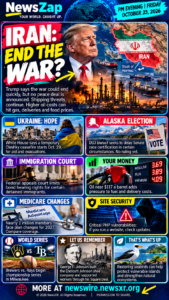
    Before you settle in for the weekend, let’s get you caught up. President Trump is talking about ending the war with Iran, but the fighting continues and oil prices are putting more pressure on household budgets. Washington has entered a new legal battle over an upcoming Senate election, a federal appeals court has issued a consequential immigration ruling, and nearly a million seniors are facing changes to their Medicare Advantage coverage. We’ve also got encouraging news from Ukraine, a serious website security warning, and a look at the World Series.

    And tonight, we’re doing something special. We’ll close by remembering George F. Johnson, an Upstate New York industrialist who believed American workers deserved a Square Deal. His story is a reminder of what a successful American company can mean to the people and communities that help build it.

    TONIGHT: TOP STORY

    Trump Says Iran War Could End Quickly, but What Happens Next?

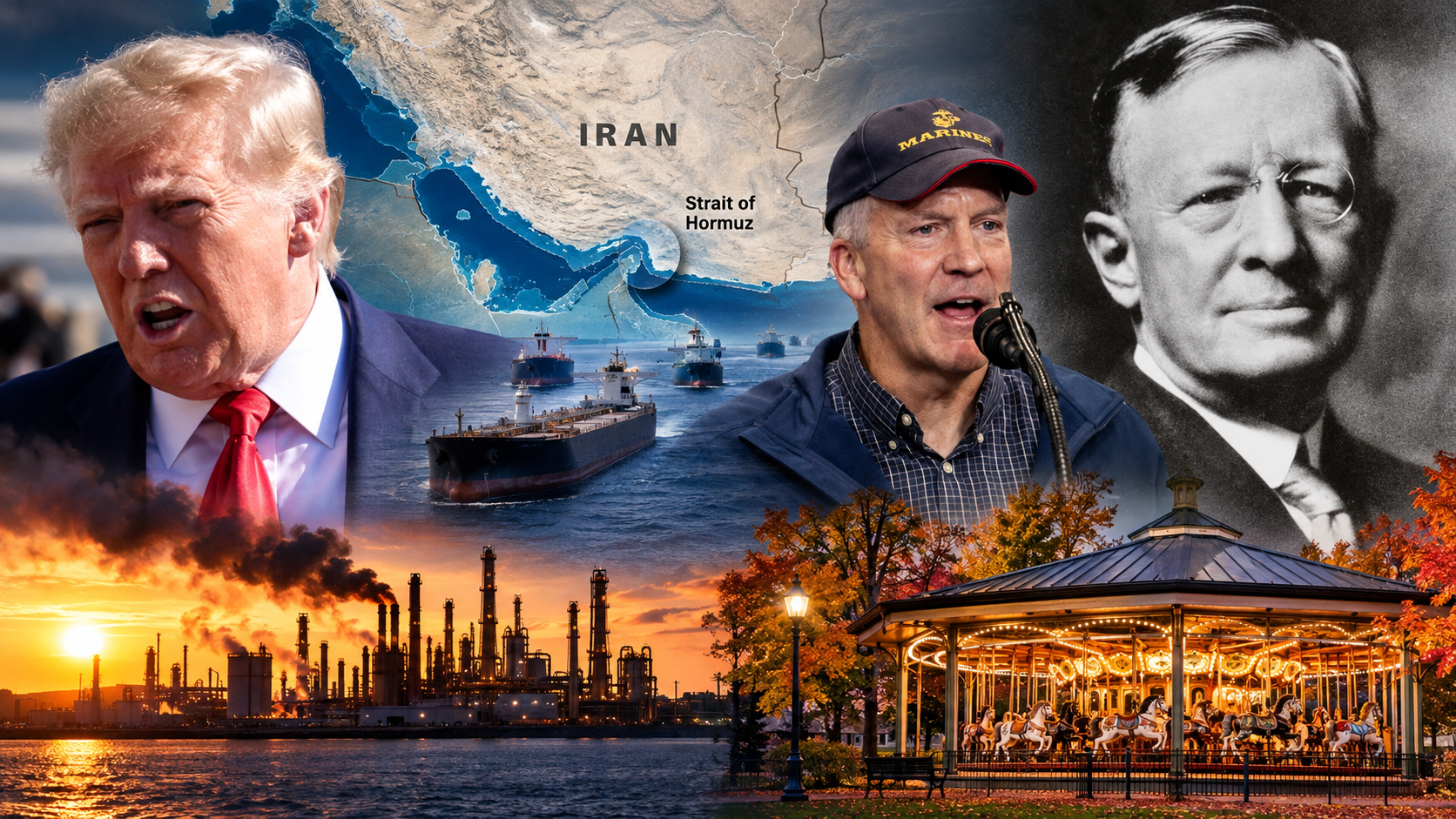
    President Donald Trump says the United States could bring the war with Iran to a quick conclusion, but he’s questioning whether Washington should end the fighting decisively or allow the conflict to wind down gradually. Speaking with reporters on the White House South Lawn Friday, Trump said oil continues moving through the Strait of Hormuz and maintained that American military objectives are being achieved. His comments suggest the administration is considering how to bring the conflict to an end, although no comprehensive peace agreement or timetable has been announced. The question now is whether diplomacy can produce a settlement before another major round of military operations.

    The uncertainty is particularly troubling for people living in the region and American military personnel serving there. Iran has threatened retaliation against U.S. bases and regional infrastructure if additional strikes occur, while American and Israeli military planners have reportedly been considering renewed attacks on Iranian nuclear, missile, and energy facilities. Those preparations do not establish that another attack has been ordered. But they leave open the possibility of further fighting even as the president discusses ending the war.

    Shipping Through the Strait of Hormuz Remains Dangerous

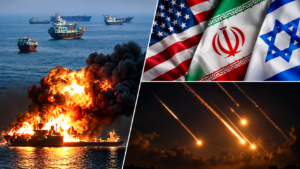
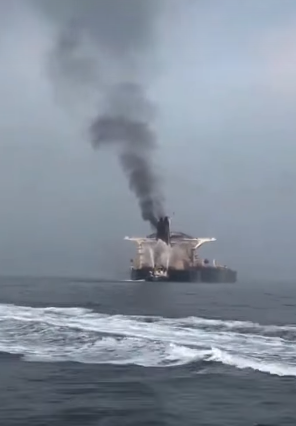
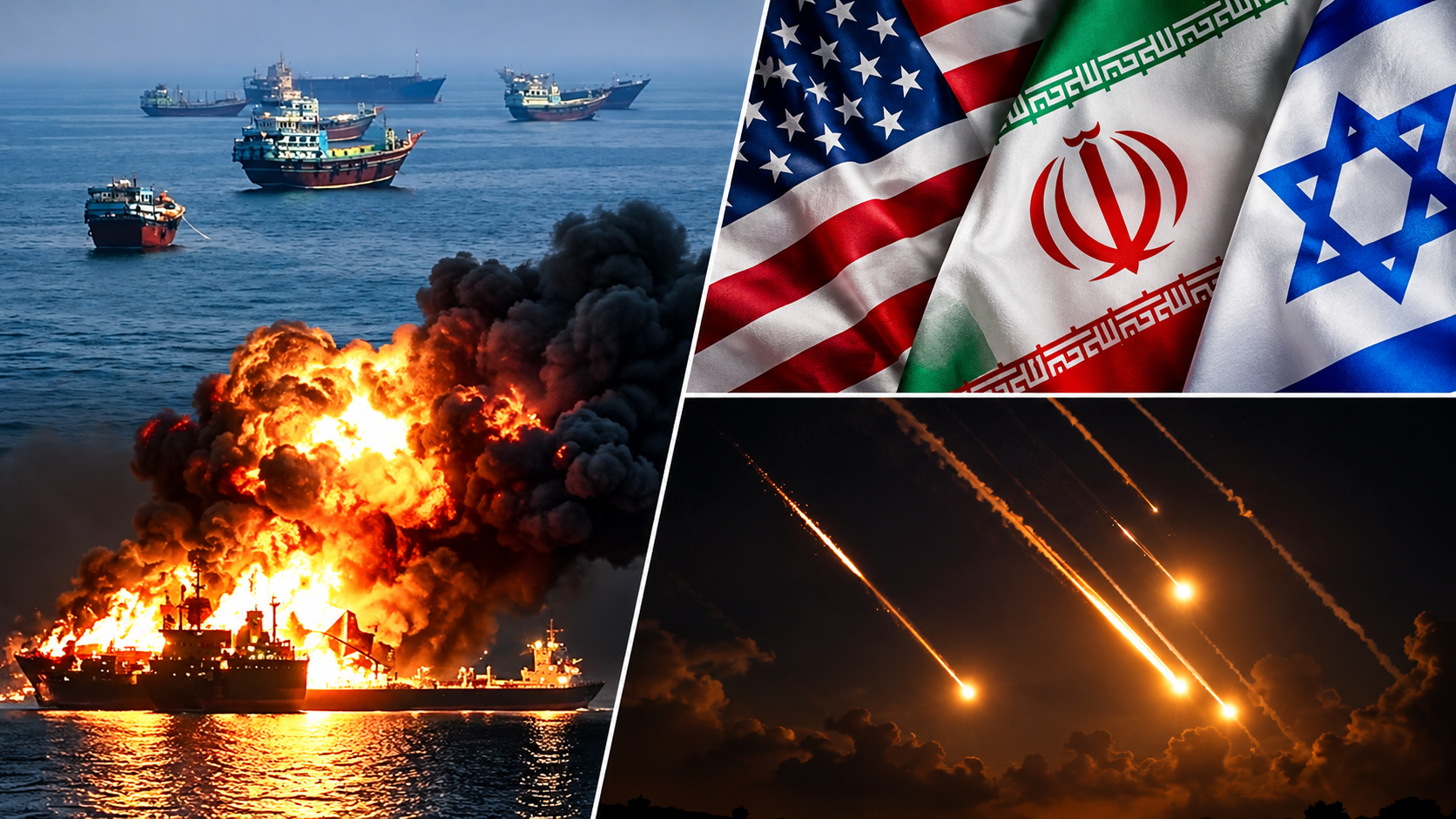
    The Strait of Hormuz remains one of the most dangerous shipping routes in the world. Iran’s Islamic Revolutionary Guard Corps reported that seven commercial vessels were struck Thursday, including ships allegedly attacked by fast boats and others damaged by naval mines. The full extent of those claims has not been independently established, but attacks and maritime security warnings have already disrupted shipping throughout the Persian Gulf. For crews navigating the waterway, the danger is immediate, and for companies transporting oil and commercial goods, the costs continue to rise.

    A Reuters review of maritime information also points to extensive damage to commercial shipping since the war began. Some shipowners are accepting extraordinary risks because freight rates have risen sharply, with reported daily rates for certain vessels exceeding $1 million. That creates a difficult situation in which transporting oil can be enormously profitable while exposing crews, ships, and cargo to serious danger. And the consequences don’t end when those vessels reach port.

    Oil Prices Rise, and Americans Feel the Pressure

    Brent crude finished Friday near $117 a barrel, while U.S. benchmark crude rose above $103. Those prices reflect continuing concern over Middle Eastern oil supplies and the possibility of additional military operations. For Americans watching the cost of gasoline, diesel, heating oil, and groceries, this isn’t simply a distant international crisis. Higher energy costs can eventually reach households through transportation, manufacturing, farming, and the delivery of everyday necessities.

    Farmers are especially vulnerable as diesel prices rise during the fall harvest season. Trucking companies face higher operating expenses, businesses must account for more expensive deliveries, and families already struggling with inflation have another concern to manage. Retail prices do not necessarily move immediately with crude oil, but prolonged disruptions increase the pressure. With the midterm elections approaching, the economic consequences of the war are becoming part of America’s domestic conversation.

    Oil Spill Adds Another Threat to the Gulf

    The conflict is also creating environmental concerns. Authorities in the United Arab Emirates have temporarily closed beaches near Umm Al Quwain and parts of Sharjah following an oil spill affecting coastal waters. Investigators have not publicly established the precise cause, although maritime analysts have examined a possible connection to a tanker damaged during an attack. Cleanup crews are working to protect beaches, marine life, and coastal communities.

    For Gulf nations, protecting seawater is especially important because desalination facilities provide drinking water to millions of residents. Oil pollution can threaten fisheries, tourism, marine ecosystems, and infrastructure far beyond the immediate location of a damaged vessel. It’s another reminder that the consequences of war extend well beyond the battlefield. A single maritime incident can affect the environment and livelihoods of people who had no part in the fighting.

    TONIGHT: WORLD NEWS

    A Humanitarian Breakthrough Offers Hope to Civilians Trapped in Ukraine

    There is some encouraging news tonight from Ukraine. The White House announced Friday that First Lady Melania Trump helped negotiate a temporary humanitarian ceasefire in Oleshky, a Russian-occupied city where residents have endured years of fighting, damaged infrastructure, and severe shortages. The agreement is scheduled to begin October 29 and would permit aid deliveries and civilian evacuations. For families who have been unable to escape, the arrangement offers the possibility of relief.

    Oleshky had approximately 24,000 residents before Russia’s invasion, but the White House estimates that only 1,700 to 2,000 remain, including about 50 children. Many are elderly, and residents have faced dangerous roads, limited medical supplies, contaminated water, and shortages of food. The destruction of the Kakhovka Dam in 2023 added devastating flooding to an already desperate situation. Some residents have reportedly been reduced to extraordinary measures simply to find enough to eat.

    Under the announced agreement, civilian teams would help deliver assistance and coordinate evacuations for residents wishing to travel to Ukrainian-controlled territory or Russia. The First Lady’s office says the arrangement grew out of earlier efforts involving the reunification of Ukrainian children with their families. The ceasefire has not yet taken effect, and its success will depend on whether the parties honor the agreement. But for someone trapped without adequate food or medicine, even a temporary opportunity to leave safely could mean everything.

    Seven Killed in Attack on Jordanian Church

    Jordan is mourning after gunmen attacked a church gathering during a funeral Friday, killing seven people and injuring approximately 40 others. The shooting occurred at Hamoud Church in the Karak governorate, where mourners had gathered to pay their respects. Authorities described the violence as a terrorist attack and launched an extensive search for those responsible. Witnesses reported scenes of panic as people attempted to escape the gunfire.

    King Abdullah visited Karak and promised that those responsible would face justice, while United Nations Secretary-General António Guterres condemned the attack. Investigators have not publicly established the attackers’ motives or confirmed whether they belonged to a larger militant organization. Jordan has generally experienced greater internal stability than several of its neighbors, making the violence particularly alarming. For the families who gathered to mourn one loss and suffered several more, the tragedy is deeply personal.

    France Faces Another Weekend of Demonstrations

    France is preparing for another difficult weekend following days of demonstrations, rioting, and property destruction fueled by anger over living costs and economic conditions. Violence in several major cities has disrupted businesses and prompted authorities to expand security operations ahead of additional protests Saturday. President Emmanuel Macron has condemned the destruction and directed officials to review their response. Demonstration organizers continue raising concerns about energy prices and household finances.

    The unrest is also unsettling financial markets. Investors are demanding higher returns on French government debt relative to German bonds, reflecting concerns about political and fiscal stability. For ordinary French families, the underlying issues remain familiar to Americans: expensive energy, strained household budgets, and uncertainty about economic conditions. The government now faces the challenge of protecting lawful demonstrations while preventing additional violence.

    North Korea’s Kim Jong Un Calls for Stronger Combat Units

    North Korean leader Kim Jong Un has directed army commanders to strengthen their units and prepare them to operate more independently. His instructions came during a two-day military conference held October 22 and 23 in Pyongyang, according to state media reporting released Saturday morning in Korea. Kim called for the development of elite combat companies as part of the country’s continuing military modernization efforts. The gathering followed the ruling Workers’ Party’s Ninth Congress earlier this year.

    North Korea has continued emphasizing conventional military readiness alongside its nuclear and missile programs. The latest directive reinforces those longstanding priorities but does not establish that a new military operation has been ordered. For neighboring countries and American forces stationed in the region, North Korea’s military development remains a significant security concern. Its relationship with Russia also adds another dimension to international efforts to contain regional tensions.

    Powerful Earthquake Shakes China’s Tibetan Plateau

    A magnitude 7.0 earthquake struck China’s Tibetan Plateau on October 22, according to the United States Geological Survey. The earthquake occurred northeast of Nagqu at an estimated depth of 18 kilometers. Federal geological estimates suggest approximately 132,000 people may have experienced moderate to severe shaking. Emergency officials are assessing the consequences in a remote region where difficult terrain and limited transportation can complicate rescue operations.

    The earthquake’s magnitude and location are established, but initial population-exposure estimates should not be confused with confirmed casualty figures. Authorities must assess damaged communities and infrastructure before the full impact becomes clear. Aftershocks remain another concern following a major earthquake. We’ll continue watching for reliable information about the people and communities affected.

    TONIGHT: NATIONAL NEWS

    Justice Department Seeks to Intervene in Alaska Senate Election

    The Justice Department has taken an extraordinary step involving Alaska’s upcoming Senate election, filing a lawsuit that could delay certification under certain circumstances if Republican Senator Dan Sullivan loses. The dispute centers on another candidate named Daniel J. Sullivan Jr., whose similar name has prompted concerns about voter confusion. The incumbent is competing against Democratic challenger Mary Peltola and other candidates in the November 3 election. President Trump publicly acknowledged directing the Justice Department to pursue the lawsuit.

    Federal attorneys argue that the similarly named candidate could draw votes away from the incumbent through confusion rather than genuine voter preference. They are asking the court to intervene if the incumbent loses by a margin potentially affected by votes cast for the other Sullivan. Alaska’s Supreme Court previously rejected attempts to remove the additional candidate from the ballot. The federal lawsuit does not mean the election has been canceled or that a judge has agreed to block certification.

    Alaska also uses ranked-choice voting, allowing voters to rank candidates in their preferred order. That makes the legal dispute particularly complicated because the system includes procedures for redistributing votes when candidates are eliminated. For Alaskans, the immediate concern is whether their votes will be counted and certified according to the state’s election laws. With Election Day just 11 days away, the case has become one of the most consequential election-related legal disputes in the country.

    Virginia Senate Leader Indicted in Federal Cannabis Case

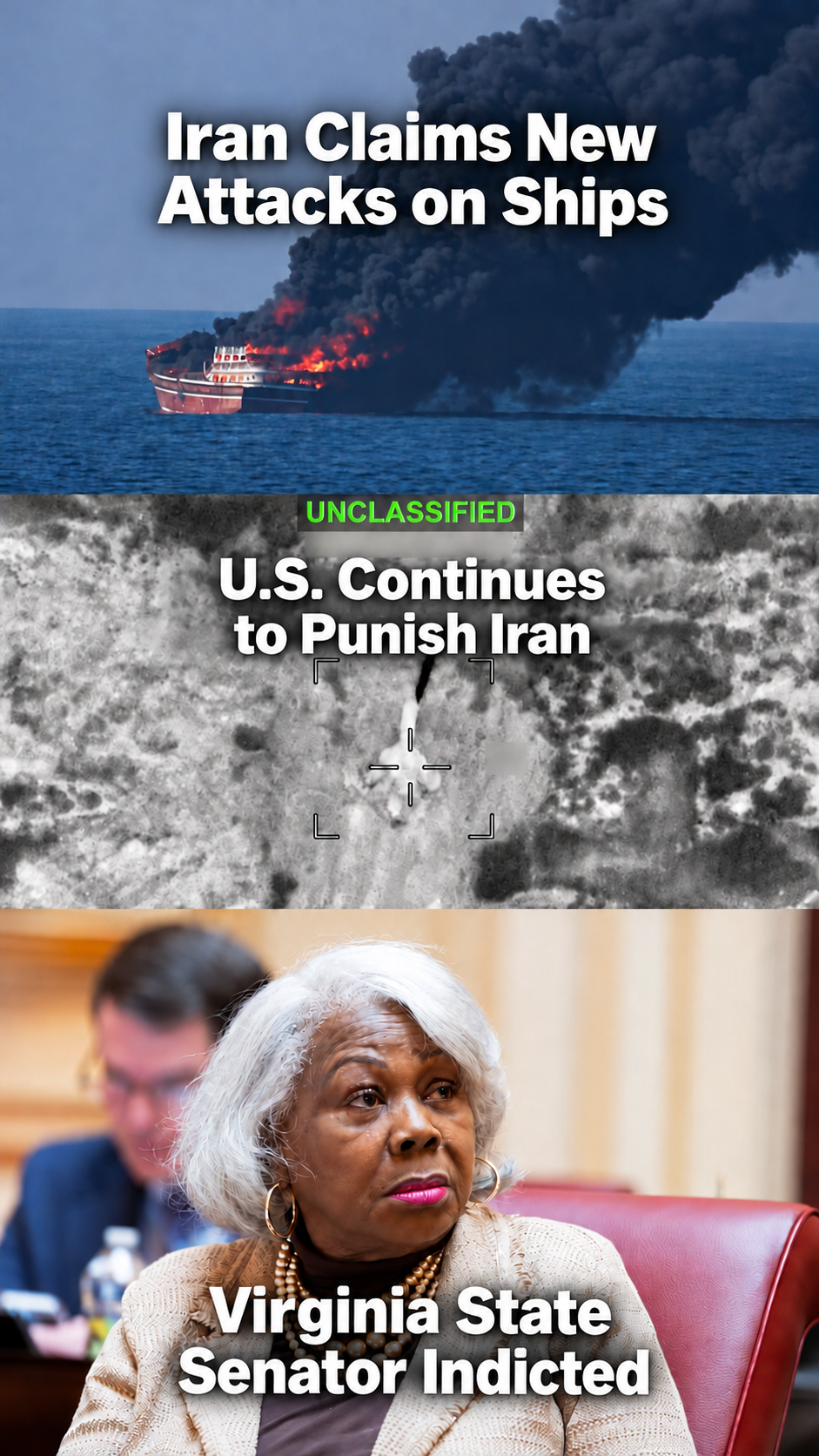
    Virginia State Senator L. Louise Lucas, one of the state’s most powerful Democratic lawmakers, has been charged in a federal investigation involving an alleged illegal cannabis distribution operation. Prosecutors accuse Lucas and several associates, including family members, of participating in unlawful activity involving marijuana sales, financial transactions, and an alleged criminal enterprise. The indictment names seven defendants and includes racketeering and money laundering allegations. Lucas, 82, serves as president pro tempore of the Virginia Senate.

    Lucas has challenged the legitimacy of the prosecution and suggested that political considerations influenced the case. Federal officials maintain that the investigation concerns alleged criminal conduct. Virginia permits certain marijuana possession and personal use, but commercial recreational sales remain subject to restrictions that are important to the allegations. Lucas and the other defendants are presumed innocent unless and until proven guilty in court.

    The indictment arrives shortly before the national midterm elections and is already becoming part of the political conversation in Virginia. But a criminal accusation is not a conviction, and the evidence will have to be tested through the judicial process. NewsXR will distinguish the government’s allegations from established findings as the case develops.

    Pentagon Designates Confucius Institutes a National Security Concern

    Defense Secretary Pete Hegseth announced Friday that the Pentagon has designated Chinese-funded Confucius Institutes associated with American universities as national security threats. The institutes have historically offered Chinese language instruction and cultural programming, but American officials have long questioned whether some programs also serve Chinese government political or intelligence interests. Hegseth alleged that certain organizations continued operating under changed names or institutional arrangements despite previous restrictions. The designation reflects the administration’s national security assessment.

    The decision comes amid continuing American efforts to restrict foreign access to sensitive research, advanced technology, and defense-related information. Universities with Chinese-funded programs may face additional scrutiny concerning partnerships and institutional arrangements. The Pentagon’s allegations do not establish that every Chinese cultural or language program has participated in espionage. The next question is how the designation will be implemented and which institutions will be directly affected.

    TONIGHT: COURT BEAT

    Federal Appeals Court Limits Bond Hearing Rights for Detained Immigrants

    A major federal appeals court ruling Friday could affect thousands of immigrants held in federal detention. The full Fifth U.S. Circuit Court of Appeals ruled 10-7 that certain immigrants detained during deportation proceedings do not possess a constitutional right to bond hearings beyond the procedures Congress has provided. The decision reverses an earlier ruling by a three-judge panel and represents a significant legal victory for the Trump administration. The Fifth Circuit covers Texas, Louisiana, and Mississippi, where substantial immigration detention operations are located.

    The dispute concerns whether immigrants who entered the country without formal admission have a constitutional right to ask a judge for release while their cases proceed. The court’s majority concluded that federal immigration law determines the protections available in the circumstances addressed by the ruling. Dissenting judges warned that the decision could permit prolonged detention without sufficient judicial review. For affected families, the practical issue is whether someone may remain in custody for extended periods while waiting for an immigration case to be resolved.

    The decision does not eliminate every form of judicial review available to immigration detainees. Related statutory questions are also moving through the courts, including matters before the Supreme Court. Nevertheless, Friday’s ruling narrows an important constitutional avenue for challenging detention in the Fifth Circuit. Its consequences could extend well beyond the immediate case as attorneys and immigration authorities respond.

    Supreme Court Leaves Federal Prison Medical-Care Restrictions Blocked

    The Supreme Court declined an emergency request Wednesday from the Trump administration seeking permission to enforce restrictions on gender-affirming medical care and related accommodations for transgender prisoners in federal custody. The decision leaves an existing lower-court injunction in place while litigation continues. The lawsuit concerns Federal Bureau of Prisons policy changes implemented following an executive order issued by President Trump. Lower courts found substantial legal problems with the agency’s justification for reversing established medical policies.

    The Supreme Court’s decision is temporary rather than a final ruling on the underlying lawsuit. For affected prisoners, it means the challenged restrictions cannot immediately take effect under the existing court order. The case also raises broader questions about administrative decision-making and the medical responsibilities of federal correctional institutions. Those issues will remain before the courts as the litigation proceeds.

    New Hampshire Voting Rules Change Ahead of Election Day

    If you’re planning to vote in New Hampshire, take a moment to check which identification documents the state accepts. The Supreme Court issued an emergency order allowing the state to enforce restrictions on student identification cards during the November 3 election. State officials argue that the requirements establish consistent identification procedures, while voting rights organizations contend that the restrictions create unnecessary obstacles. The ruling permits enforcement of the challenged requirements without finally resolving every issue in the lawsuit.

    The practical concern is straightforward, especially for students who may have relied on school-issued identification in previous elections. Voters should confirm the current rules before arriving at their polling location. Election laws can vary considerably from state to state, and a document accepted elsewhere may not satisfy New Hampshire’s requirements. A little preparation now can help avoid problems on Election Day.

    TONIGHT: WHITE HOUSE

    Iran Strategy and Russian Sanctions Keep Foreign Policy in Focus

    President Trump’s comments about ending the war with Iran have renewed attention on the administration’s foreign policy priorities. Washington is balancing military operations, diplomatic possibilities, and the economic consequences of continued conflict. At the same time, the administration has exercised waiver authority under legislation imposing sanctions related to Russia and Iran. Those decisions affect the economic pressure placed on foreign governments and the administration’s flexibility in pursuing negotiations.

    A presidential waiver does not repeal the underlying sanctions law. It temporarily suspends specified requirements under conditions established by Congress. The administration has cited energy-market stability and diplomatic considerations in explaining elements of its approach. The results will depend on whether the measures help produce meaningful negotiations or simply change the economic pressure surrounding the conflicts.

    White House Announces Measures Aimed at Housing Costs

    The administration is promoting executive measures intended to reduce certain expenses associated with homeownership. The announced policies address mortgage lending procedures, title insurance requirements, refinancing expenses, and manufactured housing. Federal agencies have been directed to examine ways of reducing administrative barriers and making housing finance more accessible. For first-time buyers and families considering refinancing, the proposals could eventually affect some transaction costs.

    The important distinction is between announcing a policy and putting it into operation. Savings will depend on how federal agencies implement the directives and how lenders respond. Housing affordability also involves home prices, interest rates, property taxes, insurance, and local housing supply. The announced measures address portions of that larger problem, with their practical effects still to be determined.

    White House Continues Search for New Press Secretary

    The White House is continuing its search for a press secretary following Katie Zacharia’s October 16 departure. Zacharia served only briefly after replacing Karoline Leavitt, and her short tenure drew considerable public attention. Leavitt has since discussed assisting President Trump in finding a successor. The administration has not established a permanent replacement in the reporting available for tonight’s edition.

    Although the departure occurred last week, the continuing vacancy matters to the administration’s communications with reporters and the public. The press secretary serves as a principal spokesperson for White House policy and daily developments. With major foreign policy questions and an approaching election, the position carries substantial responsibility. The search continues.

    TONIGHT: CAPITOL

    Campaign Spending Reaches Extraordinary Levels Before the Midterms

    The battle for Congress is becoming enormously expensive. Political campaigns, party organizations, and outside groups are pouring money into advertising and voter outreach as November 3 approaches. Reports estimate that total political advertising expenditures for the 2026 cycle could reach approximately $11.6 billion, with more than $1 billion in advertisements scheduled during the final two weeks. Much of that spending is concentrated in competitive House and Senate races.

    The amounts illustrate how deeply campaign financing has become embedded in American elections. Large donors and political action committees can finance extensive advertising campaigns, while individual candidates compete to raise enough money to remain visible. For voters, the result is a growing stream of political messages across television, social media, and other platforms. Federal campaign finance disclosures provide important information about where money comes from and how it is spent, although spending projections are not the same as completed expenditures.

    Congress Looks at Data Center Energy Costs

    Lawmakers are also examining proposals concerning the rapid growth of data centers and their demands on America’s electrical infrastructure. Artificial intelligence services require substantial computing capacity, prompting companies to construct large facilities that consume significant amounts of electricity. The expansion can bring investment, employment, and technological development to communities, but it can also place new demands on regional power grids. Residents and businesses are concerned about who will pay for the additional infrastructure.

    Members of Congress are discussing permitting reforms, energy development, and measures intended to protect utility customers from certain costs associated with expansion. The questions are becoming increasingly relevant as communities consider proposals for new data centers. A major technology investment may benefit a region, but the financial arrangements surrounding power generation and distribution matter to everyone paying an electric bill. The legislation remains under discussion.

    SPECIAL FEATURE: MIDTERM COVERAGE

    America Votes November 3: The Final Stretch Begins

    We’re now less than two weeks away from the November 3 midterm elections, and the stakes extend well beyond campaign advertisements and political arguments. Americans will decide all 435 voting seats in the House of Representatives, along with Senate races and numerous state and local offices. The results will shape congressional oversight, federal spending, legislation, and the direction of the next Congress. Tonight, we’re looking at three developments that deserve particular attention.

    Alaska: A Senate Election Faces a Federal Court Challenge

    The Justice Department’s lawsuit involving Alaska’s Senate race has become one of the most unusual election disputes of the year. Republican incumbent Dan Sullivan faces Democrat Mary Peltola and other candidates, including another man named Daniel J. Sullivan Jr. Federal officials contend that the similarity between the candidates’ names could confuse voters and influence the result. The government is seeking conditional relief that could delay certification if the incumbent loses by a margin potentially affected by votes cast for the other Sullivan.

    Alaska’s Supreme Court previously permitted the additional candidate to remain on the ballot, and the state uses ranked-choice voting. Those circumstances make the legal questions more complicated than a simple dispute over similar names. No court has ruled that the election should be canceled or that its eventual results are invalid. The case raises important questions about federal intervention, state election authority, and how voting outcomes should be evaluated when claims of confusion arise.

    House Campaigns Compete for Money and Momentum

    House Speaker Mike Johnson has been working to secure additional campaign resources for competitive Republican districts as the election approaches. Democratic organizations are also directing substantial spending toward districts they consider competitive, while outside groups continue investing heavily in advertising. The resulting financial competition has intensified across several states. Candidates are attempting to persuade voters on issues ranging from the economy and healthcare to immigration and foreign policy.

    Campaign spending can influence how often voters encounter a candidate’s message, but it does not determine an election outcome. The final decisions belong to voters, and the results will depend on ballots cast and counted. NewsXR will continue following documented campaign developments, official disclosures, and the issues that affect communities. We’ll distinguish political claims from established facts and polling estimates from actual election results.

    Medicare Advantage Changes Bring Healthcare Into Focus

    Nearly one million Medicare Advantage members are facing changes to their coverage next year. Humana and UnitedHealthcare announced Friday that they are discontinuing plans affecting approximately 990,000 members in 2027. Humana’s changes involve roughly 600,000 members, while UnitedHealthcare’s affect approximately 390,000. The companies cited rising medical costs and changing insurance-market conditions.

    For seniors receiving notices that their plans are ending, the immediate concern is finding replacement coverage that meets their needs. Alternative plans may have different premiums, prescription benefits, provider networks, and out-of-pocket expenses. These changes do not mean the federal Medicare program is ending, but they can require affected members to make important enrollment decisions. Medicare’s annual open enrollment period runs through December 7, giving people an opportunity to compare available options.

    The Polls Are Snapshots, Not Results

    Several closely watched Senate races are drawing national attention, including contests in Alaska, Maine, Ohio, North Carolina, and Texas. Individual surveys have reported narrow margins in several states, but those figures reflect samples of voters at particular moments in time. Different polling methods and turnout assumptions can produce different estimates. A candidate leading a survey has not won an election.

    As November 3 approaches, we’ll follow significant campaign developments, election procedures, legal disputes, and official results. We’ll also explain what proposed policies could mean in practical terms for Americans. Our goal is to give readers the information they need to understand the choices and developments shaping the election. The decisions belong to the voters.

    TONIGHT: ECONOMY & BUSINESS

    Rising Oil Prices Add Pressure to Household Budgets

    If you’re watching every dollar that goes into the gas tank, Friday’s oil prices deserve your attention. Brent crude settled near $117 a barrel, while U.S. crude rose above $103 as the war with Iran continued threatening energy supplies. Oil markets respond to fears of disrupted production and shipping, sometimes before an interruption actually occurs. That uncertainty can increase costs for businesses transporting goods and eventually reach families through higher prices.

    The timing is especially difficult for agricultural communities moving through harvest season. Diesel powers equipment and transportation, making farmers particularly sensitive to fuel increases. Manufacturers and delivery companies face similar pressures, and prolonged energy disruptions can affect the prices consumers pay. The longer the conflict continues, the more important its economic consequences become for American households.

    Investors Question the Cost of Artificial Intelligence Expansion

    Technology companies continue investing extraordinary amounts of money in artificial intelligence, including data centers, advanced computing equipment, and electrical infrastructure. Those investments could produce important new capabilities and future revenue, but investors are questioning how quickly the spending will generate returns. That uncertainty has contributed to volatility in technology shares. For Americans whose retirement savings are invested in broad stock-market funds, the performance of major technology companies can influence account balances.

    The expansion also raises questions about electricity costs and infrastructure development. Data centers require reliable power, and communities are examining how new facilities might affect local utility systems. The economic opportunities are substantial, but so are the financial commitments. Investors, businesses, and communities are watching to see how those costs and benefits develop.

    TONIGHT: HEALTH & SCIENCE

    Major Website Security Flaws Put Millions of Systems at Risk

    If you operate a website, this is one story worth checking before the weekend. Security researchers have disclosed two critical vulnerabilities in PHP, the programming language used by millions of websites and applications, including many associated with WordPress. The flaws, identified as CVE-2026-109618 and CVE-2026-109619, could allow attackers to execute unauthorized code on affected systems. Security updates were released October 21.

    Organizations running vulnerable PHP installations should confirm that the appropriate updates have been applied. Website owners using managed hosting can contact their providers, while organizations operating their own servers should review their installed versions and configurations. The disclosure does not mean every PHP website has been compromised, but affected systems require prompt attention. For businesses, community organizations, and publishers, protecting the underlying software is essential to protecting the services they provide.

    Medicare Plan Closures Require Attention From Affected Seniors

    The Medicare Advantage changes announced by Humana and UnitedHealthcare also carry important healthcare consequences. Approximately 990,000 members will be affected by plans scheduled to end in 2027, and many will need to compare replacement coverage. Provider networks, prescription drug benefits, premiums, and out-of-pocket costs may differ from their existing plans. A change that looks minor on paper can matter considerably to someone who depends on particular doctors or medications.

    Affected members should carefully review notices from their insurers and available enrollment options. The federal Medicare program itself is continuing, and the announcements concern specific private insurance offerings. Annual open enrollment runs through December 7. For anyone facing a change, understanding the details now can help prevent unwanted surprises when new coverage begins.

    TONIGHT: NATIONAL PUBLIC SAFETY

    Missouri Man Charged Following Fatal Hospital Shooting

    Authorities in Independence, Missouri, have charged James F. Lawson with second-degree murder following a fatal shooting inside a hospital room at Centerpoint Medical Center. Police allege that Lawson shot his girlfriend while she was visiting him October 22. The incident has raised questions about the circumstances of the shooting and security inside healthcare facilities. Lawson is presumed innocent unless and until proven guilty in court.

    The case is particularly disturbing because hospitals are places where patients, families, and healthcare professionals expect a safe environment. Investigators will need to establish how the incident unfolded and whether existing security procedures were followed. The criminal proceedings remain ongoing.

    Jordan Church Attack Prompts Regional Security Response

    Authorities in Jordan continue searching for those responsible for Friday’s deadly attack on a church gathering in Karak. Seven people were killed and approximately 40 injured, according to initial reports. Investigators are examining possible extremist connections, but no established motive or organizational affiliation should be assumed before authorities substantiate their findings. The attack has prompted an extensive security response and condemnation from Jordanian and international officials.

    The victims were attending a funeral when the violence occurred. For their families and community, the loss extends beyond the immediate security investigation. It is another reminder of the devastating consequences of violence directed at civilian gatherings.

    WEATHER TONIGHT & TOMORROW

    Southwest Storms, Colder Plains and Chilly Northeastern Nights

    The national weather picture is divided tonight, with severe thunderstorms affecting parts of the Southwest while colder air advances into the central United States. The National Weather Service has been monitoring storms across central and eastern New Mexico, where damaging winds, hail, and localized flooding remain concerns. Heavy rainfall could continue Saturday, particularly in areas that have already received significant precipitation. Travelers should check local warnings before heading into affected areas.

    Across the Plains and parts of the Midwest, an advancing cold front is expected to bring substantial temperature changes. Some communities could experience drops of 20 to 25 degrees as colder air moves south and east, while higher elevations of the northern Rockies may receive accumulating snow. Changing conditions could affect travel, especially where rain transitions to snow. It’s a good weekend to check the forecast before setting out on a longer drive.

    Much of the eastern United States is experiencing comparatively quieter conditions, although unsettled weather may affect portions of Florida’s eastern coast. Some interior northeastern communities are also facing chilly nights, with frost possible in colder valleys. Temperatures can vary considerably between nearby locations, so sensitive outdoor plants may need protection where frost is expected. Local National Weather Service forecasts remain the best source for neighborhood-level conditions.

    OVERNIGHT & TOMORROW

    What We’re Watching This Weekend

    The Iran conflict remains our leading international concern as Washington weighs its military options and threats to commercial shipping continue. In Ukraine, attention will turn toward preparations for the October 29 humanitarian ceasefire in Oleshky. Here at home, the Alaska election lawsuit and Friday’s immigration detention ruling are major legal developments requiring follow-up. Political campaigns are also entering another important weekend before Americans vote November 3.

    Weather will be another concern in parts of the Southwest and southern Plains, where heavy rainfall and thunderstorms may affect travel. And for anyone operating a website, the PHP security vulnerabilities deserve attention while updates are available. A few practical checks now could prevent problems later.

    Baseball’s Fall Classic Begins in Milwaukee

    Baseball fans have something special to look forward to this weekend. The Milwaukee Brewers and Tampa Bay Rays opened the 2026 World Series Friday at American Family Field, with both franchises pursuing their first championship. Milwaukee is appearing in the series for the first time since 1982, while Tampa Bay arrives as the American League champion. Game 2 is scheduled for Saturday evening in Milwaukee.

    The opening game was underway during tonight’s reporting period, so its final result is not included here. For supporters of either team, this World Series presents an opportunity to celebrate something their franchise has never achieved. That’s part of what makes October baseball so memorable. Every game carries the possibility of a moment fans will talk about for generations.

    LET US REMEMBER

    George F. Johnson: The American Industrialist Who Gave His Workers a Square Deal

    Tonight, before we say goodnight, we want to remember a man whose legacy remains part of the landscape of Upstate New York. His name was George F. Johnson, and he helped build Endicott Johnson into one of America’s great shoe manufacturing companies. But his greatest contribution may not have been the millions of shoes his factories produced. It was his belief that the workers who helped create a company’s prosperity deserved an opportunity to share in it.

    Born in Massachusetts in 1857, Johnson entered the shoe industry as a teenager and eventually moved to the Binghamton area, where he became a partner of businessman Henry B. Endicott. Together, they built an enterprise that employed more than 20,000 people at its peak and helped transform Binghamton, Johnson City, and Endicott into a nationally significant manufacturing center. Thousands of immigrant families came to the Southern Tier seeking work, stability, and the opportunity to build better lives. Many established roots in communities their descendants still call home.

    A Square Deal for Working Families

    Johnson believed successful businesses had responsibilities extending beyond wages and profits. His Square Deal philosophy supported healthcare, homeownership, recreation, and other benefits for employees and their families. Endicott Johnson established medical services, helped workers obtain homes, and offered programs designed to improve everyday life. At a time when many American industrial workers had limited benefits and little financial security, his approach was remarkable.

    The company’s factories also helped supply footwear to American soldiers during both world wars. Workers throughout the Southern Tier contributed to the national war effort by producing the boots and shoes needed by troops overseas. But Johnson’s influence reached beyond the factory gates. His investments helped create neighborhoods, public spaces, and recreational opportunities that became part of everyday community life.

    Six Carousels and a Lasting Gift

    Perhaps his most beloved contribution was the donation of six wooden carousels to public parks throughout Greater Binghamton. Johnson wanted working families to enjoy recreation regardless of their financial circumstances, and the rides were intended to remain free. Generations of children grew up riding those carousels, and many later returned with their own children and grandchildren. They remain treasured symbols of the region’s industrial heritage.

    One carousel carries a special connection to American television history. Rod Serling, who grew up in Binghamton and later created The Twilight Zone, drew upon childhood memories of his hometown when developing the celebrated episode Walking Distance. Its nostalgic carousel imagery recalls the world of Serling’s youth, including Binghamton’s Recreation Park. A gift intended to bring joy to working families became part of the landscape that helped inspire one of television’s most memorable stories about growing older and remembering home.

    A Legacy That Outlived the Factories

    Endicott Johnson eventually declined as American manufacturing changed, leaving enormous factories empty and thousands of families facing an uncertain future. Yet many of the homes, parks, and public spaces associated with the company’s prosperous years remain. Today, former factory properties are finding new purposes through educational, healthcare, housing, and commercial redevelopment. The region continues building upon the physical and cultural foundations of its industrial past.

    George F. Johnson died in 1948, but his Square Deal remains an important chapter in American business history. He demonstrated that pursuing substantial profits and investing in working families did not have to be competing ambitions. His legacy reminds us that a successful company can be measured not only by what it produces or earns, but also by what it leaves behind for the people and communities that helped build it.

    For generations of American workers, the dream has been to earn an honest living, provide for their families, own a home, and give their children a better opportunity. George F. Johnson believed those ambitions deserved support, and he built a business philosophy around helping workers achieve them.

    Tonight, NewsXR remembers George F. Johnson, 1857–1948, and his contributions to American industry, working families, and the communities of Upstate New York.

    A heartfelt goodnight to you and yours from all of us at NewsXR. We hope we served your needs well today and look forward to doing it again tomorrow. Goodnight, America. God Bless.

    © 2026 NewsXR. All Rights Reserved.

    © 2026 NewsXR. All Rights Reserved.

    SEO Tags: NewsXR, NewsXR News Tonight, October 23 2026 News, Iran War, Midterm Elections 2026, Alaska Senate Election, George F Johnson, World News

    © 2026 NewsXR. All Rights Reserved.

  • NewsXR News Now Friday, October 23, 2026

    NewsXR News Now Friday, October 23, 2026

    NewsXR News Now

    Friday, October 23, 2026

    Good morning, America. From the overnight developments to the stories taking shape today, here’s what’s happening in our world.

    It’s Friday, and we’re heading into the final weekend of October with plenty to talk about. The war involving Iran continues to threaten international shipping and energy supplies, a humanitarian breakthrough may be coming for civilians trapped in Ukraine, and Washington is dealing with another investigation involving a prominent political figure. We’re also beginning our special coverage of the November midterm elections, introducing a new feature that takes us back exactly 100 years, and bringing you some encouraging news about working Americans getting money they’re owed.

    There’s a lot happening, so grab your coffee and let’s get caught up.

    NOW: TOP STORY

    Iran War: Strait of Hormuz Attacks Intensify as Washington and Israel Consider Further Military Action

    The conflict involving Iran remains one of the most consequential developments in our world this morning, with international shipping under continued threat and the possibility of renewed large-scale American and Israeli attacks hanging over an already dangerous region.

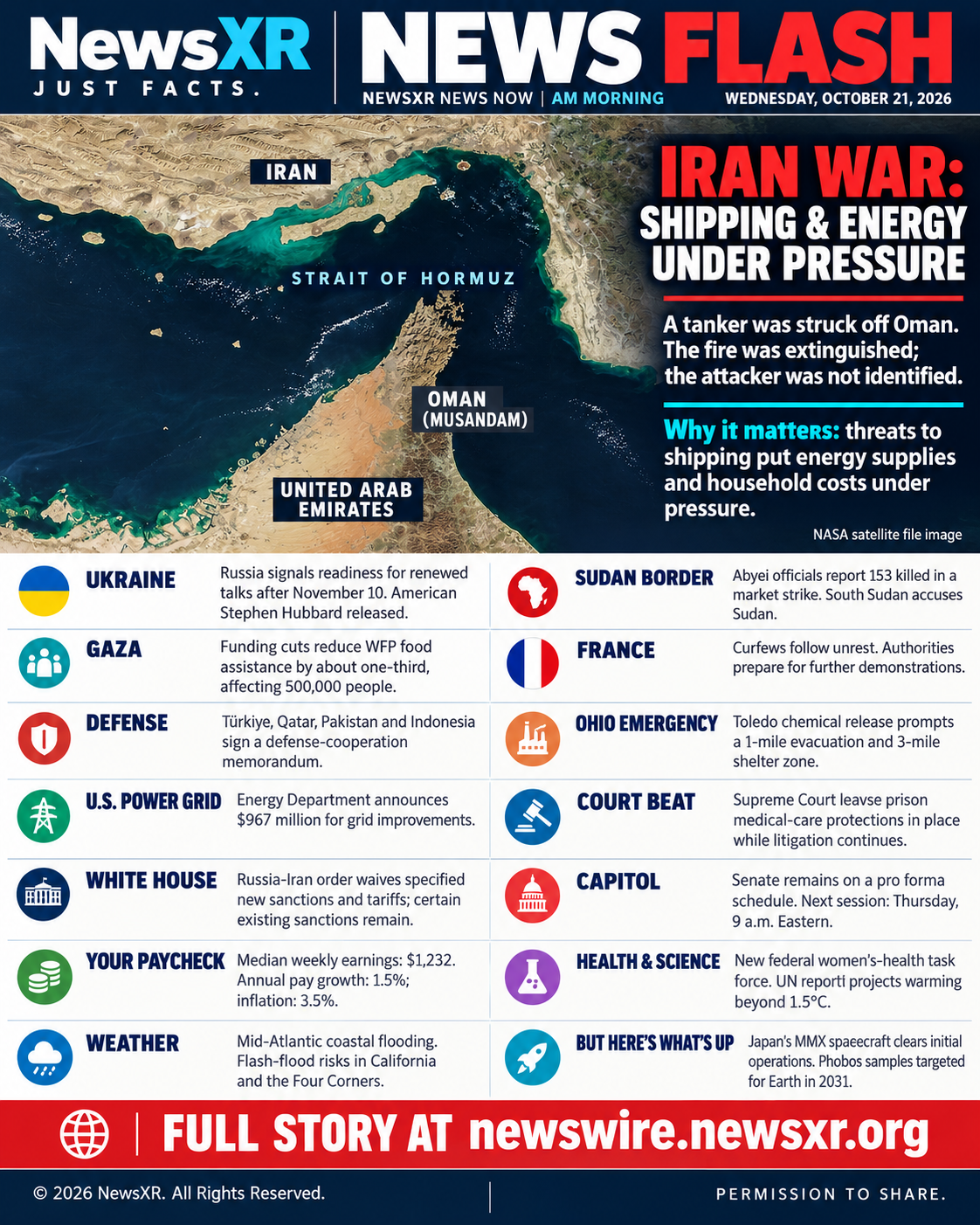
    The Strait of Hormuz, the narrow waterway connecting the Persian Gulf to international shipping routes, remains central to the crisis. Iran’s military has reported additional attacks on commercial vessels, including incidents involving fast-attack craft and naval mines. Independent reporting has documented the severe disruption to shipping through the region, where vessels carrying oil, natural gas, and commercial goods face substantial security risks.

    For Americans watching gasoline, diesel, heating oil, and grocery prices, this is much more than a distant military confrontation. Energy markets respond to the possibility of disrupted supplies, and higher transportation costs can eventually reach households through the prices of everyday products.

    The war, which began with American and Israeli military operations against Iran on February 28, has already caused extensive regional disruption. Iran has threatened retaliation against American military installations and regional interests if its territory faces additional strikes.

    Washington and Israel Examine Renewed Strike Options

    American and Israeli officials have been developing plans for possible renewed attacks on Iranian military and strategic infrastructure, according to reporting on the administration’s deliberations. Potential targets reportedly include missile production facilities and other military capabilities.

    The timing of additional military action has become entangled with American domestic politics as the November 3 midterm elections approach. The administration is weighing military objectives against the risk of further disruption to global energy supplies and the American economy.

    Reports describing post-election strike planning should not be mistaken for confirmation that a final attack order has been issued. Military contingency planning establishes possible courses of action, while the decision to execute them remains separate.

    Meanwhile, diplomatic contacts continue without a comprehensive settlement.

    Iran’s leadership is facing military pressure, economic disruption, and the consequences of a prolonged confrontation. American policymakers must determine whether additional force would improve negotiating conditions or expand a conflict that has already affected international commerce.

    The situation matters well beyond the Middle East. Every additional disruption to shipping increases pressure on energy markets, and every military escalation creates the possibility of a broader confrontation.

    For now, the Strait of Hormuz remains a critical international security concern.

    NOW: WORLD NEWS

    Melania Trump Helps Negotiate Humanitarian Ceasefire in Ukrainian City

    There is a potentially important humanitarian development this morning from Ukraine.

    The White House announced Friday that First Lady Melania Trump helped negotiate a temporary ceasefire between Russia and Ukraine in Oleshky, a Russian-occupied city in southern Ukraine where civilians have endured devastating conditions.

    The agreement is scheduled to take effect October 29 and is intended to permit humanitarian aid deliveries and civilian evacuations.

    According to the White House, the First Lady and a representative worked directly with Russian and Ukrainian leadership to establish the arrangement.

    Oleshky has been under Russian occupation since 2022. Years of fighting, flooding, damaged infrastructure, and restrictions on movement have left remaining residents struggling to obtain food, medicine, clean water, and reliable electricity.

    The situation has become particularly dangerous for elderly residents and others unable to escape. Roads are threatened by mines and drone attacks, making even ordinary movement potentially deadly.

    The announcement offers the possibility of relief, but the ceasefire has not yet begun. Neither the Russian nor Ukrainian government had immediately provided independent public confirmation of the arrangement when the White House announcement was reported.

    If successfully implemented, the agreement could allow humanitarian workers to reach people who have been isolated for months.

    For those families, the important question is whether food, medicine, and safe passage actually arrive.

    Ukraine Still Waiting for Critical American Military Support

    Ukrainian President Volodymyr Zelenskyy says his country continues to experience restrictions affecting Starlink and Starshield satellite services while awaiting American Patriot missile interceptors.

    Satellite communications have become essential to Ukrainian military operations, particularly in a war heavily dependent on drones, intelligence sharing, and electronic battlefield coordination.

    Patriot interceptors are also a critical component of Ukraine’s defenses against Russian ballistic missiles.

    The unresolved supply issues come amid continued Russian military operations and uncertainty surrounding the Trump administration’s approach to Moscow.

    President Trump has also waived portions of newly enacted sanctions targeting Russia, a decision Zelenskyy has publicly criticized.

    The combination of military supply questions, sanctions policy, and diplomatic negotiations illustrates the increasingly complicated relationship between Washington and Kyiv.

    European Researchers Estimate More Than 50,000 Summer Heat Deaths

    A major new scientific study is raising concerns about the deadly consequences of extreme summer heat.

    Researchers from the London School of Hygiene & Tropical Medicine and Imperial College London estimate that more than 50,000 heat-related deaths occurred across 854 European urban areas during the summer of 2026.

    Their analysis attributes approximately two-thirds of those deaths to human-caused climate change.

    The researchers examined temperature patterns and estimated mortality across cities representing roughly 40 percent of the population in the countries studied.

    These are statistical mortality estimates rather than individually confirmed death certificates. Nevertheless, the findings point to a substantial public health burden, particularly among older people and residents without access to adequate cooling.

    Heat-related deaths often receive less public attention than fatalities associated with hurricanes, floods, and other disasters because many occur individually, inside homes or care facilities.

    The study reinforces the importance of heat emergency planning, reliable cooling, public health outreach, and protecting people who live alone.

    NOW: NATIONAL NEWS

    Justice Department Investigates Former DHS Adviser Corey Lewandowski

    A federal investigation is examining allegations involving Corey Lewandowski, a longtime political ally of President Donald Trump who served as a senior adviser to former Homeland Security Secretary Kristi Noem.

    The Justice Department inquiry follows a referral from the Department of Homeland Security’s Office of Inspector General.

    Investigators are reviewing allegations that Lewandowski may have improperly benefited financially from his position and examining contracting activities conducted during his time at the department.

    Lewandowski occupied an unusual role within DHS, serving as a special government employee while reportedly exercising substantial influence over departmental decisions.

    The investigation has raised questions about contracting oversight and the authority exercised by political advisers inside federal agencies.

    Lewandowski has not been charged with a crime.

    His attorney, Adam Trigg, has denied wrongdoing and said his client had not been contacted by federal prosecutors concerning the investigation.

    President Trump acknowledged hearing reports about the inquiry and said he expects people serving his administration to act honestly.

    The investigation remains in its early stages. No criminal finding has been established, and Lewandowski is presumed innocent of any criminal wrongdoing.

    Tom Skerritt, Beloved Actor of Film and Television, Dies at 93

    Hollywood is remembering actor Tom Skerritt, whose career extended across more than six decades.

    Skerritt died Wednesday at age 93, according to his family. His death was attributed to natural causes.

    Movie audiences remember him as Captain Dallas in the original Alien, as Mike “Viper” Metcalf in Top Gun, and for his performances in Steel Magnolias and A River Runs Through It.

    Television viewers knew him as Sheriff Jimmy Brock in the CBS drama Picket Fences, a role that earned him an Emmy Award in 1993.

    Skerritt built his career playing characters who often carried quiet authority, warmth, and unmistakable humanity.

    His work became part of the entertainment memories of several generations of Americans.

    Other notable losses reported this week include former New York Rangers player Ron Duguay, country music performer John Anderson, and former Cincinnati Reds first baseman Todd Benzinger.

    NOW: COURT BEAT

    Supreme Court Blocks Immediate Restrictions on Medical Care for Transgender Federal Prisoners

    The Supreme Court has rejected an emergency request from the Trump administration seeking permission to immediately enforce restrictions on gender-affirming medical treatment and related accommodations for transgender prisoners in federal custody.

    The October 21 decision leaves an existing lower-court injunction in place while litigation continues.

    The dispute involves changes to Federal Bureau of Prisons policy following an executive order issued by President Trump.

    U.S. District Judge Royce Lamberth previously determined that prison officials had likely violated federal administrative law by reversing established medical policies without adequately considering the agency’s own evidence.

    The D.C. Circuit Court of Appeals upheld the injunction before the administration sought emergency relief from the Supreme Court.

    The high court declined that request without providing a detailed explanation. Justices Clarence Thomas and Samuel Alito dissented.

    The ruling does not permanently resolve the underlying lawsuit. It means the challenged restrictions cannot immediately take effect while the litigation proceeds under the existing court order.

    Supreme Court Allows New Hampshire Student ID Voting Restrictions

    In another consequential decision, the Supreme Court has cleared the way for New Hampshire to prohibit the use of student identification cards as proof of identity at the polls during the November midterm elections.

    The emergency order, issued Thursday, reverses a lower-court restriction on the state’s implementation of its identification requirements.

    State officials argued that the law provides consistent identification standards and reduces uncertainty for election workers.

    Voting rights advocates challenged the restrictions, arguing that prohibiting student identification could create obstacles for eligible voters.

    The Supreme Court cited the longstanding principle that federal courts should generally avoid changing election procedures immediately before an election.

    Justice Ketanji Brown Jackson publicly dissented.

    The practical result is that New Hampshire voters cannot rely on student identification cards under the challenged procedures.

    With Election Day approaching, voters should consult the state’s current official identification requirements before going to the polls.

    Federal Judge Orders Trump Deposition in BBC Lawsuit

    A federal judge has ordered President Donald Trump to sit for a deposition by December 11 in connection with his $10 billion defamation lawsuit against the BBC.

    The order follows concerns raised by the broadcaster’s attorneys about delays in obtaining testimony from the president, who initiated the lawsuit.

    The ruling concerns the discovery process and does not determine whether Trump’s underlying defamation allegations have merit.

    Both sides remain engaged in pretrial proceedings.

    NOW: WHITE HOUSE

    Administration Expands Restrictions on Sensitive American Technology Investments Abroad

    The Treasury Department is proposing additional restrictions on American investments in advanced technologies involving countries designated as national security concerns.

    The proposal covers sensitive sectors including artificial intelligence, advanced computing, and other technologies that could support foreign military capabilities.

    Countries affected by the broader investment security framework include China, Russia, Iran, and North Korea.

    The proposal builds upon earlier federal restrictions intended to prevent American investment capital and technical expertise from strengthening potentially adversarial military systems.

    For American technology companies and investors, the rules could affect financing decisions, international partnerships, and access to certain overseas markets.

    The new restrictions remain proposals requiring further administrative action. They should not be confused with regulations already fully implemented.

    Russia Sanctions Waiver Raises Questions About Administration Priorities

    President Trump’s decision to waive portions of newly enacted sanctions against Russia continues to draw scrutiny.

    The administration has linked elements of its Russia policy to broader energy and diplomatic considerations, while Ukrainian officials have criticized the suspension of restrictions intended to pressure Moscow.

    The waiver does not repeal the underlying legislation.

    Instead, it temporarily suspends specified requirements under authority granted by the law.

    The distinction matters because Congress established the sanctions framework, while the administration is exercising powers governing its implementation.

    NOW: CAPITOL

    Congressional Campaigns Intensify as November Elections Approach

    Congressional attention is increasingly concentrated on the November 3 elections.

    Members of the House and Senate are campaigning in competitive states and districts as voters prepare to decide the composition of the next Congress.

    The stakes extend beyond individual candidates.

    Control of the House and Senate will affect congressional oversight, federal spending negotiations, confirmation proceedings, and the administration’s ability to advance legislation.

    Campaign advertising and outside political spending are also intensifying as candidates compete for the attention of voters who have not yet made their decisions.

    Although many lawmakers are away from Washington, the legislative consequences of this election will extend into the next congressional session.

    Treasury Investment Restrictions Highlight Continuing Congressional Oversight Questions

    Federal restrictions involving technology investment abroad are also raising questions about the division of responsibility between Congress and the executive branch.

    Congress has expanded the statutory framework for reviewing investments in sensitive technology sectors.

    The Treasury Department is now responsible for developing regulations that carry out those requirements.

    Lawmakers will retain oversight responsibilities concerning how broadly the rules are enforced and whether they achieve their stated national security objectives.

    SPECIAL FEATURE: MIDTERM COVERAGE

    America Votes November 3: The Battle for Congress Enters Its Final Days

    We’re introducing a new daily NewsXR feature this morning.

    With Election Day approaching, we’ll follow the races, candidates, campaign developments, and voting rules that matter to Americans across the country.

    The November 3 elections will determine all 435 voting seats in the House of Representatives and approximately one-third of the U.S. Senate, alongside numerous state and local offices.

    And while national political arguments dominate television and social media, these elections also involve the people who will make decisions about taxes, schools, public services, state budgets, and local government.

    Here are several important developments.

    Texas: Senate Contest Remains Closely Divided

    The contest between Republican Ken Paxton and Democrat James Talarico is drawing national attention.

    An October Fox News survey reported the two candidates tied at 49 percent each among the voters surveyed.

    The race has attracted substantial campaign spending and attention from national political organizations.

    Both parties view Texas as important to their congressional strategies.

    A polling tie does not guarantee an election tie, and voter turnout will ultimately determine the outcome.

    Maine: Susan Collins Faces Troy Jackson

    Republican Senator Susan Collins is seeking another term against Democratic challenger Troy Jackson.

    A Fox News poll released Friday reported 49 percent support for each candidate.

    The campaign has also become increasingly contentious.

    Collins recently released an advertisement highlighting Jackson’s remark during an October 15 debate, when he told her to shut up following a disruption.

    Jackson’s campaign has criticized the advertisement as a personal attack.

    With the candidates closely matched in the reported survey, the race remains a significant contest to watch.

    Ohio: Sherrod Brown and Jon Husted Compete for Senate Seat

    Former Democratic Senator Sherrod Brown is seeking to return to Washington in a special election against Republican Senator Jon Husted.

    An October Fox News poll reported Brown at 52 percent and Husted at 47 percent.

    The race is receiving national attention because Ohio has supported Republicans in recent statewide federal elections while Brown previously built a political career emphasizing labor issues and manufacturing communities.

    The campaign offers voters competing approaches to economic policy, federal spending, and the direction of the Senate.

    North Carolina: Cooper and Whatley Compete for Open Senate Seat

    Former Democratic Governor Roy Cooper and Republican Michael Whatley are competing in another nationally watched Senate race.

    A recent Carolina Journal/Harper survey reported Cooper at 49 percent and Whatley at 39 percent.

    North Carolina has experienced close statewide contests for years, making voter participation and changing political coalitions important factors.

    Both campaigns are competing for support across urban, suburban, and rural communities.

    New Hampshire: Voting Rules Change Following Supreme Court Order

    The Supreme Court’s decision concerning student identification cards adds a significant election administration development to the final campaign period.

    The ruling permits New Hampshire officials to enforce restrictions on student IDs as acceptable voting identification.

    Voters who previously relied upon school-issued identification should review the state’s current requirements and bring an accepted form of identification.

    The ruling also illustrates how election litigation can affect the procedures voters encounter at polling locations.

    What NewsXR Will Be Watching

    Our daily election coverage will examine significant developments in congressional races, campaign financing, polling, early voting, election rules, and legal disputes.

    We’ll distinguish polling data from actual votes and identify when a survey was conducted rather than treating every new number as an election result.

    We will also explain policies and proposals in practical terms, helping readers understand what candidates and officeholders are actually proposing.

    Election Day is Tuesday, November 3.

    NOW: ECONOMY & BUSINESS

    Wall Street Slides as Technology Stocks Face Renewed Pressure

    American stock markets experienced a difficult Thursday, with technology shares taking particularly heavy losses.

    The Nasdaq Composite fell approximately 2.6 percent, while the S&P 500 declined about 1.2 percent.

    The Dow Jones Industrial Average finished slightly higher, reflecting a mixed market in which losses were concentrated heavily among major technology companies.

    Investors are increasingly examining whether high valuations for artificial intelligence companies can be sustained in an environment of elevated interest rates.

    The market’s technology-heavy sectors have benefited from enormous investment in AI infrastructure, but questions remain about how quickly those investments will produce sufficient financial returns.

    For Americans with retirement accounts and investment portfolios, the swings are a reminder that market performance can vary sharply even when broad economic conditions appear relatively stable.

    Middle East Shipping Disruptions Continue to Threaten Energy Prices

    The conflict involving Iran remains an important factor in global energy markets.

    The Strait of Hormuz is a major international route for petroleum and liquefied natural gas.

    Attacks on commercial vessels, shipping delays, and uncertainty about future military operations can increase the cost of moving fuel around the world.

    Those pressures can affect gasoline, diesel, aviation fuel, and heating oil prices.

    Transportation costs also influence other sectors of the economy, including agriculture, manufacturing, and food distribution.

    The longer disruptions continue, the greater the risk that energy-related costs will affect household and business budgets.

    NOW: HEALTH & SCIENCE

    Major Internet Security Emergency: Critical PHP Vulnerabilities Put Websites at Risk

    A major cybersecurity emergency is affecting the software infrastructure behind a substantial portion of the internet.

    Security researchers have disclosed two critical vulnerabilities in PHP, the programming language used by millions of websites and widely deployed content management systems.

    The vulnerabilities, collectively known as PHP2Shell, were identified using artificial intelligence-assisted security research.

    They are tracked as CVE-2026-109618 and CVE-2026-109619.

    Researchers say attackers could potentially exploit affected systems to execute unauthorized code or obtain sensitive information from server memory.

    The problem is particularly significant because PHP is used extensively in platforms including WordPress, Drupal, and Joomla.

    Security updates were released October 21 for supported PHP versions.

    Researchers have observed attempts to exploit the vulnerabilities, although reports of attempted attacks should not automatically be interpreted as confirmed successful compromises.

    Website operators should verify that their hosting providers and server administrators have applied the appropriate security patches.

    For ordinary internet users, the vulnerability does not mean every website has been compromised. It means organizations operating affected systems need to take the threat seriously and act promptly.

    Additional PHP Security Concern Emerges After Emergency Patches

    Security reporting Friday identified another potential remote-code-execution issue affecting certain unusually configured PHP applications.

    The newly identified concern is being tracked separately from the original PHP2Shell vulnerabilities.

    Its exploitation requirements appear more limited, but the disclosure reinforces the importance of maintaining supported software and reviewing server configurations.

    The wider lesson is that foundational internet technologies require constant security maintenance, even when their underlying software has been used for decades.

    European Heat Study Raises New Public Health Questions

    The European heat mortality research released Friday also carries important lessons for American communities.

    Older adults, people with chronic illnesses, outdoor workers, and residents without reliable cooling are particularly vulnerable during prolonged heat emergencies.

    Researchers emphasize that dangerous heat is not limited to record-breaking daytime temperatures. Warm overnight conditions can prevent the body from recovering and increase cumulative health risks.

    As communities confront increasingly severe summer heat, public health agencies face growing pressure to improve emergency planning and assistance for vulnerable residents.

    NOW: WEATHER & PUBLIC SAFETY

    Heavy Rain Threatens Parts of the Southwest While Colder Weather Approaches the Plains

    The National Weather Service is monitoring potentially hazardous conditions across several regions as the weekend approaches.

    Heavy rainfall and thunderstorms are affecting portions of California, the Southwest, and the Four Corners region.

    Forecasters warn that localized flooding remains possible, particularly where intense rainfall affects dry terrain, steep slopes, and areas vulnerable to rapid runoff.

    The unsettled weather is expected to shift toward New Mexico and the southern Plains.

    Meanwhile, a developing low-pressure system is expected to bring substantially colder conditions into parts of the central United States.

    Temperatures in some areas could fall by 20 to 25 degrees as a strong cold front advances through the region.

    Parts of the northern Rockies may also experience accumulating snow.

    Residents traveling through affected regions should monitor local National Weather Service alerts, particularly where flooding, snow, or sharp temperature changes could complicate travel.

    Ithaca Man Charged Following Alleged Mass Violence Threats

    In Upstate New York, authorities have arrested a 19-year-old Ithaca man following an investigation into alleged threats involving mass violence.

    Police identified the suspect as Sai Han.

    According to investigators, staff at a local mental health facility contacted law enforcement October 21 after Han allegedly made statements about harming others and expressed an interest in mass shootings.

    Officers subsequently located Han and interviewed him.

    Authorities allege that additional concerning statements prompted officers to arrange a mental health evaluation at Cayuga Medical Center.

    Investigators obtained search warrants and seized electronic devices for forensic examination.

    Han was subsequently charged with Making a Terroristic Threat, a Class D felony under New York law.

    The investigation remains active. Han is presumed innocent unless and until proven guilty in court.

    THE DAY AHEAD

    What We’re Watching This Friday

    Several developments deserve attention as the day continues.

    In the Middle East, the security of commercial shipping and the possibility of additional military operations remain major concerns. Any significant escalation could have immediate consequences for international security and energy markets.

    In Ukraine, attention will turn toward the practical arrangements necessary to implement the October 29 humanitarian ceasefire announced by the White House.

    In Washington, federal investigators continue examining allegations involving Corey Lewandowski, while the administration faces continuing questions about its approach to Russia and Iran.

    On the campaign trail, candidates are entering the final stretch before the November 3 elections. New polling, campaign finance disclosures, and election-related court proceedings may affect the national political conversation.

    And across the country, weather conditions will require attention in areas facing heavy rain, potential flooding, and the arrival of colder air.

    NEWSXR THEN [Before XR]

    October 23, 1926: A Queen Captivates America, a Hurricane Devastates the Caribbean, and Soviet Politics Takes a Historic Turn

    Welcome to our newest NewsXR feature.

    Every day, we’re taking you back exactly 100 years to revisit the headlines, personalities, and events that shaped the world before NewsXR.

    Today, we’re opening the history books to Saturday, October 23, 1926.

    America was living through the Roaring Twenties. Radio was transforming communication, automobiles were reshaping daily life, and newspapers remained the principal source of information for millions of families.

    And the headlines? Some might sound surprisingly familiar.

    A Romanian Queen Becomes an American Media Sensation

    Queen Marie of Romania was touring the United States, attracting enormous public attention.

    Americans followed her travels through newspaper reports and the rapidly expanding medium of radio.

    On October 22, the queen was scheduled to deliver a widely promoted radio address during events associated with a New York banquet.

    Newspapers described the arrangements for broadcasting her remarks across multiple radio stations, including WJZ in New York.

    For Americans accustomed to receiving news through printed newspapers, radio offered something extraordinary: the opportunity to hear a visiting monarch speak almost as events unfolded.

    It was an early demonstration of the enormous influence electronic media would eventually have on public life.

    A century later, audiences can watch world leaders speak live from almost anywhere on Earth.

    A Deadly Hurricane Strikes the Caribbean

    October 1926 also brought devastating hurricane destruction to Cuba and surrounding areas.

    A powerful storm struck the Isle of Pines and other parts of the region, causing widespread destruction and hundreds of deaths.

    Communications infrastructure was severely damaged, making it difficult for newspapers to obtain reliable information about the disaster.

    The storm later affected Bermuda, where maritime losses added to the tragedy.

    In 1926, reporting from disaster zones could take days as journalists struggled with severed telegraph lines and disrupted transportation.

    Today, satellites, radar, aircraft, and digital communications provide far greater warning and visibility.

    Yet the threat from powerful hurricanes remains very real.

    A Political Turning Point in the Soviet Union

    Exactly 100 years ago today, Leon Trotsky and Lev Kamenev were removed from positions in the Soviet Communist Party’s ruling Politburo.

    The action formed part of an intensifying struggle for power following the death of Vladimir Lenin.

    Joseph Stalin was consolidating authority as political rivals lost influence within the Communist Party leadership.

    The October 23 developments marked another step in a political transformation that would profoundly shape Soviet history and international relations for decades.

    A Century Apart, Elections Still Make Headlines

    The United States was also approaching midterm elections in October 1926.

    Political controversies, campaign allegations, and disputes involving the influence of the Ku Klux Klan formed part of the national political conversation.

    Today, exactly a century later, Americans are once again preparing for midterm elections amid intense political disagreement and concerns about the direction of the country.

    The candidates, institutions, and circumstances are different.

    But the role of elections in determining America’s future remains central to our national story.

    That’s our first trip into NewsXR THEN [Before XR]. Tomorrow, we’ll open another page of history.

    BUT HERE’S WHAT’S UP

    More Than 260,000 New York City Delivery Workers Are Getting Money They Were Owed

    Let’s close this morning with something good.

    If you’ve ever ordered food through a delivery app, you’ve probably watched someone navigate traffic, weather, crowded streets, and tight schedules to bring a meal directly to your door.

    For many of those workers, the job is demanding, and every dollar matters.

    Now, more than 260,000 New York City delivery workers are in line to receive compensation following a major settlement involving DoorDash.

    The city’s Department of Consumer and Worker Protection announced a $131.5 million settlement after investigating violations of laws governing delivery worker pay.

    More than $115 million is designated for worker restitution, while the remainder covers penalties and related costs.

    City investigators examined extensive company records and identified workers who had been underpaid, paid late, or not paid at all.

    DoorDash acknowledged payment mistakes and said it would compensate affected workers and correct the problems that caused them.

    Eligible workers do not need to submit individual claims.

    According to the city, settlement administrators are preparing personalized notices explaining the amounts workers are owed and how payments will be distributed.

    Some workers will receive substantial sums, including additional compensation required under the settlement.

    The agreement also establishes new monitoring requirements intended to improve compliance with worker compensation laws.

    For the people who spent their days delivering meals, the important part is straightforward: money earned through honest work is being returned to the people who earned it.

    And that’s worth celebrating.

    Because sometimes good news isn’t about winning a prize, setting a record, or achieving fame.

    Sometimes it’s about an ordinary working person finally getting a fair shake.

    And America could use more of that.

    That’s what’s up.

    © 2026 NewsXR. All Rights Reserved.
  • NewsXR News Now  Thursday, October 22, 2026

    NewsXR News Now Thursday, October 22, 2026

    NewsXR News Now

    Thursday, October 22, 2026

    Good morning, America. From the overnight developments to the stories taking shape today, here’s what’s happening in our world. First, an apology for getting to you late this morning as we work out the kinks, and a thank-you for sticking with us. There’s plenty to catch up on: danger on the Gulf’s shipping lanes, missiles flying while diplomats discuss peace, and decisions here at home touching everything from your vote to your next house. Let’s get into it.

    NOW: TOP STORY

    Ships Under Fire as Iran War Threatens Another Escalation

    The shipping lanes are dangerous, the threats are getting louder, and another round of U.S.-Israeli strikes is reportedly on the planning table. Iran’s Revolutionary Guard Navy said Thursday that it struck four vessels in the northern Persian Gulf on Wednesday, setting them on fire, while three others hit mines west of the Strait of Hormuz. It accused the vessels of unauthorized oil transfers and warned that American bases in the region could face a wider response.

    Meanwhile, The New York Times reports that U.S. and Israeli military planners have developed options for renewed strikes after America’s November 3 midterm elections. The possible targets include energy infrastructure, nuclear facilities, and missile and drone stockpiles. A decision on whether and when to launch those strikes remains unsettled. Taken together, the shipping claims, threats against American bases and preparations for further strikes put the prospect of a wider conflict squarely in view. For crews navigating these waters, this story reaches well beyond the negotiating room.

    Deadly Saudi Airport Attack Brings the Danger to Civilian Travelers

    In Saudi Arabia, an attack on Dammam’s airport killed two people and injured eight, according to Saudi aviation authorities, who blamed the Houthis. The State Department has ordered non-emergency U.S. government employees and their families to leave the kingdom, citing increased Houthi hostilities. An airport is where people begin work trips, head home and meet family; this attack puts those ordinary journeys inside the region’s widening danger. If you or someone you know is traveling there, security conditions and flight availability deserve close attention.

    NOW: WORLD NEWS

    Talks on the Table, Missiles in the Sky Over Ukraine

    Diplomats are discussing another attempt at peace while Russia and Ukraine keep attacking. Russian ballistic missiles struck Kyiv overnight, and Ukraine launched a large drone attack toward Moscow. Ukraine reported at least 21 ballistic missiles in three waves; Russia reported 630 Ukrainian drones directed toward Moscow. The exchanges followed U.S. envoy Steve Witkoff’s meeting with Vladimir Putin in St. Petersburg, a sharp reminder of how far a conversation about peace remains from a quiet night.

    The Kremlin says technical-level talks involving Russia, Ukraine and the United States could begin on or after November 10, possibly in Abu Dhabi, with postwar security arrangements on the agenda. Moscow also says the proposals Witkoff brought did not fully satisfy its demands. Russia released American Stephen Hubbard from custody, giving the diplomatic effort a concrete development beyond the discussion of future meetings. A ceasefire and an agreed settlement remain out of reach. The next thing to watch is whether the proposed talks become a firm commitment with a date and a place.

    Welcome News From the Vatican on Pope Leo’s Health

    The Vatican says Pope Leo XIV needs no further cancer treatment after tests confirmed that the cancer removed during lung surgery was localized. Doctors removed the lower lobe of his right lung last week after a nodule turned up during another examination. He has left the hospital and is gradually returning to his duties. For those following the first major health event of his pontificate, the announcement brings a more reassuring picture of his recovery.

    NOW: NATIONAL NEWS

    Virginia State Senator Indicted in Alleged Marijuana Enterprise

    Virginia state Sen. Lillie Louise Lucas faces federal allegations that she directed a marijuana distribution enterprise involving relatives and associates and used her public office to protect it. The Justice Department announced an eight-count indictment charging seven defendants with offenses including marijuana distribution and money laundering. Prosecutors allege that the operation acquired and distributed at least 100 kilograms of marijuana and laundered the proceeds. The accusation reaches beyond drug sales to the alleged use of public power for private interests. Lucas and the other defendants are presumed innocent unless proven guilty in court.

    Omar Plans to Leave Washington Home After Federal Search

    Rep. Ilhan Omar says she plans to move out of the Washington home federal agents searched last week because the attention has left her feeling unsafe. The Associated Press, citing a person briefed on the investigation, reports that authorities are examining possible fraud in her family’s immigration paperwork. Omar says she is confident she did nothing wrong. Her decision to move brings the investigation’s personal consequences into public view while the case remains unresolved.

    NOW: COURT BEAT

    Election Investigations Face Court Limits in Nine States

    With Election Day approaching, a federal judge has ordered limits on specified DHS election-related field operations and interviews involving people the government knows, suspects or reasonably should suspect are U.S. citizens. The preliminary injunction covers California, Connecticut, Georgia, Missouri, Nevada, New York, Pennsylvania, Washington and Wisconsin. Judge Araceli Martínez-Olguín found that flawed data and the surrounding enforcement campaign supported a likely Voting Rights Act violation. She temporarily stayed her order until Friday, October 23. Subject to its conditions and further court action, the restrictions would then last through the close of voting on Election Day, making the next court developments especially consequential for affected voters.

    Prison Health-Care Protections Stay in Place as Appeal Continues

    The Supreme Court has declined the administration’s request to suspend an injunction protecting access to gender-affirming care in federal prisons. The case, Kingdom v. Trump, challenges Bureau of Prisons restrictions on treatments including hormone therapy. For the people affected, the immediate result is that the lower court’s protections remain in place while the appeal proceeds. The broader legal fight continues; the justices’ action addressed an emergency request to pause those protections.

    A $25 Billion Privacy Penalty for Meta

    Facebook’s handling of personal information has produced a $25 billion penalty in New Mexico. A judge ordered Meta to pay that amount after a September jury verdict found the company liable for misleading users about privacy in a case involving the Cambridge Analytica scandal. Wednesday’s ruling set the financial penalty following that earlier finding of liability. Meta says it expects to prevail on appeal, so the courtroom fight is continuing. For anyone who has wondered what happens to information shared online, this case puts a substantial dollar figure on the consequences of misleading users about its protection.

    NOW: WHITE HOUSE

    White House Takes Aim at Overseas Investment Scams

    Fraudulent investments were the focus at the White House Wednesday, where President Donald Trump and senior officials highlighted operations against overseas networks targeting Americans. FBI Director Kash Patel said the bureau had dismantled 20 scam compounds worldwide. Trump said authorities had warned more than 10,000 potential victims and prevented at least $1.6 billion in losses this year. The people behind these schemes are chasing real household savings, making the reach of those operations a consumer story as much as a law-enforcement one.

    As for the presidential bathroom session, we decided not to cover it. We’ll defer to CNN and FOX to fight that one out.

    NOW: CAPITOL

    Voters Have a To-Do List for Congress: Lower Costs, End the War

    Whoever wins control of Congress will inherit a fairly clear message from voters about where to start. A new AP-NORC poll finds that about eight in 10 registered voters want lowering the cost of living among the next Congress’s highest priorities. Roughly seven in 10 put ending the Iran war in that category. Those concerns rank above either investigating Trump or advancing his agenda. Household costs and a war abroad are heading into the November 3 election as demands the next Congress will have to answer.

    NOW: ECONOMY & BUSINESS

    Buying a Home Against Wall Street: New Rules Take Shape

    If you’ve wondered how an individual homebuyer is supposed to compete with a company buying houses in bulk, Treasury’s latest proposal is worth watching. The department issued proposed regulations implementing the ROAD to Housing Act’s restrictions on large institutional investors purchasing single-family homes. Treasury says the underlying restrictions generally start January 7, 2027, and apply to covered investors controlling at least 350 homes. Exceptions include qualifying build-to-rent and renovate-to-rent purchases. The proposal explains how those categories and other requirements would work, with public comments requested after Federal Register publication. The details of those rules will help determine which purchases are restricted and which remain permitted.

    Fewer New Jobless Claims, More People Still Collecting Benefits

    Thursday’s unemployment figures tell two parts of the job-market story. New claims fell by 6,000 to a seasonally adjusted 194,000 for the week ending October 17, according to the Labor Department, with the prior week revised to 200,000. Continuing claims rose by 25,000 to 1.728 million for the week ending October 10. Fewer people filed new applications, while more remained on benefits.

    Advertising Deal Puts Customer Data and Competition in Focus

    Publicis’s proposed $2.2 billion acquisition of LiveRamp has drawn conditions from the Federal Trade Commission over how the combined business could treat competitors and their customers. The FTC alleges the deal could let Publicis disadvantage rival agencies and pressure customers to switch. Its proposed safeguards include fair access to LiveRamp’s services, barriers against using protected customer information, and independent compliance audits. The consent package is open for public comment. At issue is whether control of an important advertising service would also give one company an unfair advantage over businesses that depend on it.

    NOW: HEALTH & SCIENCE

    A New Combination Heads Toward Testing Against Breast Cancer

    Researchers are preparing to test another approach to advanced triple-negative breast cancer, a difficult-to-treat form of the disease. BioNTech plans to pair its experimental drug pumitamig with Gilead’s Trodelvy in a late-stage study comparing the combination with Trodelvy alone. The changes require regulatory approval, and the combination’s safety and effectiveness remain to be established. For patients and families following the research, the question is whether the two medicines together can offer an improvement over the existing treatment. That is what the planned trial is designed to examine.

    NOW: WEATHER & PUBLIC SAFETY

    Two Coasts, Two Storm Threats: Check More Than the Sky Outside

    A quiet-looking morning inland can hide serious trouble at the shore. The National Weather Service identifies Subtropical Storm Josephine as the source of significant coastal flooding, dangerous marine conditions and beach erosion along portions of the Eastern Seaboard. Hazardous surf and flooded coastal roads are immediate concerns, even where the weather a little farther inland seems uneventful. If you’re heading toward the water, check warnings for that particular stretch of coast before you go.

    Out West, a Pacific storm drawing on tropical moisture is bringing excessive rainfall, severe thunderstorms and high-elevation snow to California, the Southwest and the Four Corners region. Your elevation and route can make a substantial difference in what you encounter. Lower terrain faces flooding risks while mountain roads can bring snow into the same journey. Check conditions along the whole trip, especially if you’re crossing higher ground. The weather at your front door may tell only a small part of the story.

    Website Owners Face an Urgent Security Update

    If you run a website, this is one to pass along to whoever maintains it. The PHP development team has released fixes for two critical vulnerabilities that can let attackers execute code remotely without authenticating. Updated versions include 8.5.12, 8.4.27, 8.3.36 and 8.2.35 across supported branches. Developers say there are no complete mitigations and urge affected users to update immediately. The practical step is to check whether your site uses an affected version and get the fixes installed.

    THE DAY AHEAD

    The Developments That Could Move Today’s Stories Forward

    We’ll be watching the Gulf’s shipping lanes and Washington’s next moves as the Iran conflict threatens another escalation. On Ukraine, the next meaningful diplomatic development would be concrete arrangements for the proposed talks. Here at home, the DHS election case faces a Friday deadline as the judge’s temporary stay approaches its end, while Treasury’s housing rules and the FTC’s advertising agreement head into public review. Updated coastal and western weather warnings also deserve attention as travel plans take shape. Those are the developments to watch as this morning’s stories unfold.

    BUT HERE’S WHAT’S UP

    America’s Newest National Park Comes With 27 Million Years of Scenery

    Before you get on with your day, here’s a place worth making room for on your map. Chiricahua in southeastern Arizona became a national park after the president signed its redesignation into law October 20. Its roughly 12,000 acres include towering volcanic spires and balanced rocks shaped from an eruption about 27 million years ago. Desert, grassland and forest meet in the Chiricahua Mountains, offering places to hike, watch birds and look up at the night sky. First protected as a national monument in 1924, the landscape also preserves the homeland and history of the Chiricahua Apache. The designation is new; the wonder has been there a very long time. With everything else competing for our attention today, that’s a welcome reason to look beyond the headlines and toward a little open sky.

    NewsXR’s signature approach to telling the news brings together a traditional story for depth, a NewsFlash image for the essentials at a glance, and a NewsSnap geared toward Gen Z. We developed this distinctive format to make substantive reporting accessible across generations, attention spans, and media habits. We bring the story to people in formats they actually use, expanding who journalism reaches and serves.

    © 2026 NewsXR. All Rights Reserved.

  • NewsXR News Now | AM Morning Wednesday, October 21, 2026

    NewsXR News Now | AM Morning Wednesday, October 21, 2026

    NewsXR News Now | AM Morning
    Wednesday, October 21, 2026

    Good morning, America. From the overnight developments to the stories taking shape today, here’s what’s happening in our world.

    TOP STORY: Iran War Keeps Shipping and Energy Supplies Under Pressure

    Commercial shipping faces renewed danger near the Strait of Hormuz after a tanker was struck by an unidentified projectile off Oman. The United Kingdom Maritime Trade Operations agency placed the incident 11 nautical miles west of Bukha, near the strategically important passage. Local authorities reported that the strike started a fire, which was extinguished, and the tanker was subsequently at anchor. The agency’s warning did not identify who carried out the attack.

    The conflict’s economic consequences are reaching American households as winter approaches. Financial Times reporting placed heating-oil prices at $6.14 a gallon, citing U.S. Energy Information Administration figures. The National Energy Assistance Directors Association estimated that low-income households in the Northeast would face an additional $1.1 billion in heating costs this winter. Families dependent on heating oil are confronting those increases alongside rent, medication and other essential expenses.

    WORLD NEWS

    Russia Signals Readiness for Renewed Ukraine Talks

    Russian President Vladimir Putin met U.S. envoy Steve Witkoff in St. Petersburg as Washington pursued renewed negotiations over the war in Ukraine. Kremlin adviser Yuri Ushakov said Moscow had agreed in principle to resume three-way discussions after November 10, with Abu Dhabi identified as a possible venue. Russia also released American Stephen Hubbard, a retired teacher whose imprisonment had become part of the diplomatic discussions. The diplomatic movement has not produced an agreed ceasefire or settlement.

    Officials Report 153 Killed in Abyei Market Strike

    Authorities in the disputed Abyei region reported at least 153 deaths following Monday’s drone strike on Amiet market near the Sudan-South Sudan border. South Sudan accused Sudan of responsibility and summoned its ambassador in protest. Medical teams treated wounded survivors while fires complicated efforts to retrieve bodies. The attack struck a commercial area near a fuel depot as Sudan’s civil war continued to destabilize the surrounding region.

    Funding Shortage Cuts Gaza Food Assistance

    Funding shortages have forced the World Food Programme to reduce assistance in Gaza by roughly one-third, affecting approximately 500,000 people, according to the United Nations. The agency says funding for its Palestinian operations is less than half the amount received in previous years. It needs $450 million to maintain critical operations in Gaza and the West Bank through March. The reductions arrive as winter approaches and families remain dependent on food parcels, hot meals and other humanitarian support.

    France Maintains Curfews Following Unrest

    French authorities have imposed curfews and restrictions on gatherings in several cities following October 17 violence. President Emmanuel Macron said Wednesday that security preparations were underway ahead of further demonstrations. He said the government was using existing legal powers rather than declaring a national state of emergency. Macron also announced a Thursday meeting with intelligence services and senior officials to review the unrest and security response.

    Four Countries Expand Defense Cooperation

    Türkiye, Qatar, Pakistan and Indonesia have signed the Badr memorandum to expand defense cooperation. Its stated objectives include military production, technical training, research and development, and improvements to military capabilities. Türkiye’s presidency said the arrangement would support joint work among the four countries. The signing comes amid continuing regional security concerns surrounding the Iran war.

    NATIONAL NEWS

    Chemical Emergency Forces Toledo Evacuations

    A hazardous-materials release at a north Toledo industrial terminal forced residents to evacuate overnight and prompted shelter-in-place orders across surrounding neighborhoods. The city identified a one-mile evacuation radius around MC Tank Terminal at 1266 Progress Avenue, with a broader three-mile shelter zone. The company identified the tank’s contents as glycidyl methacrylate, an industrial chemical used in plastics, paints and coatings. Emergency crews continued monitoring the release Wednesday amid concern about another explosion.

    Energy Department Announces $967 Million for Grid Improvements

    The Department of Energy announced approximately $967 million in additional funding for improvements to electricity infrastructure. The funding runs through the Grid Resilience State and Tribal Formula Grant program and is available to states, territories and tribes. Projects are intended to prevent power disruptions, strengthen infrastructure and accommodate growing electricity demand. The department says the investments are also intended to reduce electricity costs over time.

    COURT BEAT

    Supreme Court Leaves Prison Medical-Care Protections in Place

    The Supreme Court rejected the Trump administration’s emergency request to suspend lower-court protections affecting medical care for transgender federal prisoners. The October 21 docket entry in Trump v. Kingdom records the denial of the administration’s application for a stay. Justices Clarence Thomas and Samuel Alito would have granted the request. The decision leaves the lower-court protections in place while the underlying litigation continues.

    WHITE HOUSE

    Russia-Iran Sanctions Order Includes Broad Waivers

    An executive order published Wednesday sets out implementation of the Lindsey O. Graham Sanctioning Russia and Iran Act while waiving specified new tariffs, sanctions and restrictions. President Trump signed the order October 16, citing national interests as the basis for the waivers. The document describes substantial tariff increases, including duties affecting Russian goods, but expressly waives their application under its waiver provisions. It also preserves certain pre-existing Russia sanctions and allows officials to reconsider the waivers.

    CAPITOL

    Senate Remains on Pro Forma Schedule

    The Senate’s adopted October schedule calls for brief pro forma sessions without legislative business during the election recess. Its next listed session is Thursday, October 22, at 9 a.m. Eastern. Additional sessions are scheduled through early November. The arrangement keeps the chamber meeting procedurally without returning it to regular floor debate and voting.

    ECONOMY & BUSINESS

    Weekly Earnings Fall Behind Inflation

    Median weekly earnings for full-time wage and salary workers reached $1,232 in the third quarter, the Bureau of Labor Statistics reported Wednesday. That represented a 1.5 percent increase from a year earlier, compared with a 3.5 percent increase in consumer prices over the same period. Prices therefore increased faster than the median earnings measure. The estimates cover 122.2 million full-time wage and salary workers and are not seasonally adjusted.

    HEALTH & SCIENCE

    Women’s-Health Order Establishes Federal Task Force

    President Trump’s October 19 executive order establishes a White House Women’s Health Task Force and directs federal action on women’s-health research. The task force is co-chaired by the secretary of health and human services and the president’s chief of staff. Its stated purpose includes improving research, prevention, diagnosis and treatment throughout women’s lives. The order establishes an administrative framework whose effects will depend on implementation.

    UN Report Projects Warming Beyond 1.5 Degrees

    The UN Environment Programme’s new Emissions Gap Report says global warming is set to exceed 1.5 degrees Celsius above pre-industrial levels. Its lowest-overshoot scenario projects a peak of approximately 1.7–1.8 degrees around mid-century. Returning to or below 1.5 degrees by 2100 would require substantial emissions reductions and carbon removal. Even under that pathway, the report puts the chance of returning to the target at approximately 50 percent.

    WEATHER & PUBLIC SAFETY

    Coastal Flooding in Mid-Atlantic; Flash-Flood Risks in Southwest

    A nor’easter is producing coastal flooding, dangerous marine conditions and beach erosion along portions of the Mid-Atlantic coast. Federal forecasters identify the stretch from southern New Jersey through coastal North Carolina, with high-tide cycles posing particular concern. Conditions are expected to begin improving Thursday. Meanwhile, moisture moving into California and the Four Corners region is bringing flash-flood risks, with the Four Corners threat expected to intensify Thursday.

    THE DAY AHEAD

    President Trump’s public schedule lists travel to Clemson, South Carolina, with departure and arrival times unspecified in the reviewed schedule. Coastal communities from southern New Jersey through North Carolina face continuing high-tide flooding concerns. Rain and thunderstorms are expected to expand across parts of the Southwest. The Senate’s next scheduled pro forma session is Thursday morning at 9 a.m. Eastern.

    BUT HERE’S WHAT’S UP

    Japan’s Martian Moon Mission Clears an Early Milestone

    Japan’s MMX spacecraft has completed its initial critical operations and is in good health, the Japan Aerospace Exploration Agency announced Wednesday. The mission aims to collect material from Phobos, one of Mars’s moons, and return it to Earth in 2031. Scientists hope the samples will help explain how the Martian moons formed and how the solar system evolved. The successful start opens a roughly five-year journey toward bringing a piece of that distant world home.

    -End-

    ATTACHED IMAGE: The NewsXR News Flash is a visual edition of the day’s news, combining an informative cover image with concise summaries of the principal world and national developments. Designed especially for younger viewers and people scrolling social media, it explains what happened and why it matters, leaving viewers substantially informed without the full report’s depth. Each graphic carries NewsXR branding, “JUST FACTS,” permission to share, and directions to the complete report.

    © 2026 NewsXR. All Rights Reserved.
  • Iran Signals Major Escalation With Claims of Mine Blockade as Tanker Attacks and Threats of Wider War Intensify

    Iran Signals Major Escalation With Claims of Mine Blockade as Tanker Attacks and Threats of Wider War Intensify

    Iran Signals Major Escalation With Claims of Mine Blockade as Tanker Attacks and Threats of Wider War Intensify

    NEWSXR INTERNATIONAL | WAR UPDATE | OCTOBER 21, 2026

    Middle East – Iran’s Revolutionary Guard is claiming that commercial oil tankers have struck naval mines while attempting to navigate the Strait of Hormuz, raising the stakes in an increasingly dangerous confrontation with the United States and Israel. The Iranian announcements come as international maritime authorities confirm separate attacks against tankers in the Persian Gulf, including a strike early Wednesday that ignited a fire aboard a commercial vessel near Oman. Tehran is warning that additional Western military action could trigger attacks against vital communications infrastructure, while Israel is reportedly pressing for renewed large-scale strikes against Iran. Across the region, the conflict is expanding through deadly missile attacks in Yemen, threats to Saudi Arabia, and growing uncertainty over whether diplomatic negotiations can prevent another major military confrontation.

    Iran Claims Tankers Struck Naval Mines

    Iran’s Islamic Revolutionary Guard Corps Navy announced Tuesday that three commercial tankers had struck naval mines while attempting to use shipping routes Tehran considers unauthorized. Iranian state media reported that two vessels caught fire and that a third supertanker, allegedly carrying more than two million barrels of crude oil, exploded after entering a mined area. Iranian officials accused the vessels of disabling their navigation and positioning systems to avoid detection while traveling through restricted waters. However, the Revolutionary Guard did not identify the vessels or provide independently verifiable evidence establishing that the reported explosions occurred as described.

    International maritime monitoring organizations have not confirmed Iran’s latest mine claims. The Joint Maritime Information Center previously reported that similar Iranian announcements involving two supertankers on October 17 lacked substantiating evidence, and maritime security specialists continue investigating reports of possible mining activity. The distinction is significant because verified attacks against commercial shipping have continued, but those incidents have generally involved unidentified projectiles rather than confirmed underwater explosions. Iran’s announcements nevertheless represent an explicit assertion that vessels disregarding its maritime restrictions face potentially deadly consequences, whether or not the specific mine incidents are ultimately verified.

    Another Tanker Struck Near Oman

    While Iran’s claims remain disputed, international maritime authorities have documented two additional tanker attacks within approximately seven hours of each other. The United Kingdom Maritime Trade Operations agency reported that a tanker was struck by an unidentified projectile approximately 11 nautical miles west of Bukha, Oman, at 1:45 a.m. UTC on Wednesday, October 21. The impact started a fire aboard the vessel, which was subsequently extinguished. All crew members were reported safe, and authorities reported no environmental damage. The tanker remained at anchor following the incident, and responsibility for the attack had not been established.

    A separate incident occurred Tuesday evening when another tanker was struck by an unidentified projectile approximately 30 nautical miles southeast of Al Faw, Iraq. That vessel reported no casualties, significant damage, or environmental impact. The attacks demonstrate that the danger to commercial shipping now extends beyond the Strait of Hormuz into the wider Persian Gulf. Maritime security authorities have maintained a SEVERE threat assessment for the strait and elevated the broader Persian Gulf to SUBSTANTIAL, citing attacks on vessels, electronic navigation interference, and the growing dangers facing commercial shipping.

    The Strait of Hormuz remains one of the world’s most important energy transportation corridors, carrying approximately one-fifth of global oil and liquefied natural gas trade before the war began. Although Iran has repeatedly declared restrictions on passage, shipping has not stopped completely, with vessels continuing to transit through alternative arrangements and routes. The United States has also maintained its own naval blockade of Iranian ports, creating competing efforts by Washington and Tehran to control maritime commerce. The confrontation has transformed the narrow waterway into a major instrument of economic and military pressure, with commercial shipping companies and energy markets increasingly exposed to the consequences.

    Deadly Houthi Missile Attack Kills 73 in Yemen

    The escalating maritime confrontation comes alongside renewed bloodshed in Yemen, where a Houthi missile attack on a government security training facility in Shabwa province has killed 73 people, according to local authorities. Three ballistic missiles struck the installation Monday while security personnel were undergoing training, leaving more than 200 wounded and 14 others missing. The death toll rose as emergency responders assessed the destruction and additional casualties were identified. The Houthis acknowledged conducting the operation, describing the installation as a Saudi-operated military facility, while Yemen’s internationally recognized government identified the victims as security personnel undergoing training.

    The attack represents one of the deadliest developments in the renewed fighting between the Iran-aligned Houthis and forces supported by Saudi Arabia. Fighting has intensified in recent weeks as Yemeni government forces attempt to regain territory near the Bab el-Mandeb Strait, another strategically important international shipping passage. Houthi attacks have also targeted Saudi interests, including energy infrastructure and transportation facilities. Saudi authorities reported intercepting additional drones Wednesday near Medina and the kingdom’s Eastern Province, although Houthi officials denied conducting those particular operations.

    The developments illustrate how the confrontation involving Iran, Israel, and the United States has expanded beyond the original combatants. Saudi Arabia faces renewed threats to its infrastructure, while Yemen’s existing humanitarian emergency is worsening under additional military pressure. Britain has announced plans to provide further defensive military assistance to Saudi Arabia, reflecting growing international concern over the expanding conflict. Although Iran maintains longstanding political and military relationships with the Houthis, publicly available evidence does not establish that Tehran directly ordered each of the group’s recent attacks.

    Iran Threatens Undersea Internet Cables

    Iranian officials have also threatened to extend the confrontation beyond conventional military targets by attacking undersea communications infrastructure if the United States or Israel launches another major offensive against Iranian territory. Senior Iranian security figures have identified fiber-optic cables, data centers, and facilities supporting advanced computing systems as possible targets for retaliation. The threatened infrastructure carries international communications and financial data, making it important to businesses, banking systems, governments, and telecommunications networks across several regions. Damage to major undersea cables could cause significant disruptions, although the actual consequences would depend on which systems were affected and the availability of alternative communications routes.

    The warnings have alarmed Gulf governments whose economies depend on secure energy transportation, financial systems, and international communications. Qatar has cautioned that attacks involving underwater cables, naval mines, or oil spills could inflict serious damage across the region, including on countries not directly participating in the conflict. Such incidents could also disrupt commercial activity far beyond the Middle East. No independently verified Iranian attack against undersea communications cables has been established during the current reporting period, but the threats have introduced another potential danger as military tensions increase.

    Israel Presses for Renewed Military Action

    The possibility of another major American-Israeli offensive against Iran has become a central concern as military and diplomatic tensions intensify. According to reporting by the Financial Times, Israeli Prime Minister Benjamin Netanyahu previously ordered preparations for a multiday bombing campaign against Iranian infrastructure, including power plants, nuclear-related facilities, and installations associated with the country’s leadership. The reported operation was scheduled for earlier this month but did not proceed after President Donald Trump opposed restarting major hostilities before the November 3 American midterm elections. The reporting indicates differences between Washington and Israel over the timing of additional military operations, although both governments continue threatening further action against Tehran.

    U.S. Defense Secretary Pete Hegseth traveled to Israel on October 19 for discussions with Netanyahu and senior Israeli officials concerning military cooperation and the continuing confrontation. Additional reporting indicates that American military planners have examined possible operations against Iranian strategic infrastructure and military installations should President Trump authorize renewed attacks. The United States is also reportedly expanding its regional military presence, with another aircraft carrier strike group expected to deploy to the Middle East. These preparations and reported contingency plans do not establish that another offensive has been ordered, but they underscore the continuing possibility of renewed large-scale combat.

    Iranian officials have responded with warnings that further attacks on their territory would provoke retaliation. Foreign Minister Abbas Araghchi has maintained that Iran is prepared to defend itself while insisting that a diplomatic solution remains possible. Tehran has also rejected American demands concerning its nuclear program and accused Washington of using military and economic pressure to force concessions. The opposing positions have left both governments maintaining substantial military capabilities while publicly defending demands that remain difficult to reconcile.

    Diplomatic Negotiations Continue Behind the Scenes

    Despite the threats and continuing attacks, diplomatic efforts involving Pakistan and Qatar remain active. Pakistan’s army chief, Field Marshal Asim Munir, traveled to Tehran Tuesday as part of efforts to facilitate negotiations between Iran and the United States. Qatar has confirmed that communications between the two governments have not stopped and that mediators continue seeking terms for an agreement. Iranian officials have reiterated that unrestricted passage through the Strait of Hormuz will not resume without concessions from Washington, including changes affecting sanctions, Iranian oil exports, and the American blockade of Iranian ports.

    The dispute extends beyond maritime transportation. Washington continues demanding restrictions on Iran’s nuclear activities, while Tehran maintains that its nuclear program is a sovereign right and rejects proposals it considers unacceptable. Iranian President Masoud Pezeshkian has insisted that negotiations cannot proceed effectively while sanctions and military threats remain in place. American officials have continued expressing concern about Iran’s nuclear capabilities and regional military activities. No comprehensive ceasefire agreement has been announced, and the competing demands continue preventing a diplomatic breakthrough.

    War’s Economic Pressure Reaches Beyond the Middle East

    The expanding conflict is also affecting international energy markets and transportation costs. Brent crude oil briefly reached approximately $112 per barrel Tuesday as traders reacted to continuing maritime attacks and uncertainty surrounding future supplies. Although some Middle Eastern oil producers have restored export volumes through alternative routes, the increasingly dangerous security environment threatens shipping availability and raises the cost of insurance and maritime transportation. Damage to commercial vessels can also remove tankers from service for extended periods, creating additional pressure even when oil production itself remains unaffected.

    The economic consequences have become politically significant as the United States approaches its November midterm elections. Reuters reported that Iranian officials view prolonged economic disruption and elevated energy prices as potential sources of pressure on the Trump administration, although the extent to which electoral considerations influence individual Iranian military decisions remains uncertain. Iran is also experiencing substantial economic pressure from American sanctions and restrictions on its own oil exports. Both countries therefore face economic consequences from a confrontation in which neither has accepted the other’s principal negotiating demands.

    A Region Facing Another Critical Moment

    Eight months after the United States and Israel launched their military campaign against Iran in February, the confrontation remains unresolved and increasingly dangerous for neighboring countries. Commercial vessels continue coming under attack, Yemen has experienced another deadly missile strike, Saudi Arabia faces renewed security threats, and Iran is warning that communications infrastructure could become a target if major hostilities resume. Meanwhile, American and Israeli military preparations are proceeding alongside diplomatic negotiations that have yet to produce an agreement.

    The developments of the past 48 hours illustrate a conflict in which economic pressure, military threats, and diplomatic maneuvering have become deeply intertwined. Iran’s unverified claims of tanker mine explosions are now accompanied by independently documented attacks against commercial vessels, while threats of renewed strikes and retaliation continue raising the risks for the wider region. Diplomatic channels remain open, but the fundamental disagreements over maritime security, sanctions, and Iran’s nuclear program have not been resolved.

    For governments, shipping companies, businesses, and civilians across the Middle East, the immediate concern is whether the continuing confrontation can be contained or whether the next round of military action will draw additional countries and infrastructure into the fighting.


    © 2026 NewsXR. All Rights Reserved.