Tag: NewsXR

  • A Staggering Reality

    A Staggering Reality

    A NewsXR tribute to the officers who died in the line of duty in 2026

    NewsXR holds law enforcement to a high standard and demands accountability because the power to enforce the law carries an enormous responsibility to the public. We also recognize the tremendous risk carried by the men and women who accept that responsibility and report for duty. Every shift carries the possibility of an existential threat, a confrontation or emergency that can take an officer’s life and leave a family facing a loss that can never be repaired. America is one of the most violent nations on earth, and that reality is part of the working environment law enforcement enters every day. Demanding accountability and recognizing that danger are both necessary parts of an honest examination of policing.

    As of October 11, 2026, the Officer Down Memorial Page records 73 law enforcement officers who died in the line of duty this year. Seventy-three lives, seventy-three names, and seventy-three losses reaching far beyond the agencies where these officers served. The roll includes municipal police officers, sheriff’s deputies, state troopers, federal officers, a correctional officer, and officers serving Puerto Rico. Some died through violence, others through accidents or duty-related illnesses, but every name belongs to a person whose death is recognized as a line-of-duty loss. These are staggering numbers, and behind each one stands a human life that deserves to be remembered.

    NewsXR offers this accompanying memorial in recognition of their service, the dangers of their work, and the families, friends, colleagues, and communities left to carry their absence. Our commitment to scrutiny remains firm, and our recognition of sacrifice is equally firm. We can demand that officers exercise their authority responsibly while honoring those whose service cost them their lives. The following roll call records every officer currently listed on ODMP’s 2026 honor roll, beginning with the most recent End of Watch and continuing backward to the first recorded death of the year. We remember them by name.

    Roll Call of the Fallen

    January 1 through October 11, 2026 | 73 recorded line-of-duty deaths
    Listed from most recent to earliest. All dates are End of Watch dates.

    # End of Watch Name and rank Agency
    1 October 11 Homicide Agent Kevin Morris Brevard County Sheriff’s Office, Florida
    2 October 10 Police Officer Shane Seiber Philadelphia Police Department, Pennsylvania
    3 October 2 Trooper Bradley Ritger Wisconsin State Patrol
    4 September 28 Officer Brian Liles California Highway Patrol
    5 September 28 Trooper Hayden Phillips Kentucky State Police
    6 September 25 Chief of Police George W. Bacorn, Jr. Denton Police Department, Maryland
    7 September 9 Master Deputy Michael Wade Hendricks Charleston County Sheriff’s Office, South Carolina
    8 September 7 Deputy Sheriff Terrian Bailey Claiborne County Sheriff’s Department, Mississippi
    9 September 1 Sergeant Chris Fisher Warm Springs Police Department, Georgia
    10 August 29 Wildlife Officer David Taylor U.S. Fish and Wildlife Service, Division of Refuge Law Enforcement
    11 August 29 Police Officer Christopher DeLong, Jr. Columbia Police Department, South Carolina
    12 August 8 Deputy Sheriff Betty Jean Uriegas Hall County Sheriff’s Office, Georgia
    13 August 6 Deputy Sheriff Burlie W. Duvall, III Appomattox County Sheriff’s Office, Virginia
    14 August 4 Police Officer Austin “Zade” Abdelnabi Las Vegas Metropolitan Police Department, Nevada
    15 August 3 Director of Public Safety Joseph Allen Scheid Coldwater Police Department, Michigan
    16 July 30 Master Deputy Sheriff Jillian Olson Lexington County Sheriff’s Office, South Carolina
    17 July 29 Town Marshal Brad Fisher Lynn Police Department, Indiana
    18 July 15 Deputy Sheriff Adam Heitman Creek County Sheriff’s Office, Oklahoma
    19 July 13 Deputy U.S. Marshal Michael Andrew Hanson United States Marshals Service
    20 July 5 Sergeant Scott Ries Rittman Police Department, Ohio
    21 July 1 Trooper First Class Michael E. Pahira, Jr. Pennsylvania State Police
    22 June 28 Police Officer Trevor Howard Marked Tree Police Department, Arkansas
    23 June 28 Deputy Sheriff Erika Serrato Montgomery County Sheriff’s Office, Texas
    24 June 25 Deputy Sheriff Damien Draper Bost Columbus County Sheriff’s Office, North Carolina
    25 June 17 Trooper Sergio Romero Texas Department of Public Safety, Texas Highway Patrol
    26 June 9 Police Officer Dustin T. Krish Carrollton Police Department, Georgia
    27 May 29 Deputy Sheriff Logan Reece Utt Carroll County Sheriff’s Office, Virginia
    28 May 29 Police Officer Kristen Yeager Central Berks Regional Police Department, Pennsylvania
    29 May 26 Police Officer Sandra Blair DeSoto Police Department, Texas
    30 May 22 Corporal Barry James Foust Arlington County Police Department, Virginia
    31 May 22 Sergeant Joseph Apodaca Taos County Sheriff’s Office, New Mexico
    32 May 14 Police Officer Dylan Chase Owen Citronelle Police Department, Alabama
    33 May 12 Game Warden Pilot Joshua T. Tibbetts Maine Department of Inland Fisheries and Wildlife, Warden Service
    34 May 11 Police Officer Don “DJ” Keller Greenwood Police Department, South Carolina
    35 May 6 Trooper Kevin Trainor Massachusetts State Police
    36 May 1 Border Patrol Agent Sean M. McDonough U.S. Customs and Border Protection, United States Border Patrol
    37 April 30 Deputy Sheriff Richard Coyle Crittenden County Sheriff’s Office, Kentucky
    38 April 25 Police Officer John G. Bartholomew Chicago Police Department, Illinois
    39 April 24 Reserve Deputy Constable Heather Avery Jefferson County Constable’s Office, Precinct 1, Texas
    40 April 22 Police Officer Dallas Hinton Thomasville Police Department, Alabama
    41 April 19 Deputy Sheriff Thomas “Walker” LeMay LeFlore County Sheriff’s Office, Oklahoma
    42 April 10 Agent Eddie Santiago-Renta Puerto Rico Police Department
    43 April 10 Deputy Sheriff Landon Faulkner Hamilton County Sheriff’s Office, Tennessee
    44 April 9 Detective Randy Hoppert Tulare County Sheriff’s Office, California
    45 April 8 Trooper Vernon Brake Oklahoma Highway Patrol
    46 April 1 Deputy Sheriff Michael Leroy Jimerson Jackson County Sheriff’s Office, Mississippi
    47 March 21 Deputy Sheriff Steven Bruner Calhoun County Sheriff’s Office, Florida
    48 March 8 Corporal Timothy J. O’Connor, Jr. Pennsylvania State Police
    49 March 7 Deputy Sheriff Kaleb Mitchell Forsyth County Sheriff’s Office, North Carolina
    50 March 1 Master Trooper Steven J. Perry North Carolina Highway Patrol
    51 February 27 Trooper Daniel Shown Texas Department of Public Safety, Texas Highway Patrol
    52 February 27 Police Officer Ronald John Bosela New York State Environmental Conservation Police
    53 February 25 Correctional Officer Dustin Pedigo Tennessee Department of Correction
    54 February 24 Deputy Sheriff Michael Hislope Christian County Sheriff’s Office, Missouri
    55 February 23 Deputy Sheriff Gabriel Ramirez Christian County Sheriff’s Office, Missouri
    56 February 23 Sergeant Michael Schlattman Bernalillo County Sheriff’s Office, New Mexico
    57 February 23 Deputy Sheriff Kenneth Lewis Fort Bend County Sheriff’s Office, Texas
    58 February 22 Corporal David M. Hathcock Montgomery Police Department, Alabama
    59 February 22 Master Trooper Stien Davis, Jr. North Carolina Highway Patrol
    60 February 19 Police Officer Caleb Daniel Abney Hahira Police Department, Georgia
    61 February 18 Trooper Michael Diego Florida Highway Patrol
    62 February 16 Police Officer Brian D. Elliott Beech Grove Police Department, Indiana
    63 February 4 Trooper Hunter R. Bennett Arizona Department of Public Safety
    64 February 2 Deputy Sheriff Richard A. Haggard Lee County Sheriff’s Department, Mississippi
    65 February 1 Police Officer Senior Pradeep Tamang Gwinnett County Police Department, Georgia
    66 January 30 Deputy Sheriff Christopher Ohlmeyer Jefferson Parish Sheriff’s Office, Louisiana
    67 January 30 Deputy Sheriff Derrick Bonham Weakley County Sheriff’s Office, Tennessee
    68 January 21 Deputy Sheriff Tim Jordan Bossier Parish Sheriff’s Office, Louisiana
    69 January 13 Agent Aníbal Morales Aponte Puerto Rico Police Department
    70 January 11 Police Officer Elijah Garretson Copperas Cove Police Department, Texas
    71 January 7 Police Officer Stephen A. LaPorta Uxbridge Police Department, Massachusetts
    72 January 7 Police Officer Terry L. Bennett Metropolitan Police Department, District of Columbia
    73 January 4 Deputy Constable Aaron Armstrong Caldwell County Constable’s Office, Precinct 3, Texas
  • Judicial Scribes in an Outdated Court: When Procedure Matters More Than Justice

    Judicial Scribes in an Outdated Court: When Procedure Matters More Than Justice

    Judicial Scribes in an Outdated Court: When Procedure Matters More Than Justice
    Smith v State of New York
    By NewsXR Editorial
    Terry Smith was incarcerated at Attica Correctional Facility when another incarcerated man punched him in the eye in 2006, fracturing his orbital socket and leaving him with blurred and double vision. Over the years that followed, Smith was seen by multiple providers and specialists, some of whom recommended surgery. Court of Claims Judge Stephanie A. Saunders later found that New York State failed to provide timely and adequate medical care, noting that Smith had no ability to choose his doctors, control when he was seen, or seek treatment elsewhere. She concluded that earlier intervention would likely have improved his outcome and awarded him $50,000.
    The State appealed, and the Appellate Division, Fourth Department, unanimously reversed the judgment and dismissed the claim. The court did not find that Smith had received proper care, that surgery had never been recommended, or that his injuries were insignificant. Instead, it ruled that Smith failed to present expert medical testimony proving that earlier treatment would have produced a better result. Under longstanding New York malpractice law, questions involving diagnosis, treatment, and medical causation generally require an expert. Smith, representing himself, did not have one, so he lost everything.
    That is the legal foundation of the decision, and NewsXR does not pretend the Fourth Department invented that rule for Terry Smith. But a rule can be longstanding and still operate unjustly. The State controlled Smith’s medical care while he was incarcerated, controlled his access to specialists, and controlled much of the medical record later used in litigation. Years later, when he tried to hold that same State accountable, the system demanded something he was poorly positioned to obtain: an independent medical expert willing to review the case and testify on his behalf.
    That imbalance is the real problem. A well-funded litigant can hire experts, lawyers, investigators, and specialists. A former prisoner representing himself may struggle simply to understand what kind of expert is required, much less afford one. New York’s own Court of Claims has recognized that incarcerated and formerly incarcerated people face serious barriers to obtaining counsel and pursuing potentially meritorious claims. Yet Smith’s case was ultimately defeated by precisely that kind of barrier.
    NewsXR believes this decision reflects an outdated judicial mentality. The Fourth Department may not be uniformly hostile to incarcerated litigants, but its approach in cases like this places rigid procedural compliance ahead of practical access to justice. It treats profoundly unequal litigants as though they possess equal resources and equal ability to satisfy complex evidentiary requirements. That may be technically consistent. It is not necessarily fair.
    The court acted less like a tribunal seeking justice and more like a panel of judicial scribes guarding the rulebook. Smith persuaded a trial judge that the State failed him. He lost not because the appellate court proved otherwise, but because he could not provide the kind of expert testimony the system demanded. When procedure becomes more important than whether the underlying wrong actually occurred, the justice system risks becoming little more than a maze that only the well-resourced know how to navigate.
    NewsXR hopes this case does not end with the Fourth Department. If further review is available, we hope the New York Court of Appeals accepts the case and asks a broader question: whether rules designed to ensure reliable evidence are instead becoming barriers that make justice unreachable for people without money, lawyers, or expert witnesses.
    Our prayer is simple: may Terry Smith reach a court willing to decide not only whether the rules were followed, but whether those rules actually served justice.
  • ICE Shooting Investigation Update

    ICE Shooting Investigation Update

    NewsXR Newsbrief | ICE Shooting Investigation Update

    Bronx, NY – The investigation into Thursday’s shooting of a 28-year-old man by federal immigration officers in New York City’s Marble Hill neighborhood continues as new legal developments, demands for accountability, and public demonstrations intensify scrutiny of the incident.

    A federal judge has temporarily blocked the deportation of Oscar Belgal, who was wounded when an Immigration and Customs Enforcement (ICE) officer fired seven rounds during an attempted arrest on October 8. Belgal’s five-year-old son was inside the vehicle but was not physically injured. Belgal remains in federal immigration custody as his attorneys challenge his detention.

    Bronx District Attorney Darcel Clark has confirmed that her office is investigating the shooting, while federal authorities have defended the officer’s actions, alleging that Belgal struck government vehicles and endangered officers. Available surveillance footage has not conclusively established those allegations.

    On Sunday, October 11, Mayor Zohran Mamdani announced additional scrutiny of the incident and questioned the police response to demonstrations that followed. Federal officials have also pledged to release additional ICE body-camera footage, which could provide critical evidence concerning the circumstances surrounding the shooting.

    The investigation remains ongoing, with questions about the use of deadly force and the conflicting accounts of the confrontation still unresolved.

  • Shouldn’t compassion be among its most recognizable characteristics?

    Shouldn’t compassion be among its most recognizable characteristics?

    TODAY’S QUESTION | FAITH & POLITICS

    If a political movement claims to represent Christian values, shouldn’t compassion be among its most recognizable characteristics?

    Today, we’re asking an honest and difficult question of the American political right, particularly those who place Christianity, faith, and traditional religious values at the center of their political identity.

    Jesus Christ taught compassion, humility, mercy, forgiveness, and care for the poor, the sick, the imprisoned, and the stranger. These teachings occupy a central place in Christianity and raise legitimate questions about how religious convictions should influence political leadership and public policy.

    Many conservative leaders and their supporters sincerely embrace the principles of God and country. But when a political movement identifies itself so closely with Christianity, shouldn’t its policies, priorities, and treatment of vulnerable people reflect the compassion at the heart of that faith?

    This is not an attack on conservatives or Christianity. It is a legitimate question about the relationship between professed religious values and political conduct.

    Today, that question is directed at the right. Tomorrow, we may have an equally difficult question for the left.

    That’s how independent journalism should work. NewsXR does not exist to protect one political party from criticism while subjecting another to scrutiny. We examine issues on their merits, ask difficult questions wherever they arise, and hold competing political movements to consistent standards of accountability.

    We are not choosing sides. We are opening a discussion that deserves to be had.

    So we ask our readers: If Christian values are central to a political movement’s identity, how prominently should compassion, mercy, and care for the vulnerable be reflected in its leadership and policies?

    We welcome thoughtful, respectful perspectives from across the political and religious spectrum.

  • The Frozen Wheel: Why Nuclear Deterrence Has Trapped Humanity in Moral Gridlock

    The Frozen Wheel: Why Nuclear Deterrence Has Trapped Humanity in Moral Gridlock

    The Frozen Wheel: Why Nuclear Deterrence Has Trapped Humanity in Moral Gridlock

    For centuries, human history moved to a brutal but predictable rhythm, defined by the cyclical buildup and destruction of global orders. Empires would rise, expand their resources, and eventually clash when their borders and spheres of influence overlapped. These historic friction points inevitably ignited a hegemonic war. This was a total conflict that, despite its horrific human cost, decisively shattered the old status quo, punished the vanquished, and cleared the ground for a new geopolitical architecture.

    In 1945, that ancient wheel of history ran directly into an immovable wall.

    The advent of nuclear weapons did not alter human nature, nor did it erase the friction between competing civilizations. Instead, it did something far more unnatural by artificially damming the river of history. By introducing the absolute certainty of Mutual Assured Destruction, atomic arsenals forced a permanent pause on the natural cycle of total war. For more than eighty years, this nuclear peace has successfully averted a direct battlefield clash between the world’s most powerful nations. But we are beginning to see the profound, tragic cost of this permanent freeze.

    By keeping the natural buildup and destroy cycle at bay, nuclear weapons have made the resolution of global moral conflicts permanently unattainable.

    In previous eras, a defining moral crisis like the global fight against fascism could be brought to an absolute conclusion. The oppressive regime was physically dismantled, its leaders were tried at Nuremberg, and the international order was forcefully rewritten toward a shared standard of justice. The victory was definitive because the material capability to enforce it existed.

    Today, the nuclear shield has transformed sovereignty into an absolute sanctuary for structural evil. When a nuclear-armed superpower decides to redraw historical borders, absorb its neighbors, or systematically violate human rights, the international community finds itself completely paralyzed. Traditional international law becomes a toothless illusion. The West is left with an agonizing, impossible choice between attempting to forcefully resolve the moral conflict and triggering a thermonuclear third world war, or accepting a deeply fractured reality where powerful autocracies bully smaller nations with total impunity.

    Faced with this gridlock, the modern world is fracturing along its natural, civilizational fault lines. Non-Western blocs, recognizing that the United States holds the keys to the global financial system, are actively building a parallel economic world order. They are hoarding gold, bypassing Western communication networks, and settling trades in local currencies. They are deliberately insulating themselves so they can operate freely within their regional domains without fear of Washington’s financial sanctions.

    This brings us to the core truth that the modern rules-based international order refuses to acknowledge, which is that global stability may only be possible when we return to respecting the natural spheres of influence of superpower nations.

    From the perspective of great-power realism, the current global tinderbox is not the result of regional aggression, but the consequence of the West violating the natural geography of power. Pushing military alliances and political influence directly into the historic backyards of other nuclear states, whether in Eastern Europe or the Taiwan Strait, creates an existential panic that forces those states to lash out. If the United States expects foreign rivals to honor the Monroe Doctrine and stay out of the Western Hemisphere, it must eventually concede that other superpowers will dominate their own neighborhoods based on shared history, language, and geography.

    Honesty demands that we look directly at where this path leads if humanity fails to find a new way to resolve its differences. We must strip away the sanitized language of diplomatic strategy and face the unvarnished reality. In statistics and systems engineering, if a high-risk system runs indefinitely, the probability of a catastrophic failure eventually approaches absolute certainty. Nuclear deterrence relies on human leaders making perfectly rational, flawless decisions under extreme pressure forever.

    If we continue down the current path, the system will eventually fail. A third world war will not look like the prolonged industrial mobilization of the 1940s. It will be an automated, hypersonic exchange of thermonuclear weapons. Within a matter of hours, major global cities will be obliterated, followed by an artificial winter that collapses global agriculture, effectively ending human history.

    The only alternative to extinction is a fundamental, unprecedented evolution in how our species handles competition. If we cannot fight all-out wars to reset the global order, we must transition to new arenas to settle who leads. We are seeing the early stages of this shift as superpowers compete for dominance through artificial intelligence, quantum computing, space exploration, and alternative financial architectures. The winner of the global order will not be the nation that drops the most bombs, but the one that builds the most resilient, independent system.

    We are trapped in a terrifying paradox. The very weapons that prevent humanity from destroying itself also prevent us from correcting global injustices. The tectonic pressure of our paused history continues to build behind a nuclear dam, while the world slowly splits into competing financial and political hemispheres. If we continue to ignore the natural order of regional spheres and fail to build a strictly managed alternative for technological and economic competition, we risk breaking the dam entirely, leaving no world left to save.

  • South Carolina Supreme Court Overturns Alex Murdaugh Murder Convictions, Orders New Trial

    South Carolina Supreme Court Overturns Alex Murdaugh Murder Convictions, Orders New Trial

    South Carolina Supreme Court Overturns Alex Murdaugh Murder Convictions, Orders New Trial

    The South Carolina Supreme Court has unanimously overturned Alex Murdaugh’s convictions and life sentences for the 2021 murders of his wife, Maggie, and son, Paul, ordering that he receive a new trial.

    The ruling does not declare Murdaugh innocent. Instead, the state’s highest court found that the original trial had been compromised by improper interference with the jury by Colleton County Clerk of Court Rebecca “Becky” Hill. According to the court findings cited in news reports, Hill made comments to jurors that suggested they should distrust Murdaugh’s defense, pay close attention to his behavior and body language while he testified, and move toward a verdict quickly once deliberations began.

    The justices concluded that those actions violated Murdaugh’s constitutional right to a fair trial before an impartial jury. In effect, the court found that a court official had improperly influenced the fact-finding process in a case where the jury alone was supposed to determine guilt.

    The Supreme Court also criticized the handling of evidence related to Murdaugh’s extensive financial crimes, finding that large amounts of unrelated financial misconduct evidence had been allowed into the murder trial. That evidence had been used by prosecutors in part to establish motive and explain pressure Murdaugh was facing at the time of the killings.

    Despite the reversal, Murdaugh will not be released from prison. He is still serving substantial sentences for separate financial crimes involving the theft of millions of dollars from legal clients and others who had trusted him. The overturned murder convictions therefore change his legal status in the homicide case, but they do not mean he is going free.

    South Carolina Attorney General Alan Wilson has said prosecutors intend to aggressively pursue a retrial. That means the state will have to present the murder case again before a new jury and prove beyond a reasonable doubt that Murdaugh killed Maggie and Paul.

    The retrial will begin with a new jury pool and a courtroom operating under far greater scrutiny than the first. Reports indicate Sumter County has already begun preparing to host the proceedings.

    The case now moves into a new phase: one of the most closely watched murder prosecutions in the country will have to be tried all over again, this time without the constitutional problems that caused the original verdicts to be thrown out.

    NewsXR Legal Notice: Alex Murdaugh remains accused in connection with the murders of Maggie and Paul Murdaugh. The reversal of his convictions means those murder charges have not been finally adjudicated through a valid conviction. He is presumed innocent of those charges unless and until proven guilty in a new trial.

  • What Your Neighbors Are Actually Fighting About

    What Your Neighbors Are Actually Fighting About

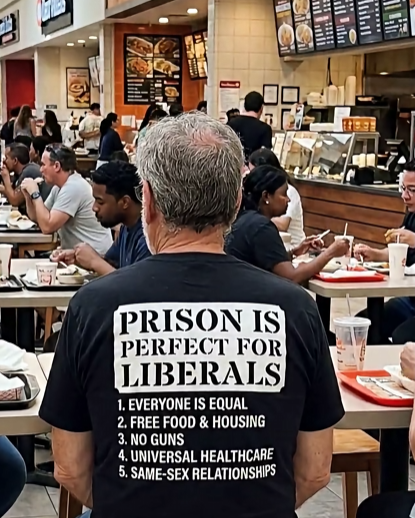
    We saw this picture, and we wondered if our younger neighbors even know what the divides and factions in this country are really about. So, let us sum it up for you:

    The Right’s warning: If you rely on the government for your rent, food, and healthcare, you surrender your freedom. The moment an authority feeds you and houses you, it controls you. In exchange for zero risk, you get zero independence – which is exactly how a prison operates. True freedom is hard, risky, and requires taking care of yourself.

    The Left’s warning: If a medical emergency bankrupts you and your entire paycheck goes to rent and groceries, you aren’t free either. Working 60 hours a week just to stay off the street isn’t independence; it’s exploitation. True freedom requires a basic floor – healthcare, fair pay, and housing – so you actually have the power to live your life.

    One side sees dependence on the state as the ultimate trap. The other sees poverty and corporate greed as the ultimate trap.

    And neither side is wrong, but the only right way forward is a compromise everyone can live with.

  • Evening Wrap for Wednesday July 9, 2026

    Evening Wrap for Wednesday July 9, 2026

    Evening Wrap for Wednesday July 9, 2026

    A recap of what’s important in the Southern Tier

    Zero noise. Just the facts.

    Built for younger viewers. News can feel different now. And that is okay. We’re not your grandparents’ news.

    🌍 World News

    • Russia banned diesel exports after Ukrainian drone strikes.

    • China faces severe storm threats this year.

    🇺🇸 The Nation

    • CDC nominee Erica Schwartz gets a July 15 hearing.

    • Senate panel weighs tougher Chinese automaker restrictions.

    • U.S. traffic deaths hit a 2014 low.

    🍎 State & Regional

    • Binghamton University opened a new cleanroom.

    • The facility supports chip workforce training.

    • Southern Tier private jobs reached 209,100.

    🌦 Weather Now

    • Binghamton is mostly clear at 72 degrees.

    • Humidity remains active across the region.

    📅 Three-Day Forecast

    • Friday: humid, with showers and thunder possible.

    • Saturday: sunny, pleasant, and less humid.

    • Sunday: mostly sunny and pleasant.

    🏟 Sports Highlights

    • Rumble Ponies beat Hartford, 10-4.

    • Black Bears signed goalie Graham Burke.

    • Mets outslugged Kansas City, 16-12.

  • A Slap in the Face Still Stings: How a Decade-Old Name Change Helped Break Correctional Morale

    A Slap in the Face Still Stings: How a Decade-Old Name Change Helped Break Correctional Morale

    A Slap in the Face Still Stings: How a Decade-Old Name Change Helped Break Correctional Morale

    The Name Change Was Not Cosmetic. It Was One of the First Cracks.

    A CompanyXR Media Group Editorial

    New York cannot fix the abuse crisis inside its prisons if it keeps pretending this culture appeared out of nowhere. The brutality, the coverups, the staff resentment, the illegal strike, the hollowed-out mentorship, the mandatory overtime, the weak accountability, and the open contempt between Albany and the prison floor are not separate problems. They are pieces of the same collapse.

    One of the earliest cracks came when New York erased the old Department of Correctional Services identity and replaced it with the Department of Corrections and Community Supervision. That was not just a name change. It was a message. For many correction officers, it landed as a slap in the face.

    For decades, Correctional Services had a professional identity. Hard, imperfect, institutional, and often criticized, but understood by the people who wore the uniform. The mission was custody, order, control, facility safety, and prison security. Then the state merged that world with parole and community supervision, bringing together two different missions, two different professional cultures, and two different languages of public safety.

    Reentry matters. Rehabilitation matters. Community supervision matters. But New York did not successfully build a shared correctional mission. It stapled two different worlds together and expected the workforce to salute the new flag. The rebranding and merger marked, among other issues, a major morale rupture inside New York’s correctional workforce. To many officers, it became one more insult forced down their throats by progressive-minded lawmakers and agency leadership who seemed far more interested in reshaping the language of corrections than understanding the reality of prison work.

    Then came the closures. More prisons shut down. More rural communities were told to absorb the consequences. More officers saw the state treating correctional facilities not as public-safety institutions, local employers, and dangerous workplaces, but as budget lines and political liabilities. The prisons are overwhelmingly located outside the political and media center of the state, and the WilmerHale report notes that many incarcerated people from urban areas serve their sentences in non-urban communities staffed by officers from those areas.

    There was also a political and demographic fault line the state never honestly confronted. Many prisons are located in rural and Upstate communities where prison employment, law enforcement, military service, family tradition, and conservative politics often overlap. Meanwhile, the policy power center is Democratic-controlled Albany. That does not make every correction officer Republican, and it does not make every reform Democratic theater, but it does help explain why many officers experienced the state’s prison reforms not as workplace policy, but as cultural attack.

    HALT was imposed on the correctional workforce, and to many officers, it landed like another mandate from Albany with no real-world replacement plan. The state restricted one of the oldest control tools in corrections, but failed to pair that restriction with a serious incentive structure for good behavior, adequate programming, meaningful treatment capacity, enough staffing, or workable alternatives for dangerous and disruptive conduct. The report describes HALT as limiting segregated confinement, mandating programming and out-of-cell time, and prohibiting segregated confinement for special populations including those over 55, under 21, pregnant or postpartum, disabled, or diagnosed with serious mental illness.

    That is why HALT is so deeply resented inside the workforce. Many DOCCS staff did not see it as reform. They saw it as disarmament. Albany had taken away punishment without creating incentive, limited segregation without building a behavioral system to replace it, and then left frontline officers to manage the fallout inside facilities already under pressure from violence, drugs, mental illness, staffing shortages, and mandatory overtime.

    And here is the hard truth: correction officers were right about their grievances. They were right about unsafe working conditions, understaffing, mandatory overtime, drugs flooding facilities, violence inside the walls, and the state changing rules without giving the system the staffing, treatment infrastructure, disciplinary alternatives, programming capacity, and facility-level support needed to make those reforms work safely. The WilmerHale report confirms that both incarcerated individuals and DOCCS staff feel unsafe, and that staffing shortages create a cycle of less programming, worse conditions, more misbehavior, more stress, attrition, and fewer staff.

    But their institutional response was dead wrong. Instead of forcing Albany into a serious implementation plan, too much of the correctional establishment retreated into resentment, obstruction, silence, deliberate indifference, and outright abuse. Instead of proving that frontline officers deserved a seat at the reform table, parts of the system proved why outside oversight had become necessary. The workforce was right about the failures, but the workforce culture was wrong in how it answered them.

    Based upon information and belief, we believe the 2011 rebranding and merger marked a major morale rupture inside New York’s correctional workforce. Many older, retirement-ready correction officers who might otherwise have stayed well beyond pension eligibility, as had long been common in New York corrections, instead chose to leave. They did not just retire from a job. They walked away from an identity they believed the state had discarded.

    That matters because veteran correction officers were not merely payroll numbers. They were the informal training system. They were the mentors, the block-level stabilizers, the staff who knew how to read a unit before it exploded. When that generation left, the agency lost institutional memory at the exact moment it needed steady leadership the most. The public record now confirms the broader crisis of retirement, retention, and morale, including the report’s finding that security staff numbers have steadily decreased since 2019 and dropped sharply from the end of 2024 to October 2025.

    When experienced officers leave, rookies do not learn from calm veterans who know how to run a block without feeding chaos. They learn from whoever remains. If the remaining culture is bitter, aggressive, exhausted, and convinced that the state has betrayed them, that becomes the real training manual. Not the academy. Not policy. The floor. That is where New York’s prison culture has been rotting.

    The WilmerHale report states that reported uses of force in DOCCS facilities more than tripled over the past decade despite a decline in the incarcerated population, rising from approximately 6,000 in 2016 to approximately 22,000 in 2025. It also found that Mid-State had the highest number of OSI complaints in 2025 for alleged staff assault or excessive or unnecessary use of force, while Marcy ranked tenth among DOCCS facilities.

    This is not a normal workplace problem. This is institutional failure, and we need to be clear about the scale of that failure. When we talk about failures inside New York’s prison system, we are not talking about paperwork mistakes, policy confusion, or ordinary bureaucratic dysfunction. We are talking about systemic abuse, violence, retaliation, medical indifference, false reporting, coverups, humiliation, and the degradation of human beings held in state custody. We are talking about conditions and conduct that, in our view, reach the level of crimes against humanity and demand to be treated with that level of seriousness.

    No culture rots this completely by accident. It rots because leadership allows it to rot. It rots because warnings are ignored, complaints are buried, bad actors are protected, oversight is weak, discipline is negotiable, and the people with the power to intervene keep choosing delay over confrontation. The WilmerHale report documents not merely isolated misconduct, but systemic shortcomings in oversight, accountability, training, discipline, medical care, mental health care, staffing, and culture.

    That is the failed leadership at the center of this crisis: not reform itself, not the idea of rehabilitation, and not the demand that incarcerated people be treated as human beings, but the state’s refusal to manage the system it chose to reshape. Albany and DOCCS leadership allowed the correctional culture to decay so completely that incarcerated people were abused and degraded, correction staff were abandoned to dangerous and unsustainable conditions, families on both sides were ignored, and New York’s own prisons became moral evidence against them.

    It is the moral failure Albany still refuses to name. Still refuses to own and doesn’t appear to have the will or the care to fix. New York’s prisons are failing incarcerated people and correctional staff at the same time. Those truths are not in conflict. They are the same story.

    Inside the walls, many staff have become disgruntled, resentful, bitter, exhausted, and convinced they have been abandoned by leadership. They believe Albany pities incarcerated people at the expense of the officers ordered to supervise them. They believe lawmakers listened to advocates, reports, lawsuits, and reform groups, but not to the people working forced overtime inside violent, drug-soaked, understaffed facilities.

    That perception matters because resentment has consequences. But the harder truth is this: state leaders appear to care about no one trapped inside New York’s broken correctional system – not the incarcerated, not the officers, and not the families waiting for someone to fix it.

    When staff believe leadership has chosen incarcerated people over them, the workplace becomes poisonous. Every reform becomes an attack. Every grievance becomes proof of betrayal. Every new policy becomes another slap from Albany. And inside that bitterness, abuse finds cover.

    But that does not make the staff the only victims. The abuses inside New York’s prisons are not rumor. They are documented. They are proven. They are part of the same culture we began calling out when we showed Lady Liberty with blood on her hands. The WilmerHale report documents the killings of Robert Brooks and Messiah Nantwi, prior incidents of excessive force, false reports, efforts to conceal misconduct, failures to intervene, weak accountability, and systemic problems in oversight, training, discipline, grievance systems, medical care, mental health care, staffing, and culture.

    The report says Robert Brooks was beaten in the infirmary at Marcy while handcuffed, that other officers and staff failed to intervene, and that body-camera footage showed Use of Force Reports filed after the beating were false. It also says Messiah Nantwi was beaten to death during the illegal strike, and that according to the indictment, staff conspired to cover up the killing by mopping up blood, coordinating stories, planting a weapon, and filing false reports.

    That is not reform politics. That is not labor tension. That is a correctional culture in collapse.

    The realer truth is this: correction staff were victims too – not innocent victims, not helpless victims, and not victims whose suffering excuses what followed. They were victims of understaffing, forced overtime, unsafe facilities, failed leadership, political arrogance, broken implementation, and a state that kept demanding more while giving them less. The report confirms the system’s central failure: both incarcerated people and staff feel unsafe, and the staffing crisis feeds instability and danger for both.

    But too many staff responded to being victimized by victimizing the people beneath them. That is where grievance became corruption, where resentment became abuse, and where legitimate workplace complaints lost moral authority because violence, retaliation, false reporting, medical indifference, silence, and coverups were allowed to become part of the operating culture. The staff were failed by Albany and agency leadership, but incarcerated people were then made to pay for that failure with their safety, dignity, health, and in the cases of Robert Brooks and Messiah Nantwi, their lives.

    The people locked inside these prisons are being failed by violence, abuse, retaliation, medical neglect, mental-health collapse, failed programming, weak oversight, and a custody culture that too often treats them as enemies instead of human beings in state care. Correction staff are being failed by dangerous conditions, poor staffing, forced overtime, weak leadership, political whiplash, and reforms that too often arrive without the resources needed to make them real. Families on both sides are being failed by a state that keeps producing trauma and calling it management.

    Now all of New York is paying for it. Families are paying. Communities are paying. Taxpayers are paying. Rural prison towns are paying. Crime victims are paying. Formerly incarcerated people trying to come home are paying. Good correction staff who still believe in professionalism are paying. Every New Yorker who expects the state to operate a lawful, humane, secure correctional system is paying.

    This is not just a prison problem. It is a New York problem, and it must be fixed.

    A professional correctional workforce needs veteran leadership, institutional memory, real training, lawful authority, safe staffing, mental-health support, and a mission it can believe in. It needs officers who know when to stand firm, when to de-escalate, when to separate people, when to call medical, when to document, when to walk away, and when to tell another officer, “Enough.” When those people leave, prisons do not become softer. They become more dangerous.

    New York must be honest enough to say two things at once. Correction officers who abuse incarcerated people must be removed, prosecuted where appropriate, and permanently barred from returning to positions of power over confined human beings. At the same time, New York cannot rebuild safe prisons by treating every correction officer as disposable, every workforce concern as union propaganda, and every reform as successful simply because lawmakers passed it.

    The old DOCS identity was not perfect. Far from it. It carried its own history, failures, brutality, silence, and institutional arrogance. But it gave the workforce a clear professional center. DOCCS was supposed to become something better: custody, accountability, rehabilitation, reentry, supervision, and public safety in one modern system. Instead, the state created a hybrid agency without first building a shared culture strong enough to hold it together.

    A prison system cannot run on resentment, retaliation, silence, exhausted rookies, angry veterans, weak leadership, political slogans, and union bunker logic. It cannot run on Albany’s arrogance, staff abuse, failed implementation, broken oversight, and families begging for basic humanity from outside the walls. If New York wants real correctional reform, it must stop pretending the name change was just a name change.

    It was a signal. The workforce heard it, the culture changed, and the people locked inside state prisons have been paying the price ever since.

  • SOUTHERN TIER TODAY – Wednesday, July 8, 2026

    SOUTHERN TIER TODAY – Wednesday, July 8, 2026

    SOUTHERN TIER TODAY
    Wednesday, July 8, 2026
    From the NewsXR™ News Team

    In the World Today:

    The top world story today is the sharp escalation between the United States and Iran after U.S. forces launched strikes against Iranian targets following attacks on commercial vessels in the Strait of Hormuz. Reuters reported that President Donald Trump declared the interim accord with Iran “over” after new attacks and renewed hostilities in the Gulf region, raising concerns about oil prices, military escalation, and the future of cease-fire negotiations.

    Elsewhere internationally, the FIFA World Cup continues drawing massive crowds and global attention, but the tournament is also unfolding alongside serious geopolitical strain and violence abroad. Reports of civilians trying to follow the tournament from conflict zones have placed the world’s largest sporting event against the backdrop of war, displacement, and international pressure.

    Australia is also moving further into high-tech beach monitoring after a series of deadly shark encounters. Expanded drone surveillance along popular coastlines is being used to help lifeguards and public safety officials spot great white sharks and warn swimmers before danger reaches the shoreline.

    In the Nation Today:

    The top national story is the Justice Department’s 2026 National Health Care Fraud Takedown, which charged 455 defendants, including 90 medical professionals, in alleged health care fraud and opioid abuse schemes involving more than $6.5 billion in false claims. The DOJ said the sweep included significant patient harm, including death, and described it as a major national enforcement action against health care fraud.

    In New York, state officials are moving ahead with new deer population controls aimed at increasing antlerless deer harvests. The Department of Environmental Conservation says the regulations are intended to help manage the state’s deer population, which affects road safety, agriculture, forest health, ticks, and local ecosystems across rural and suburban communities.

    In the Southern Tier Today:
    Binghamton Shooting Investigation Continues After Fourth of July Violence

    Binghamton Police are continuing to search for a suspect after a Fourth of July shooting left one man hospitalized near Gerard Avenue and Walnut Street.

    Police said the shooting happened around 9 p.m. during a large gathering when a physical altercation broke out and a suspect fired one round, striking a man in the leg. WBNG reported that police were searching for the suspect after the victim was hospitalized.

    The case is another reminder of how quickly a holiday gathering can turn into a serious public safety incident. For residents in Binghamton’s West Side neighborhoods, the shooting raises familiar questions about late-night crowd safety, gun access, neighborhood response, and whether enough is being done to prevent violent disputes before they escalate.

    The investigation remains active, and anyone with information should contact Binghamton Police.

    2 Other Stories

    • Hawley Street Encampment and Housing Fallout Continue: The protest encampment outside the Broome County Office Building remains part of the local and regional conversation after the deadly Knights Inn fire in Endwell. The encampment was cleared after city officials issued notice, but housing advocates continue pressing for answers about emergency housing placements, motel safety, public oversight, and how vulnerable people are protected after being placed through government systems.
    • Food Bank of the Southern Tier Receives Major Community Boost: The Food Bank of the Southern Tier will receive $53,236 through Wegmans’ Fill the Bus campaign. WBNG reported that Wegmans customers raised $769,300 companywide during the donation scanning campaign, with the Southern Tier total supporting local food bank work.

    Police & Court Blotter

    • Thomas Murray, 24, of Binghamton, was indicted by a federal grand jury on charges of distributing and possessing child pornography. Federal prosecutors said the indictment alleges distribution through an online messaging service and possession involving electronic devices. The charges remain accusations unless proven in court.
    • Thomas E. George III, 49, of Binghamton, was convicted by a Broome County jury of second-degree criminal possession of a weapon after Johnson City police found a loaded handgun concealed in his waistband during a traffic stop. Authorities also reported methamphetamine in the case, and George faces a possible state prison sentence.
    • Sean Anthony Haynes, 37, of Johnson City, was arrested by New York State Police at Binghamton and charged with fifth-degree criminal possession of a controlled substance, a felony, after a motorcycle traffic stop on Broome Corporate Parkway. Troopers reported suspected crack cocaine during the investigation. The charges remain accusations unless proven in court.
    • Binghamton Police continue investigating the Gerard Avenue shooting, where a man was shot in the leg during a Fourth of July fight. Police said the suspect fled before officers arrived, and no arrest had been announced in the latest local reporting.
    • New York State Police investigated a rollover crash on Interstate 81 in Lisle that injured five people after a Chevrolet SUV overturned. The crash remains part of a larger regional public safety picture following the holiday travel period.
    • Cortland Police continued a regional search tied to a shooting incident near the edge of Broome County’s wider news area. Police said they were looking for a suspect and an accomplice after gunfire was reported near Union Street, drawing regional attention because violent cases near county lines can involve multiple agencies and communities.

    Weather & 5-Day Forecast

    The Southern Tier is getting a comfortable midsummer break after recent heat, humidity, and flood concerns. Wednesday brings early patchy fog followed by partly sunny skies and seasonable warmth, while Thursday and Friday bring the next chances for showers and thunderstorms. The weekend trends drier and more pleasant.

    Wednesday, July 8: Patchy morning fog, then partly sunny. High 82, low 64.
    Thursday, July 9: Partly sunny with a slight afternoon shower or storm chance. High 85, low 65.
    Friday, July 10: Scattered showers and afternoon thunderstorms. High 81, low 62.
    Saturday, July 11: Drying out with partly cloudy skies. High 80, low 61.
    Sunday, July 12: Mostly sunny and pleasant. High 82, low 62.

    Local Sports Update (Detailed)

    • Rumble Ponies Rally in Hartford: The Binghamton Rumble Ponies snapped a rough stretch with a 10-4 win over the Hartford Yard Goats, using a six-run eighth inning to take the series opener. OurSports Central reported that JT Schwartz hit his ninth home run and Binghamton came alive late at Dunkin’ Park.
    • Black Bears Add Rookie Goaltender Graham Burke: The Binghamton Black Bears announced Graham Burke as their first goalie signing of the summer for the 2026-27 season. The team said Burke recently completed his NCAA Division III career at UMass Dartmouth and posted a .918 save percentage with the Corsairs.
    • STAC Championship Format Changes Ahead: The Southern Tier Athletic Conference is moving toward a Large School and Small School championship format for the 2026-27 school year. The change is expected to reshape postseason competition and create more balanced championship paths for regional high school athletes.
    • Corning Track and Field Earns National Attention: The Corning boys’ 4xMile relay team’s national-level success gives the Southern Tier another strong high school sports storyline, with regional athletes continuing to show they can compete beyond Section IV and state competition.
    • Youth and Community Sports Stay Active Across the Region: Summer sports remain busy across the Southern Tier, with baseball, softball, youth camps, golf, and community tournaments keeping local athletes and families connected through the heart of the season.

    Good News Story
    Food Bank of the Southern Tier Receives More Than $53,000 Through Wegmans Campaign

    The Food Bank of the Southern Tier is receiving $53,236 through Wegmans’ Fill the Bus campaign, giving the region a major community win during the summer months.

    WBNG reported that the campaign ran from June 3 to June 17 and that all proceeds support local Feeding America food bank partners. For families, children, seniors, and working households dealing with food insecurity, support like this can translate into meals, stability, and relief when summer can place extra pressure on household budgets.

    It is also a reminder that the Southern Tier keeps showing up when people need help.

    Gen Z Summary

    The Southern Tier has a lot happening today. Globally, the U.S. and Iran situation is getting seriously tense after attacks near the Strait of Hormuz and U.S. retaliatory strikes. Nationally, the DOJ announced a massive health care fraud takedown, and New York is moving ahead with deer population rules that could affect roads, farms, forests, and hunters.

    Locally, Binghamton Police are still investigating the Fourth of July shooting near Gerard Avenue and Walnut Street. The Hawley Street housing protest and Knights Inn fallout are still part of the regional conversation, and the police blotter is busy with federal charges, weapons cases, crash investigations, and shooting updates.

    Weather is finally giving us a little peace with a comfortable midsummer break, but storms are creeping back later this week. Sports are moving too, with the Rumble Ponies getting a big win in Hartford, the Black Bears signing a rookie goalie, STAC changing its championship format, and local athletes staying active across the region.

    The big community W is the Food Bank of the Southern Tier getting more than $53,000 through Wegmans’ Fill the Bus campaign. That is real help for real people.

    👉 Drop your comments below.

    📰 🌐 📱
    © 2026 CompanyXR Media Group – All Rights Reserved
    #NewsXR #SouthernTier #BroomeCountyNews