NewsXR News Tonight
Friday, October 23, 2026
Good evening, America. Here’s where things stand in our world tonight.
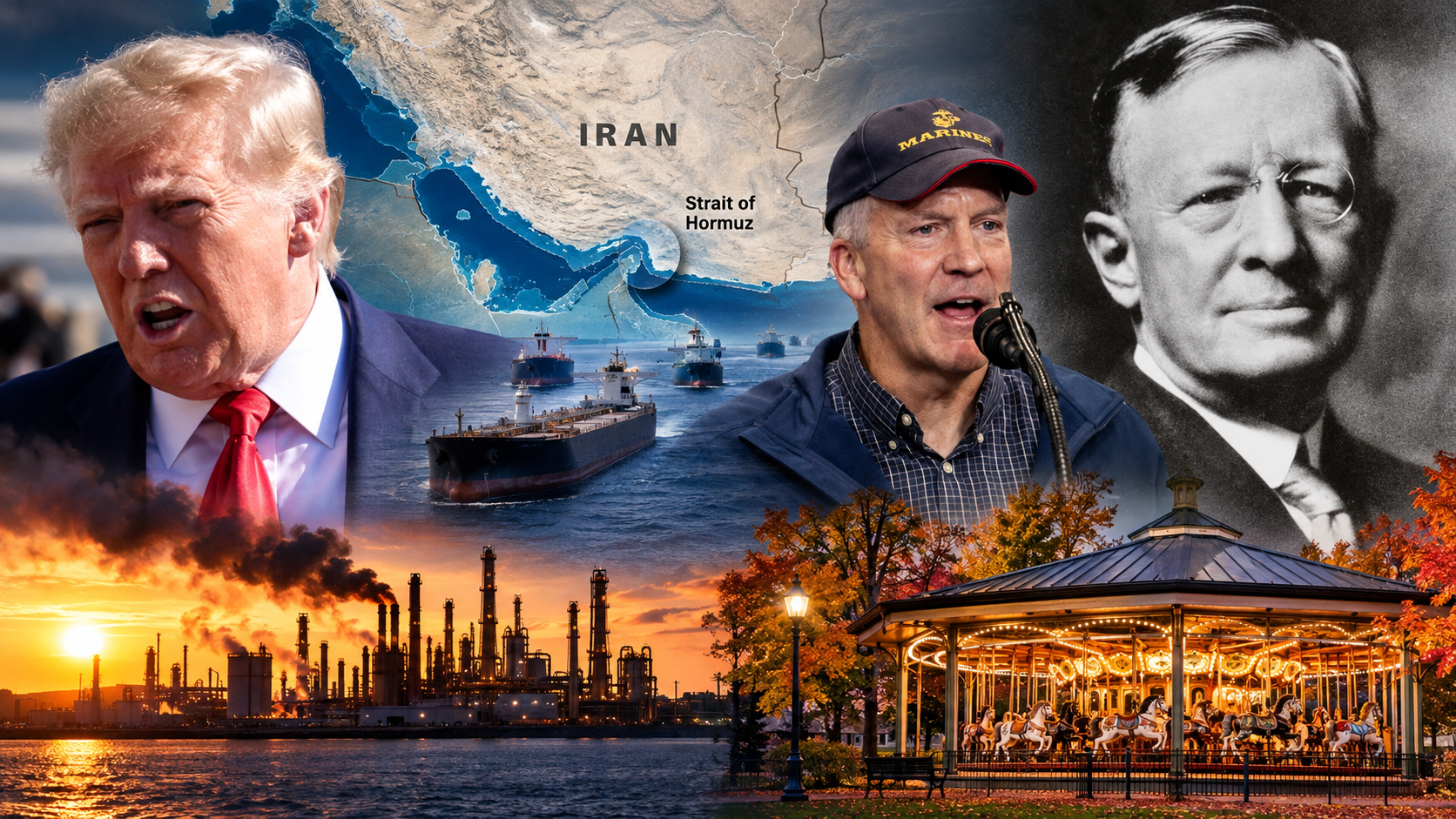
Before you settle in for the weekend, let’s get you caught up. President Trump is talking about ending the war with Iran, but the fighting continues and oil prices are putting more pressure on household budgets. Washington has entered a new legal battle over an upcoming Senate election, a federal appeals court has issued a consequential immigration ruling, and nearly a million seniors are facing changes to their Medicare Advantage coverage. We’ve also got encouraging news from Ukraine, a serious website security warning, and a look at the World Series.
And tonight, we’re doing something special. We’ll close by remembering George F. Johnson, an Upstate New York industrialist who believed American workers deserved a Square Deal. His story is a reminder of what a successful American company can mean to the people and communities that help build it.
TONIGHT: TOP STORY
Trump Says Iran War Could End Quickly, but What Happens Next?
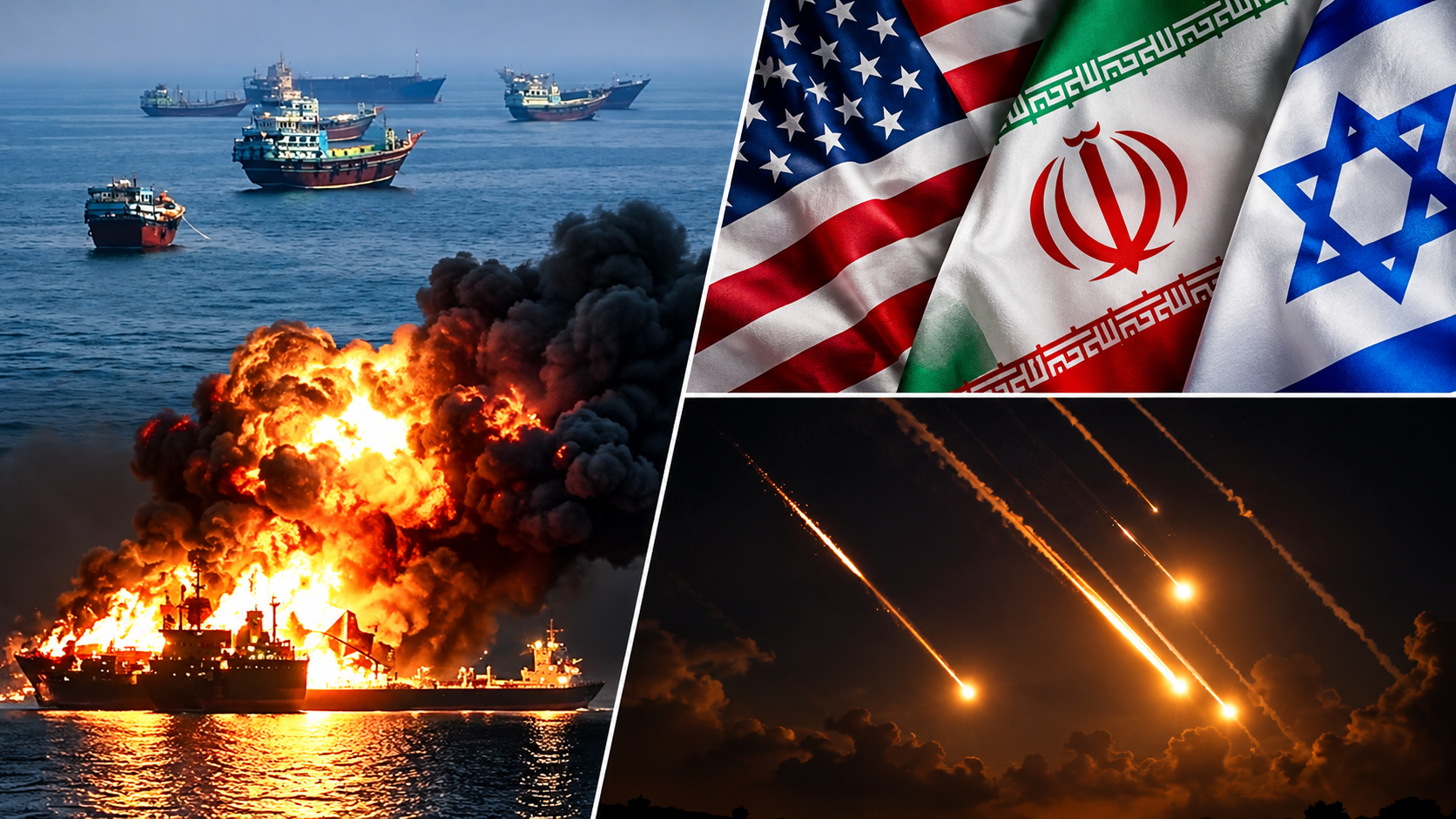
President Donald Trump says the United States could bring the war with Iran to a quick conclusion, but he’s questioning whether Washington should end the fighting decisively or allow the conflict to wind down gradually. Speaking with reporters on the White House South Lawn Friday, Trump said oil continues moving through the Strait of Hormuz and maintained that American military objectives are being achieved. His comments suggest the administration is considering how to bring the conflict to an end, although no comprehensive peace agreement or timetable has been announced. The question now is whether diplomacy can produce a settlement before another major round of military operations.
The uncertainty is particularly troubling for people living in the region and American military personnel serving there. Iran has threatened retaliation against U.S. bases and regional infrastructure if additional strikes occur, while American and Israeli military planners have reportedly been considering renewed attacks on Iranian nuclear, missile, and energy facilities. Those preparations do not establish that another attack has been ordered. But they leave open the possibility of further fighting even as the president discusses ending the war.
Shipping Through the Strait of Hormuz Remains Dangerous
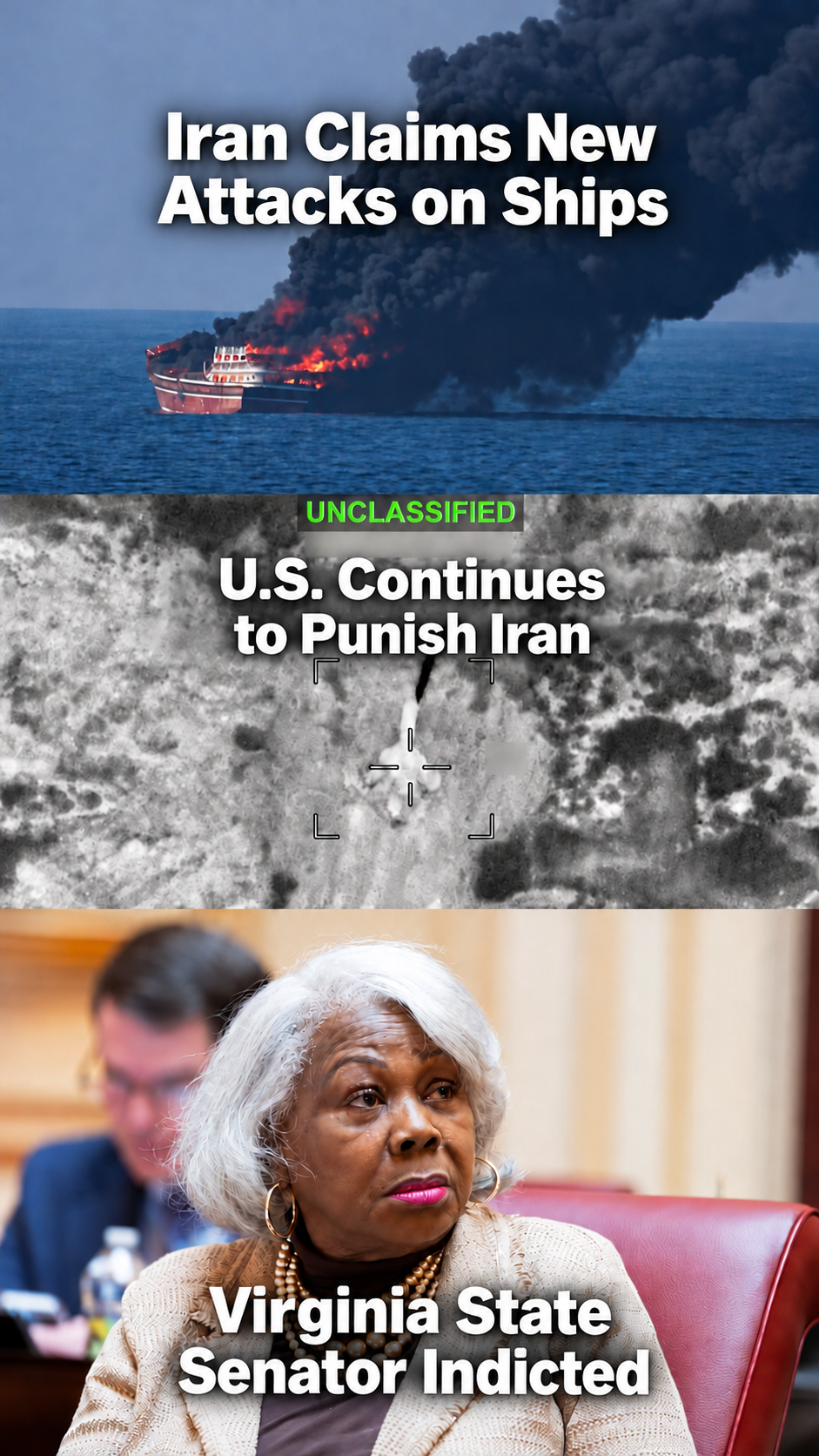
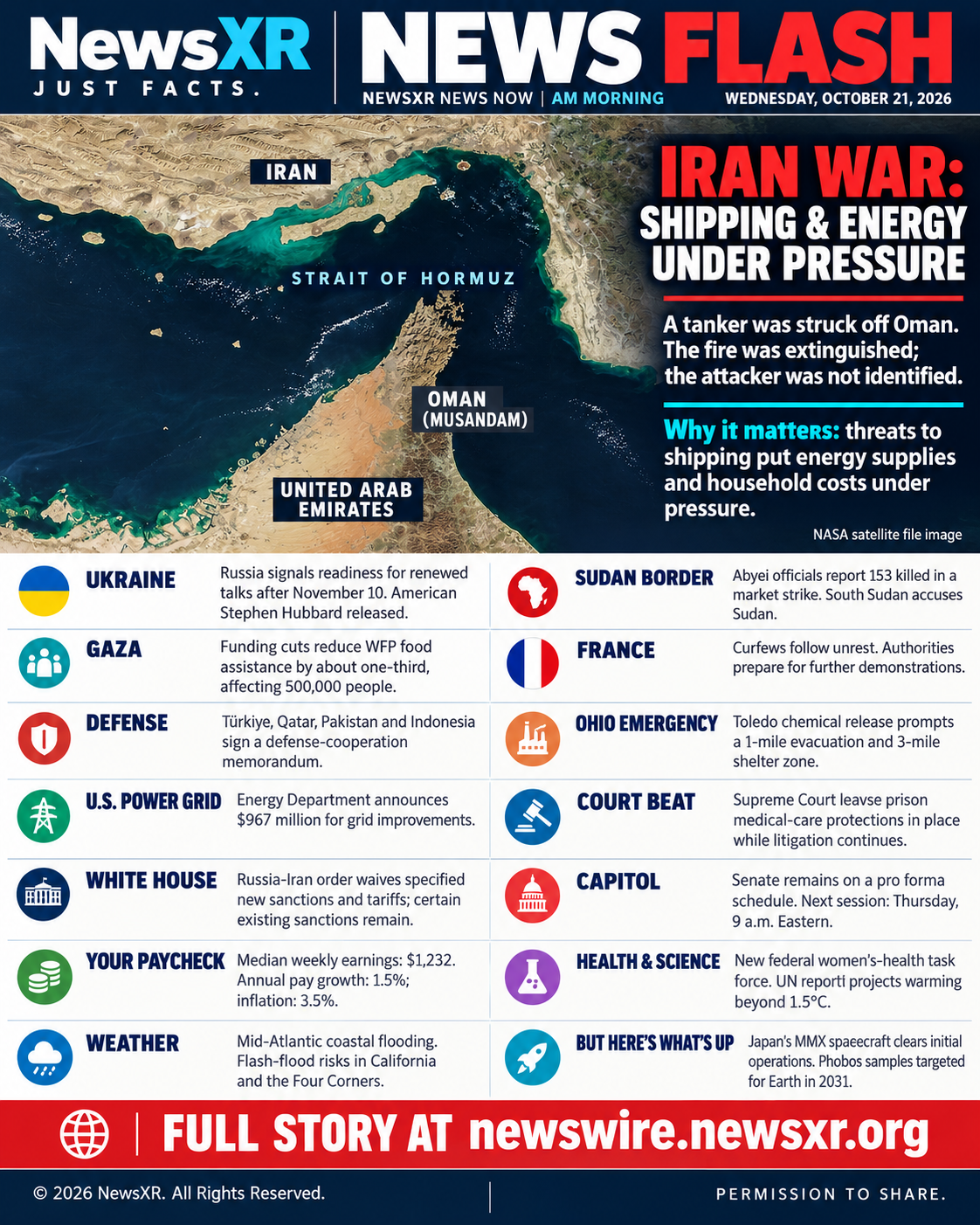
The Strait of Hormuz remains one of the most dangerous shipping routes in the world. Iran’s Islamic Revolutionary Guard Corps reported that seven commercial vessels were struck Thursday, including ships allegedly attacked by fast boats and others damaged by naval mines. The full extent of those claims has not been independently established, but attacks and maritime security warnings have already disrupted shipping throughout the Persian Gulf. For crews navigating the waterway, the danger is immediate, and for companies transporting oil and commercial goods, the costs continue to rise.
A Reuters review of maritime information also points to extensive damage to commercial shipping since the war began. Some shipowners are accepting extraordinary risks because freight rates have risen sharply, with reported daily rates for certain vessels exceeding $1 million. That creates a difficult situation in which transporting oil can be enormously profitable while exposing crews, ships, and cargo to serious danger. And the consequences don’t end when those vessels reach port.
Oil Prices Rise, and Americans Feel the Pressure
Brent crude finished Friday near $117 a barrel, while U.S. benchmark crude rose above $103. Those prices reflect continuing concern over Middle Eastern oil supplies and the possibility of additional military operations. For Americans watching the cost of gasoline, diesel, heating oil, and groceries, this isn’t simply a distant international crisis. Higher energy costs can eventually reach households through transportation, manufacturing, farming, and the delivery of everyday necessities.
Farmers are especially vulnerable as diesel prices rise during the fall harvest season. Trucking companies face higher operating expenses, businesses must account for more expensive deliveries, and families already struggling with inflation have another concern to manage. Retail prices do not necessarily move immediately with crude oil, but prolonged disruptions increase the pressure. With the midterm elections approaching, the economic consequences of the war are becoming part of America’s domestic conversation.
Oil Spill Adds Another Threat to the Gulf
The conflict is also creating environmental concerns. Authorities in the United Arab Emirates have temporarily closed beaches near Umm Al Quwain and parts of Sharjah following an oil spill affecting coastal waters. Investigators have not publicly established the precise cause, although maritime analysts have examined a possible connection to a tanker damaged during an attack. Cleanup crews are working to protect beaches, marine life, and coastal communities.
For Gulf nations, protecting seawater is especially important because desalination facilities provide drinking water to millions of residents. Oil pollution can threaten fisheries, tourism, marine ecosystems, and infrastructure far beyond the immediate location of a damaged vessel. It’s another reminder that the consequences of war extend well beyond the battlefield. A single maritime incident can affect the environment and livelihoods of people who had no part in the fighting.
TONIGHT: WORLD NEWS
A Humanitarian Breakthrough Offers Hope to Civilians Trapped in Ukraine
There is some encouraging news tonight from Ukraine. The White House announced Friday that First Lady Melania Trump helped negotiate a temporary humanitarian ceasefire in Oleshky, a Russian-occupied city where residents have endured years of fighting, damaged infrastructure, and severe shortages. The agreement is scheduled to begin October 29 and would permit aid deliveries and civilian evacuations. For families who have been unable to escape, the arrangement offers the possibility of relief.
Oleshky had approximately 24,000 residents before Russia’s invasion, but the White House estimates that only 1,700 to 2,000 remain, including about 50 children. Many are elderly, and residents have faced dangerous roads, limited medical supplies, contaminated water, and shortages of food. The destruction of the Kakhovka Dam in 2023 added devastating flooding to an already desperate situation. Some residents have reportedly been reduced to extraordinary measures simply to find enough to eat.
Under the announced agreement, civilian teams would help deliver assistance and coordinate evacuations for residents wishing to travel to Ukrainian-controlled territory or Russia. The First Lady’s office says the arrangement grew out of earlier efforts involving the reunification of Ukrainian children with their families. The ceasefire has not yet taken effect, and its success will depend on whether the parties honor the agreement. But for someone trapped without adequate food or medicine, even a temporary opportunity to leave safely could mean everything.
Seven Killed in Attack on Jordanian Church
Jordan is mourning after gunmen attacked a church gathering during a funeral Friday, killing seven people and injuring approximately 40 others. The shooting occurred at Hamoud Church in the Karak governorate, where mourners had gathered to pay their respects. Authorities described the violence as a terrorist attack and launched an extensive search for those responsible. Witnesses reported scenes of panic as people attempted to escape the gunfire.
King Abdullah visited Karak and promised that those responsible would face justice, while United Nations Secretary-General António Guterres condemned the attack. Investigators have not publicly established the attackers’ motives or confirmed whether they belonged to a larger militant organization. Jordan has generally experienced greater internal stability than several of its neighbors, making the violence particularly alarming. For the families who gathered to mourn one loss and suffered several more, the tragedy is deeply personal.
France Faces Another Weekend of Demonstrations
France is preparing for another difficult weekend following days of demonstrations, rioting, and property destruction fueled by anger over living costs and economic conditions. Violence in several major cities has disrupted businesses and prompted authorities to expand security operations ahead of additional protests Saturday. President Emmanuel Macron has condemned the destruction and directed officials to review their response. Demonstration organizers continue raising concerns about energy prices and household finances.
The unrest is also unsettling financial markets. Investors are demanding higher returns on French government debt relative to German bonds, reflecting concerns about political and fiscal stability. For ordinary French families, the underlying issues remain familiar to Americans: expensive energy, strained household budgets, and uncertainty about economic conditions. The government now faces the challenge of protecting lawful demonstrations while preventing additional violence.
North Korea’s Kim Jong Un Calls for Stronger Combat Units
North Korean leader Kim Jong Un has directed army commanders to strengthen their units and prepare them to operate more independently. His instructions came during a two-day military conference held October 22 and 23 in Pyongyang, according to state media reporting released Saturday morning in Korea. Kim called for the development of elite combat companies as part of the country’s continuing military modernization efforts. The gathering followed the ruling Workers’ Party’s Ninth Congress earlier this year.
North Korea has continued emphasizing conventional military readiness alongside its nuclear and missile programs. The latest directive reinforces those longstanding priorities but does not establish that a new military operation has been ordered. For neighboring countries and American forces stationed in the region, North Korea’s military development remains a significant security concern. Its relationship with Russia also adds another dimension to international efforts to contain regional tensions.
Powerful Earthquake Shakes China’s Tibetan Plateau
A magnitude 7.0 earthquake struck China’s Tibetan Plateau on October 22, according to the United States Geological Survey. The earthquake occurred northeast of Nagqu at an estimated depth of 18 kilometers. Federal geological estimates suggest approximately 132,000 people may have experienced moderate to severe shaking. Emergency officials are assessing the consequences in a remote region where difficult terrain and limited transportation can complicate rescue operations.
The earthquake’s magnitude and location are established, but initial population-exposure estimates should not be confused with confirmed casualty figures. Authorities must assess damaged communities and infrastructure before the full impact becomes clear. Aftershocks remain another concern following a major earthquake. We’ll continue watching for reliable information about the people and communities affected.
TONIGHT: NATIONAL NEWS
Justice Department Seeks to Intervene in Alaska Senate Election
The Justice Department has taken an extraordinary step involving Alaska’s upcoming Senate election, filing a lawsuit that could delay certification under certain circumstances if Republican Senator Dan Sullivan loses. The dispute centers on another candidate named Daniel J. Sullivan Jr., whose similar name has prompted concerns about voter confusion. The incumbent is competing against Democratic challenger Mary Peltola and other candidates in the November 3 election. President Trump publicly acknowledged directing the Justice Department to pursue the lawsuit.
Federal attorneys argue that the similarly named candidate could draw votes away from the incumbent through confusion rather than genuine voter preference. They are asking the court to intervene if the incumbent loses by a margin potentially affected by votes cast for the other Sullivan. Alaska’s Supreme Court previously rejected attempts to remove the additional candidate from the ballot. The federal lawsuit does not mean the election has been canceled or that a judge has agreed to block certification.
Alaska also uses ranked-choice voting, allowing voters to rank candidates in their preferred order. That makes the legal dispute particularly complicated because the system includes procedures for redistributing votes when candidates are eliminated. For Alaskans, the immediate concern is whether their votes will be counted and certified according to the state’s election laws. With Election Day just 11 days away, the case has become one of the most consequential election-related legal disputes in the country.
Virginia Senate Leader Indicted in Federal Cannabis Case
Virginia State Senator L. Louise Lucas, one of the state’s most powerful Democratic lawmakers, has been charged in a federal investigation involving an alleged illegal cannabis distribution operation. Prosecutors accuse Lucas and several associates, including family members, of participating in unlawful activity involving marijuana sales, financial transactions, and an alleged criminal enterprise. The indictment names seven defendants and includes racketeering and money laundering allegations. Lucas, 82, serves as president pro tempore of the Virginia Senate.
Lucas has challenged the legitimacy of the prosecution and suggested that political considerations influenced the case. Federal officials maintain that the investigation concerns alleged criminal conduct. Virginia permits certain marijuana possession and personal use, but commercial recreational sales remain subject to restrictions that are important to the allegations. Lucas and the other defendants are presumed innocent unless and until proven guilty in court.
The indictment arrives shortly before the national midterm elections and is already becoming part of the political conversation in Virginia. But a criminal accusation is not a conviction, and the evidence will have to be tested through the judicial process. NewsXR will distinguish the government’s allegations from established findings as the case develops.
Pentagon Designates Confucius Institutes a National Security Concern
Defense Secretary Pete Hegseth announced Friday that the Pentagon has designated Chinese-funded Confucius Institutes associated with American universities as national security threats. The institutes have historically offered Chinese language instruction and cultural programming, but American officials have long questioned whether some programs also serve Chinese government political or intelligence interests. Hegseth alleged that certain organizations continued operating under changed names or institutional arrangements despite previous restrictions. The designation reflects the administration’s national security assessment.
The decision comes amid continuing American efforts to restrict foreign access to sensitive research, advanced technology, and defense-related information. Universities with Chinese-funded programs may face additional scrutiny concerning partnerships and institutional arrangements. The Pentagon’s allegations do not establish that every Chinese cultural or language program has participated in espionage. The next question is how the designation will be implemented and which institutions will be directly affected.
TONIGHT: COURT BEAT
Federal Appeals Court Limits Bond Hearing Rights for Detained Immigrants
A major federal appeals court ruling Friday could affect thousands of immigrants held in federal detention. The full Fifth U.S. Circuit Court of Appeals ruled 10-7 that certain immigrants detained during deportation proceedings do not possess a constitutional right to bond hearings beyond the procedures Congress has provided. The decision reverses an earlier ruling by a three-judge panel and represents a significant legal victory for the Trump administration. The Fifth Circuit covers Texas, Louisiana, and Mississippi, where substantial immigration detention operations are located.
The dispute concerns whether immigrants who entered the country without formal admission have a constitutional right to ask a judge for release while their cases proceed. The court’s majority concluded that federal immigration law determines the protections available in the circumstances addressed by the ruling. Dissenting judges warned that the decision could permit prolonged detention without sufficient judicial review. For affected families, the practical issue is whether someone may remain in custody for extended periods while waiting for an immigration case to be resolved.
The decision does not eliminate every form of judicial review available to immigration detainees. Related statutory questions are also moving through the courts, including matters before the Supreme Court. Nevertheless, Friday’s ruling narrows an important constitutional avenue for challenging detention in the Fifth Circuit. Its consequences could extend well beyond the immediate case as attorneys and immigration authorities respond.
Supreme Court Leaves Federal Prison Medical-Care Restrictions Blocked
The Supreme Court declined an emergency request Wednesday from the Trump administration seeking permission to enforce restrictions on gender-affirming medical care and related accommodations for transgender prisoners in federal custody. The decision leaves an existing lower-court injunction in place while litigation continues. The lawsuit concerns Federal Bureau of Prisons policy changes implemented following an executive order issued by President Trump. Lower courts found substantial legal problems with the agency’s justification for reversing established medical policies.
The Supreme Court’s decision is temporary rather than a final ruling on the underlying lawsuit. For affected prisoners, it means the challenged restrictions cannot immediately take effect under the existing court order. The case also raises broader questions about administrative decision-making and the medical responsibilities of federal correctional institutions. Those issues will remain before the courts as the litigation proceeds.
New Hampshire Voting Rules Change Ahead of Election Day
If you’re planning to vote in New Hampshire, take a moment to check which identification documents the state accepts. The Supreme Court issued an emergency order allowing the state to enforce restrictions on student identification cards during the November 3 election. State officials argue that the requirements establish consistent identification procedures, while voting rights organizations contend that the restrictions create unnecessary obstacles. The ruling permits enforcement of the challenged requirements without finally resolving every issue in the lawsuit.
The practical concern is straightforward, especially for students who may have relied on school-issued identification in previous elections. Voters should confirm the current rules before arriving at their polling location. Election laws can vary considerably from state to state, and a document accepted elsewhere may not satisfy New Hampshire’s requirements. A little preparation now can help avoid problems on Election Day.
TONIGHT: WHITE HOUSE
Iran Strategy and Russian Sanctions Keep Foreign Policy in Focus
President Trump’s comments about ending the war with Iran have renewed attention on the administration’s foreign policy priorities. Washington is balancing military operations, diplomatic possibilities, and the economic consequences of continued conflict. At the same time, the administration has exercised waiver authority under legislation imposing sanctions related to Russia and Iran. Those decisions affect the economic pressure placed on foreign governments and the administration’s flexibility in pursuing negotiations.
A presidential waiver does not repeal the underlying sanctions law. It temporarily suspends specified requirements under conditions established by Congress. The administration has cited energy-market stability and diplomatic considerations in explaining elements of its approach. The results will depend on whether the measures help produce meaningful negotiations or simply change the economic pressure surrounding the conflicts.
White House Announces Measures Aimed at Housing Costs
The administration is promoting executive measures intended to reduce certain expenses associated with homeownership. The announced policies address mortgage lending procedures, title insurance requirements, refinancing expenses, and manufactured housing. Federal agencies have been directed to examine ways of reducing administrative barriers and making housing finance more accessible. For first-time buyers and families considering refinancing, the proposals could eventually affect some transaction costs.
The important distinction is between announcing a policy and putting it into operation. Savings will depend on how federal agencies implement the directives and how lenders respond. Housing affordability also involves home prices, interest rates, property taxes, insurance, and local housing supply. The announced measures address portions of that larger problem, with their practical effects still to be determined.
White House Continues Search for New Press Secretary
The White House is continuing its search for a press secretary following Katie Zacharia’s October 16 departure. Zacharia served only briefly after replacing Karoline Leavitt, and her short tenure drew considerable public attention. Leavitt has since discussed assisting President Trump in finding a successor. The administration has not established a permanent replacement in the reporting available for tonight’s edition.
Although the departure occurred last week, the continuing vacancy matters to the administration’s communications with reporters and the public. The press secretary serves as a principal spokesperson for White House policy and daily developments. With major foreign policy questions and an approaching election, the position carries substantial responsibility. The search continues.
TONIGHT: CAPITOL
Campaign Spending Reaches Extraordinary Levels Before the Midterms
The battle for Congress is becoming enormously expensive. Political campaigns, party organizations, and outside groups are pouring money into advertising and voter outreach as November 3 approaches. Reports estimate that total political advertising expenditures for the 2026 cycle could reach approximately $11.6 billion, with more than $1 billion in advertisements scheduled during the final two weeks. Much of that spending is concentrated in competitive House and Senate races.
The amounts illustrate how deeply campaign financing has become embedded in American elections. Large donors and political action committees can finance extensive advertising campaigns, while individual candidates compete to raise enough money to remain visible. For voters, the result is a growing stream of political messages across television, social media, and other platforms. Federal campaign finance disclosures provide important information about where money comes from and how it is spent, although spending projections are not the same as completed expenditures.
Congress Looks at Data Center Energy Costs
Lawmakers are also examining proposals concerning the rapid growth of data centers and their demands on America’s electrical infrastructure. Artificial intelligence services require substantial computing capacity, prompting companies to construct large facilities that consume significant amounts of electricity. The expansion can bring investment, employment, and technological development to communities, but it can also place new demands on regional power grids. Residents and businesses are concerned about who will pay for the additional infrastructure.
Members of Congress are discussing permitting reforms, energy development, and measures intended to protect utility customers from certain costs associated with expansion. The questions are becoming increasingly relevant as communities consider proposals for new data centers. A major technology investment may benefit a region, but the financial arrangements surrounding power generation and distribution matter to everyone paying an electric bill. The legislation remains under discussion.
SPECIAL FEATURE: MIDTERM COVERAGE
America Votes November 3: The Final Stretch Begins
We’re now less than two weeks away from the November 3 midterm elections, and the stakes extend well beyond campaign advertisements and political arguments. Americans will decide all 435 voting seats in the House of Representatives, along with Senate races and numerous state and local offices. The results will shape congressional oversight, federal spending, legislation, and the direction of the next Congress. Tonight, we’re looking at three developments that deserve particular attention.
Alaska: A Senate Election Faces a Federal Court Challenge
The Justice Department’s lawsuit involving Alaska’s Senate race has become one of the most unusual election disputes of the year. Republican incumbent Dan Sullivan faces Democrat Mary Peltola and other candidates, including another man named Daniel J. Sullivan Jr. Federal officials contend that the similarity between the candidates’ names could confuse voters and influence the result. The government is seeking conditional relief that could delay certification if the incumbent loses by a margin potentially affected by votes cast for the other Sullivan.
Alaska’s Supreme Court previously permitted the additional candidate to remain on the ballot, and the state uses ranked-choice voting. Those circumstances make the legal questions more complicated than a simple dispute over similar names. No court has ruled that the election should be canceled or that its eventual results are invalid. The case raises important questions about federal intervention, state election authority, and how voting outcomes should be evaluated when claims of confusion arise.
House Campaigns Compete for Money and Momentum
House Speaker Mike Johnson has been working to secure additional campaign resources for competitive Republican districts as the election approaches. Democratic organizations are also directing substantial spending toward districts they consider competitive, while outside groups continue investing heavily in advertising. The resulting financial competition has intensified across several states. Candidates are attempting to persuade voters on issues ranging from the economy and healthcare to immigration and foreign policy.
Campaign spending can influence how often voters encounter a candidate’s message, but it does not determine an election outcome. The final decisions belong to voters, and the results will depend on ballots cast and counted. NewsXR will continue following documented campaign developments, official disclosures, and the issues that affect communities. We’ll distinguish political claims from established facts and polling estimates from actual election results.
Medicare Advantage Changes Bring Healthcare Into Focus
Nearly one million Medicare Advantage members are facing changes to their coverage next year. Humana and UnitedHealthcare announced Friday that they are discontinuing plans affecting approximately 990,000 members in 2027. Humana’s changes involve roughly 600,000 members, while UnitedHealthcare’s affect approximately 390,000. The companies cited rising medical costs and changing insurance-market conditions.
For seniors receiving notices that their plans are ending, the immediate concern is finding replacement coverage that meets their needs. Alternative plans may have different premiums, prescription benefits, provider networks, and out-of-pocket expenses. These changes do not mean the federal Medicare program is ending, but they can require affected members to make important enrollment decisions. Medicare’s annual open enrollment period runs through December 7, giving people an opportunity to compare available options.
The Polls Are Snapshots, Not Results
Several closely watched Senate races are drawing national attention, including contests in Alaska, Maine, Ohio, North Carolina, and Texas. Individual surveys have reported narrow margins in several states, but those figures reflect samples of voters at particular moments in time. Different polling methods and turnout assumptions can produce different estimates. A candidate leading a survey has not won an election.
As November 3 approaches, we’ll follow significant campaign developments, election procedures, legal disputes, and official results. We’ll also explain what proposed policies could mean in practical terms for Americans. Our goal is to give readers the information they need to understand the choices and developments shaping the election. The decisions belong to the voters.
TONIGHT: ECONOMY & BUSINESS
Rising Oil Prices Add Pressure to Household Budgets
If you’re watching every dollar that goes into the gas tank, Friday’s oil prices deserve your attention. Brent crude settled near $117 a barrel, while U.S. crude rose above $103 as the war with Iran continued threatening energy supplies. Oil markets respond to fears of disrupted production and shipping, sometimes before an interruption actually occurs. That uncertainty can increase costs for businesses transporting goods and eventually reach families through higher prices.
The timing is especially difficult for agricultural communities moving through harvest season. Diesel powers equipment and transportation, making farmers particularly sensitive to fuel increases. Manufacturers and delivery companies face similar pressures, and prolonged energy disruptions can affect the prices consumers pay. The longer the conflict continues, the more important its economic consequences become for American households.
Investors Question the Cost of Artificial Intelligence Expansion
Technology companies continue investing extraordinary amounts of money in artificial intelligence, including data centers, advanced computing equipment, and electrical infrastructure. Those investments could produce important new capabilities and future revenue, but investors are questioning how quickly the spending will generate returns. That uncertainty has contributed to volatility in technology shares. For Americans whose retirement savings are invested in broad stock-market funds, the performance of major technology companies can influence account balances.
The expansion also raises questions about electricity costs and infrastructure development. Data centers require reliable power, and communities are examining how new facilities might affect local utility systems. The economic opportunities are substantial, but so are the financial commitments. Investors, businesses, and communities are watching to see how those costs and benefits develop.
TONIGHT: HEALTH & SCIENCE
Major Website Security Flaws Put Millions of Systems at Risk
If you operate a website, this is one story worth checking before the weekend. Security researchers have disclosed two critical vulnerabilities in PHP, the programming language used by millions of websites and applications, including many associated with WordPress. The flaws, identified as CVE-2026-109618 and CVE-2026-109619, could allow attackers to execute unauthorized code on affected systems. Security updates were released October 21.
Organizations running vulnerable PHP installations should confirm that the appropriate updates have been applied. Website owners using managed hosting can contact their providers, while organizations operating their own servers should review their installed versions and configurations. The disclosure does not mean every PHP website has been compromised, but affected systems require prompt attention. For businesses, community organizations, and publishers, protecting the underlying software is essential to protecting the services they provide.
Medicare Plan Closures Require Attention From Affected Seniors
The Medicare Advantage changes announced by Humana and UnitedHealthcare also carry important healthcare consequences. Approximately 990,000 members will be affected by plans scheduled to end in 2027, and many will need to compare replacement coverage. Provider networks, prescription drug benefits, premiums, and out-of-pocket costs may differ from their existing plans. A change that looks minor on paper can matter considerably to someone who depends on particular doctors or medications.
Affected members should carefully review notices from their insurers and available enrollment options. The federal Medicare program itself is continuing, and the announcements concern specific private insurance offerings. Annual open enrollment runs through December 7. For anyone facing a change, understanding the details now can help prevent unwanted surprises when new coverage begins.
TONIGHT: NATIONAL PUBLIC SAFETY
Missouri Man Charged Following Fatal Hospital Shooting
Authorities in Independence, Missouri, have charged James F. Lawson with second-degree murder following a fatal shooting inside a hospital room at Centerpoint Medical Center. Police allege that Lawson shot his girlfriend while she was visiting him October 22. The incident has raised questions about the circumstances of the shooting and security inside healthcare facilities. Lawson is presumed innocent unless and until proven guilty in court.
The case is particularly disturbing because hospitals are places where patients, families, and healthcare professionals expect a safe environment. Investigators will need to establish how the incident unfolded and whether existing security procedures were followed. The criminal proceedings remain ongoing.
Jordan Church Attack Prompts Regional Security Response
Authorities in Jordan continue searching for those responsible for Friday’s deadly attack on a church gathering in Karak. Seven people were killed and approximately 40 injured, according to initial reports. Investigators are examining possible extremist connections, but no established motive or organizational affiliation should be assumed before authorities substantiate their findings. The attack has prompted an extensive security response and condemnation from Jordanian and international officials.
The victims were attending a funeral when the violence occurred. For their families and community, the loss extends beyond the immediate security investigation. It is another reminder of the devastating consequences of violence directed at civilian gatherings.
WEATHER TONIGHT & TOMORROW
Southwest Storms, Colder Plains and Chilly Northeastern Nights
The national weather picture is divided tonight, with severe thunderstorms affecting parts of the Southwest while colder air advances into the central United States. The National Weather Service has been monitoring storms across central and eastern New Mexico, where damaging winds, hail, and localized flooding remain concerns. Heavy rainfall could continue Saturday, particularly in areas that have already received significant precipitation. Travelers should check local warnings before heading into affected areas.
Across the Plains and parts of the Midwest, an advancing cold front is expected to bring substantial temperature changes. Some communities could experience drops of 20 to 25 degrees as colder air moves south and east, while higher elevations of the northern Rockies may receive accumulating snow. Changing conditions could affect travel, especially where rain transitions to snow. It’s a good weekend to check the forecast before setting out on a longer drive.
Much of the eastern United States is experiencing comparatively quieter conditions, although unsettled weather may affect portions of Florida’s eastern coast. Some interior northeastern communities are also facing chilly nights, with frost possible in colder valleys. Temperatures can vary considerably between nearby locations, so sensitive outdoor plants may need protection where frost is expected. Local National Weather Service forecasts remain the best source for neighborhood-level conditions.
OVERNIGHT & TOMORROW
What We’re Watching This Weekend
The Iran conflict remains our leading international concern as Washington weighs its military options and threats to commercial shipping continue. In Ukraine, attention will turn toward preparations for the October 29 humanitarian ceasefire in Oleshky. Here at home, the Alaska election lawsuit and Friday’s immigration detention ruling are major legal developments requiring follow-up. Political campaigns are also entering another important weekend before Americans vote November 3.
Weather will be another concern in parts of the Southwest and southern Plains, where heavy rainfall and thunderstorms may affect travel. And for anyone operating a website, the PHP security vulnerabilities deserve attention while updates are available. A few practical checks now could prevent problems later.
Baseball’s Fall Classic Begins in Milwaukee
Baseball fans have something special to look forward to this weekend. The Milwaukee Brewers and Tampa Bay Rays opened the 2026 World Series Friday at American Family Field, with both franchises pursuing their first championship. Milwaukee is appearing in the series for the first time since 1982, while Tampa Bay arrives as the American League champion. Game 2 is scheduled for Saturday evening in Milwaukee.
The opening game was underway during tonight’s reporting period, so its final result is not included here. For supporters of either team, this World Series presents an opportunity to celebrate something their franchise has never achieved. That’s part of what makes October baseball so memorable. Every game carries the possibility of a moment fans will talk about for generations.
LET US REMEMBER
George F. Johnson: The American Industrialist Who Gave His Workers a Square Deal
Tonight, before we say goodnight, we want to remember a man whose legacy remains part of the landscape of Upstate New York. His name was George F. Johnson, and he helped build Endicott Johnson into one of America’s great shoe manufacturing companies. But his greatest contribution may not have been the millions of shoes his factories produced. It was his belief that the workers who helped create a company’s prosperity deserved an opportunity to share in it.
Born in Massachusetts in 1857, Johnson entered the shoe industry as a teenager and eventually moved to the Binghamton area, where he became a partner of businessman Henry B. Endicott. Together, they built an enterprise that employed more than 20,000 people at its peak and helped transform Binghamton, Johnson City, and Endicott into a nationally significant manufacturing center. Thousands of immigrant families came to the Southern Tier seeking work, stability, and the opportunity to build better lives. Many established roots in communities their descendants still call home.
A Square Deal for Working Families
Johnson believed successful businesses had responsibilities extending beyond wages and profits. His Square Deal philosophy supported healthcare, homeownership, recreation, and other benefits for employees and their families. Endicott Johnson established medical services, helped workers obtain homes, and offered programs designed to improve everyday life. At a time when many American industrial workers had limited benefits and little financial security, his approach was remarkable.
The company’s factories also helped supply footwear to American soldiers during both world wars. Workers throughout the Southern Tier contributed to the national war effort by producing the boots and shoes needed by troops overseas. But Johnson’s influence reached beyond the factory gates. His investments helped create neighborhoods, public spaces, and recreational opportunities that became part of everyday community life.
Six Carousels and a Lasting Gift
Perhaps his most beloved contribution was the donation of six wooden carousels to public parks throughout Greater Binghamton. Johnson wanted working families to enjoy recreation regardless of their financial circumstances, and the rides were intended to remain free. Generations of children grew up riding those carousels, and many later returned with their own children and grandchildren. They remain treasured symbols of the region’s industrial heritage.
One carousel carries a special connection to American television history. Rod Serling, who grew up in Binghamton and later created The Twilight Zone, drew upon childhood memories of his hometown when developing the celebrated episode Walking Distance. Its nostalgic carousel imagery recalls the world of Serling’s youth, including Binghamton’s Recreation Park. A gift intended to bring joy to working families became part of the landscape that helped inspire one of television’s most memorable stories about growing older and remembering home.
A Legacy That Outlived the Factories
Endicott Johnson eventually declined as American manufacturing changed, leaving enormous factories empty and thousands of families facing an uncertain future. Yet many of the homes, parks, and public spaces associated with the company’s prosperous years remain. Today, former factory properties are finding new purposes through educational, healthcare, housing, and commercial redevelopment. The region continues building upon the physical and cultural foundations of its industrial past.
George F. Johnson died in 1948, but his Square Deal remains an important chapter in American business history. He demonstrated that pursuing substantial profits and investing in working families did not have to be competing ambitions. His legacy reminds us that a successful company can be measured not only by what it produces or earns, but also by what it leaves behind for the people and communities that helped build it.
For generations of American workers, the dream has been to earn an honest living, provide for their families, own a home, and give their children a better opportunity. George F. Johnson believed those ambitions deserved support, and he built a business philosophy around helping workers achieve them.
Tonight, NewsXR remembers George F. Johnson, 1857–1948, and his contributions to American industry, working families, and the communities of Upstate New York.
A heartfelt goodnight to you and yours from all of us at NewsXR. We hope we served your needs well today and look forward to doing it again tomorrow. Goodnight, America. God Bless.
© 2026 NewsXR. All Rights Reserved.
© 2026 NewsXR. All Rights Reserved.
SEO Tags: NewsXR, NewsXR News Tonight, October 23 2026 News, Iran War, Midterm Elections 2026, Alaska Senate Election, George F Johnson, World News


© 2026 NewsXR. All Rights Reserved.