Category: Editorials

  • Judicial Scribes in an Outdated Court: When Procedure Matters More Than Justice

    Judicial Scribes in an Outdated Court: When Procedure Matters More Than Justice

    Judicial Scribes in an Outdated Court: When Procedure Matters More Than Justice
    Smith v State of New York
    By NewsXR Editorial
    Terry Smith was incarcerated at Attica Correctional Facility when another incarcerated man punched him in the eye in 2006, fracturing his orbital socket and leaving him with blurred and double vision. Over the years that followed, Smith was seen by multiple providers and specialists, some of whom recommended surgery. Court of Claims Judge Stephanie A. Saunders later found that New York State failed to provide timely and adequate medical care, noting that Smith had no ability to choose his doctors, control when he was seen, or seek treatment elsewhere. She concluded that earlier intervention would likely have improved his outcome and awarded him $50,000.
    The State appealed, and the Appellate Division, Fourth Department, unanimously reversed the judgment and dismissed the claim. The court did not find that Smith had received proper care, that surgery had never been recommended, or that his injuries were insignificant. Instead, it ruled that Smith failed to present expert medical testimony proving that earlier treatment would have produced a better result. Under longstanding New York malpractice law, questions involving diagnosis, treatment, and medical causation generally require an expert. Smith, representing himself, did not have one, so he lost everything.
    That is the legal foundation of the decision, and NewsXR does not pretend the Fourth Department invented that rule for Terry Smith. But a rule can be longstanding and still operate unjustly. The State controlled Smith’s medical care while he was incarcerated, controlled his access to specialists, and controlled much of the medical record later used in litigation. Years later, when he tried to hold that same State accountable, the system demanded something he was poorly positioned to obtain: an independent medical expert willing to review the case and testify on his behalf.
    That imbalance is the real problem. A well-funded litigant can hire experts, lawyers, investigators, and specialists. A former prisoner representing himself may struggle simply to understand what kind of expert is required, much less afford one. New York’s own Court of Claims has recognized that incarcerated and formerly incarcerated people face serious barriers to obtaining counsel and pursuing potentially meritorious claims. Yet Smith’s case was ultimately defeated by precisely that kind of barrier.
    NewsXR believes this decision reflects an outdated judicial mentality. The Fourth Department may not be uniformly hostile to incarcerated litigants, but its approach in cases like this places rigid procedural compliance ahead of practical access to justice. It treats profoundly unequal litigants as though they possess equal resources and equal ability to satisfy complex evidentiary requirements. That may be technically consistent. It is not necessarily fair.
    The court acted less like a tribunal seeking justice and more like a panel of judicial scribes guarding the rulebook. Smith persuaded a trial judge that the State failed him. He lost not because the appellate court proved otherwise, but because he could not provide the kind of expert testimony the system demanded. When procedure becomes more important than whether the underlying wrong actually occurred, the justice system risks becoming little more than a maze that only the well-resourced know how to navigate.
    NewsXR hopes this case does not end with the Fourth Department. If further review is available, we hope the New York Court of Appeals accepts the case and asks a broader question: whether rules designed to ensure reliable evidence are instead becoming barriers that make justice unreachable for people without money, lawyers, or expert witnesses.
    Our prayer is simple: may Terry Smith reach a court willing to decide not only whether the rules were followed, but whether those rules actually served justice.
  • Shouldn’t compassion be among its most recognizable characteristics?

    Shouldn’t compassion be among its most recognizable characteristics?

    TODAY’S QUESTION | FAITH & POLITICS

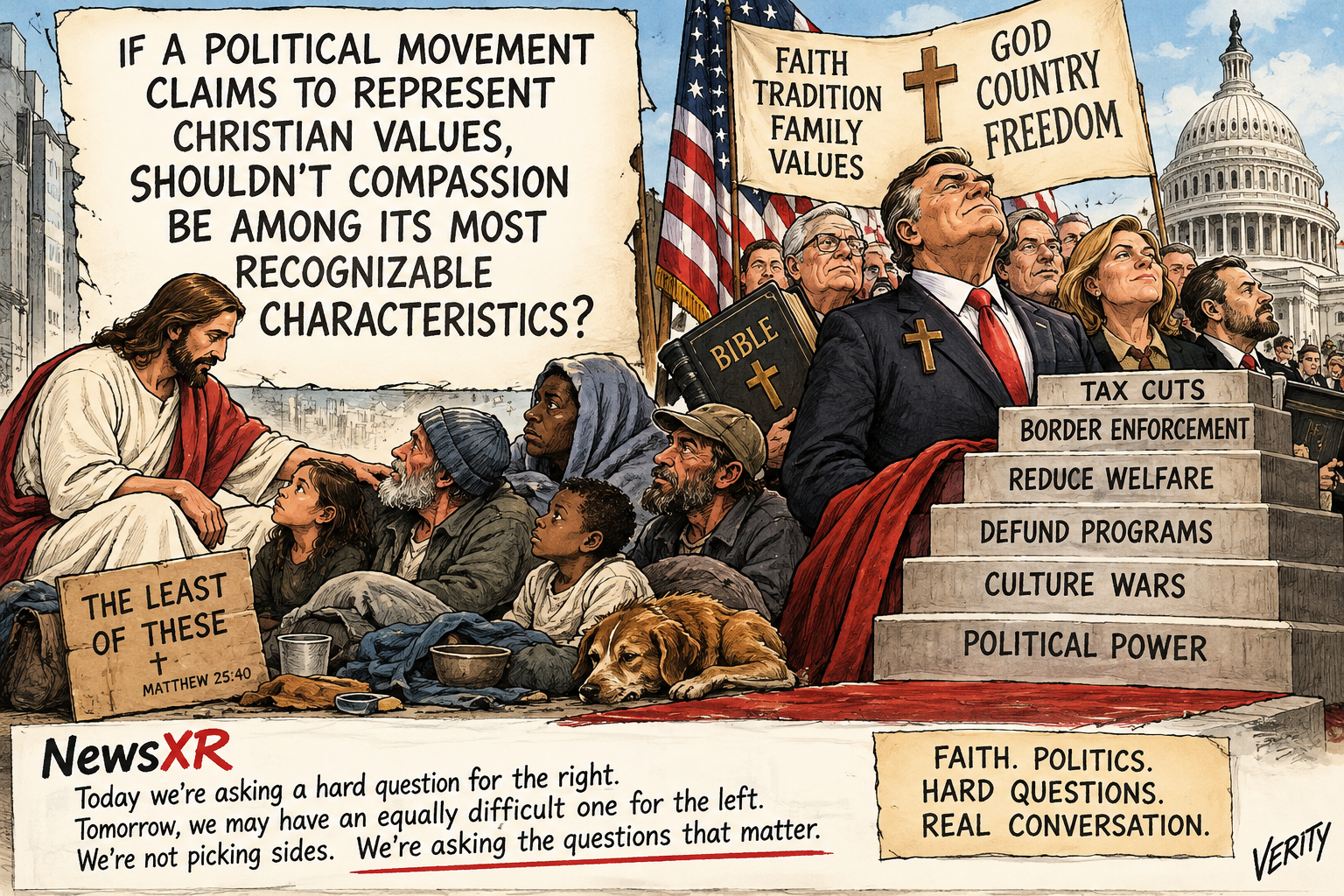
    If a political movement claims to represent Christian values, shouldn’t compassion be among its most recognizable characteristics?

    Today, we’re asking an honest and difficult question of the American political right, particularly those who place Christianity, faith, and traditional religious values at the center of their political identity.

    Jesus Christ taught compassion, humility, mercy, forgiveness, and care for the poor, the sick, the imprisoned, and the stranger. These teachings occupy a central place in Christianity and raise legitimate questions about how religious convictions should influence political leadership and public policy.

    Many conservative leaders and their supporters sincerely embrace the principles of God and country. But when a political movement identifies itself so closely with Christianity, shouldn’t its policies, priorities, and treatment of vulnerable people reflect the compassion at the heart of that faith?

    This is not an attack on conservatives or Christianity. It is a legitimate question about the relationship between professed religious values and political conduct.

    Today, that question is directed at the right. Tomorrow, we may have an equally difficult question for the left.

    That’s how independent journalism should work. NewsXR does not exist to protect one political party from criticism while subjecting another to scrutiny. We examine issues on their merits, ask difficult questions wherever they arise, and hold competing political movements to consistent standards of accountability.

    We are not choosing sides. We are opening a discussion that deserves to be had.

    So we ask our readers: If Christian values are central to a political movement’s identity, how prominently should compassion, mercy, and care for the vulnerable be reflected in its leadership and policies?

    We welcome thoughtful, respectful perspectives from across the political and religious spectrum.

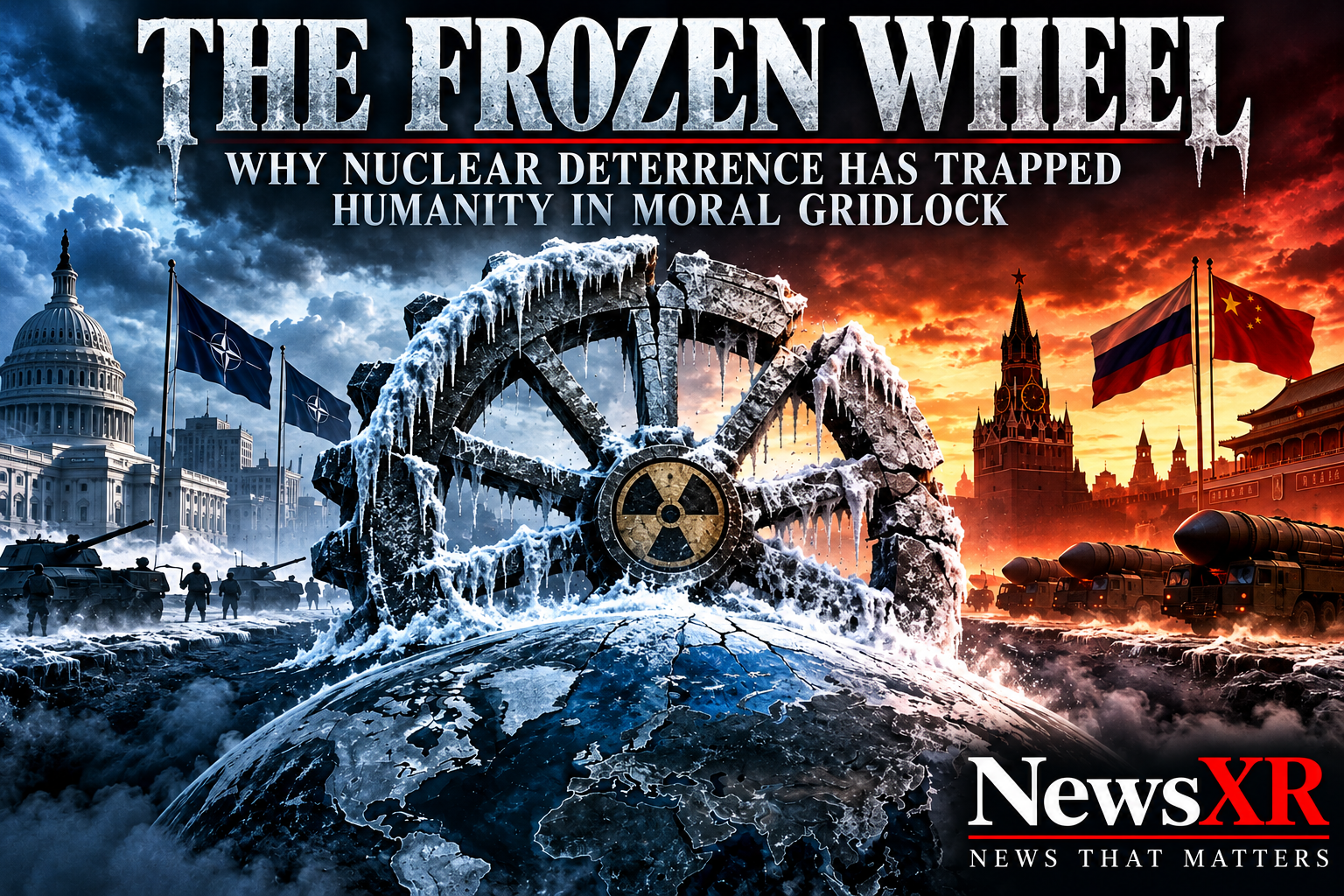
  • The Frozen Wheel: Why Nuclear Deterrence Has Trapped Humanity in Moral Gridlock

    The Frozen Wheel: Why Nuclear Deterrence Has Trapped Humanity in Moral Gridlock

    The Frozen Wheel: Why Nuclear Deterrence Has Trapped Humanity in Moral Gridlock

    For centuries, human history moved to a brutal but predictable rhythm, defined by the cyclical buildup and destruction of global orders. Empires would rise, expand their resources, and eventually clash when their borders and spheres of influence overlapped. These historic friction points inevitably ignited a hegemonic war. This was a total conflict that, despite its horrific human cost, decisively shattered the old status quo, punished the vanquished, and cleared the ground for a new geopolitical architecture.

    In 1945, that ancient wheel of history ran directly into an immovable wall.

    The advent of nuclear weapons did not alter human nature, nor did it erase the friction between competing civilizations. Instead, it did something far more unnatural by artificially damming the river of history. By introducing the absolute certainty of Mutual Assured Destruction, atomic arsenals forced a permanent pause on the natural cycle of total war. For more than eighty years, this nuclear peace has successfully averted a direct battlefield clash between the world’s most powerful nations. But we are beginning to see the profound, tragic cost of this permanent freeze.

    By keeping the natural buildup and destroy cycle at bay, nuclear weapons have made the resolution of global moral conflicts permanently unattainable.

    In previous eras, a defining moral crisis like the global fight against fascism could be brought to an absolute conclusion. The oppressive regime was physically dismantled, its leaders were tried at Nuremberg, and the international order was forcefully rewritten toward a shared standard of justice. The victory was definitive because the material capability to enforce it existed.

    Today, the nuclear shield has transformed sovereignty into an absolute sanctuary for structural evil. When a nuclear-armed superpower decides to redraw historical borders, absorb its neighbors, or systematically violate human rights, the international community finds itself completely paralyzed. Traditional international law becomes a toothless illusion. The West is left with an agonizing, impossible choice between attempting to forcefully resolve the moral conflict and triggering a thermonuclear third world war, or accepting a deeply fractured reality where powerful autocracies bully smaller nations with total impunity.

    Faced with this gridlock, the modern world is fracturing along its natural, civilizational fault lines. Non-Western blocs, recognizing that the United States holds the keys to the global financial system, are actively building a parallel economic world order. They are hoarding gold, bypassing Western communication networks, and settling trades in local currencies. They are deliberately insulating themselves so they can operate freely within their regional domains without fear of Washington’s financial sanctions.

    This brings us to the core truth that the modern rules-based international order refuses to acknowledge, which is that global stability may only be possible when we return to respecting the natural spheres of influence of superpower nations.

    From the perspective of great-power realism, the current global tinderbox is not the result of regional aggression, but the consequence of the West violating the natural geography of power. Pushing military alliances and political influence directly into the historic backyards of other nuclear states, whether in Eastern Europe or the Taiwan Strait, creates an existential panic that forces those states to lash out. If the United States expects foreign rivals to honor the Monroe Doctrine and stay out of the Western Hemisphere, it must eventually concede that other superpowers will dominate their own neighborhoods based on shared history, language, and geography.

    Honesty demands that we look directly at where this path leads if humanity fails to find a new way to resolve its differences. We must strip away the sanitized language of diplomatic strategy and face the unvarnished reality. In statistics and systems engineering, if a high-risk system runs indefinitely, the probability of a catastrophic failure eventually approaches absolute certainty. Nuclear deterrence relies on human leaders making perfectly rational, flawless decisions under extreme pressure forever.

    If we continue down the current path, the system will eventually fail. A third world war will not look like the prolonged industrial mobilization of the 1940s. It will be an automated, hypersonic exchange of thermonuclear weapons. Within a matter of hours, major global cities will be obliterated, followed by an artificial winter that collapses global agriculture, effectively ending human history.

    The only alternative to extinction is a fundamental, unprecedented evolution in how our species handles competition. If we cannot fight all-out wars to reset the global order, we must transition to new arenas to settle who leads. We are seeing the early stages of this shift as superpowers compete for dominance through artificial intelligence, quantum computing, space exploration, and alternative financial architectures. The winner of the global order will not be the nation that drops the most bombs, but the one that builds the most resilient, independent system.

    We are trapped in a terrifying paradox. The very weapons that prevent humanity from destroying itself also prevent us from correcting global injustices. The tectonic pressure of our paused history continues to build behind a nuclear dam, while the world slowly splits into competing financial and political hemispheres. If we continue to ignore the natural order of regional spheres and fail to build a strictly managed alternative for technological and economic competition, we risk breaking the dam entirely, leaving no world left to save.

  • Release the Video. Investigate the Shooting. Stop Picking Sides.

    Release the Video. Investigate the Shooting. Stop Picking Sides.

    Release the Video. Investigate the Shooting. Stop Picking Sides.

    There is something deeply troubling about the political reaction to the ICE shooting in Marble Hill, and it goes far beyond immigration policy.

    An ICE agent fired seven rounds during an attempted arrest, striking 28-year-old Oscar Bergal in the neck while his 5-year-old son was inside the vehicle. DHS says Bergal refused commands, struck government vehicles and accelerated toward officers, placing them in fear for their lives. Publicly available video shows a chaotic encounter, but it does not clearly answer the most important question: what exactly was happening at the moment an officer decided deadly force was necessary? ICE has said its body-camera footage will be released, but has not said when.

    That video needs to come out.

    What troubles us almost as much as the delay is how quickly political leaders have chosen their conclusions. One side appears prepared to condemn the officers before the investigation is complete. The other appears prepared to defend them before the investigation is complete. Neither approach serves the public.

    Immigration enforcement is controversial. That is irrelevant to determining whether these particular officers acted responsibly.

    ICE has lawful duties to perform. Agents sometimes confront dangerous people in unpredictable situations. A moving vehicle can become a deadly weapon in seconds. If the evidence shows these officers reasonably believed they were about to be struck or killed, then that evidence should be presented and the officers should be judged accordingly.

    But popular enforcement missions do not make officers infallible either. Police officers, federal agents and correctional officers are human beings. Human beings make mistakes. They panic. They misread situations. They sometimes overreact. And occasionally they use force that cannot be justified.

    If that happened here, accountability should follow. Hold the responsible officers accountable, correct whatever failed, and let the agency move forward. Accountability for misconduct is not an attack on law enforcement. It is part of maintaining legitimate law enforcement.

    The opposite rush to judgment is equally concerning. Some people appear ready to declare the shooting criminal simply because they oppose ICE, the Trump administration or immigration enforcement generally. That is not an investigation. That is politics wearing the costume of certainty.

    We should be capable of something better than this.

    Governor, mayor, secretary, president, protester or ICE supporter, nobody should be deciding what happened according to the party line. Leaders should be demanding the evidence, reviewing the evidence and following it wherever it goes.

    A federal agent discharged a firearm seven times. A man was wounded. A 5-year-old child was sitting inside the vehicle. That deserves a legitimate investigation free from political theater.

    And right now, the most important piece of evidence remains unavailable to the public.

    Release the body-camera footage. Conduct the investigation. If the agents acted properly, say so and show us why. If they did not, hold them accountable. Then let the facts, not the politics, decide where the chips fall.

  • 𝗔𝗻 𝗨𝗻𝗽𝗿𝗲𝗰𝗲𝗱𝗲𝗻𝘁𝗲𝗱 𝗦𝘂𝗿𝘃𝗶𝘃𝗮𝗹: 𝗚𝗿𝗮𝗰𝗲, 𝗝𝘂𝘀𝘁𝗶𝗰𝗲, 𝗮𝗻𝗱 𝘁𝗵𝗲 𝗨𝗻𝘀𝗲𝗲𝗻 𝗛𝗮𝗻𝗱

    𝗔𝗻 𝗨𝗻𝗽𝗿𝗲𝗰𝗲𝗱𝗲𝗻𝘁𝗲𝗱 𝗦𝘂𝗿𝘃𝗶𝘃𝗮𝗹: 𝗚𝗿𝗮𝗰𝗲, 𝗝𝘂𝘀𝘁𝗶𝗰𝗲, 𝗮𝗻𝗱 𝘁𝗵𝗲 𝗨𝗻𝘀𝗲𝗲𝗻 𝗛𝗮𝗻𝗱

    𝗔𝗻 𝗨𝗻𝗽𝗿𝗲𝗰𝗲𝗱𝗲𝗻𝘁𝗲𝗱 𝗦𝘂𝗿𝘃𝗶𝘃𝗮𝗹: 𝗚𝗿𝗮𝗰𝗲, 𝗝𝘂𝘀𝘁𝗶𝗰𝗲, 𝗮𝗻𝗱 𝘁𝗵𝗲 𝗨𝗻𝘀𝗲𝗲𝗻 𝗛𝗮𝗻𝗱
    ‎
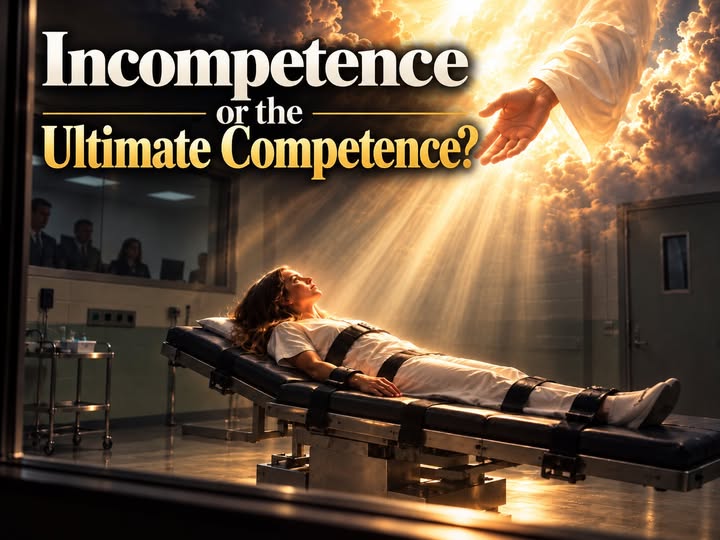
    The State of Tennessee administered two lethal doses of pentobarbital to execute Christa Pike. She survived. Placed on a ventilator and declared brain dead, hospital staff were preparing to remove life support when she woke up and spoke.
    ‎
    Holding this reality requires holding two heavy truths at once. Nothing about this extraordinary survival erases the horrific 1995 torture and murder of 19-year-old Colleen Slemmer. There is a victim and a grieving family whose pain does not vanish because something remarkable occurred. Justice, accountability, and Colleen Slemmer’s memory matter.
    ‎
    Yet for people of faith, it is impossible to watch this without asking whether an unseen hand was at work. Throughout Scripture, God worked through the broken, the condemned, and those society wrote off. To consider Providence is not to declare Pike innocent; mercy and justice are not opposites, and the death chamber is not beyond the reach of God.
    ‎
    Systems fail. God does not.
    ‎
    The full weight of state authority was deployed to end a life. The machinery failed. Days later, on the verge of life support being withdrawn, she regained consciousness. How many times must death be prepared before we are humble enough to admit we may be witnessing something beyond medical anomaly?
    ‎
    Governor Bill Lee halted executions while the state investigates. To subject Christa Pike to this machinery a second time would not be justice – it would be an insistence on cruelty, an arrogant attempt to finish an act that has crossed into something far darker.
    ‎
    If Providence truly intervened where the state intended death, anyone determined to override that outcome should proceed with profound caution. Woe to the man who interferes with the will of God.
    We’ll be following this one closely. Goodnight
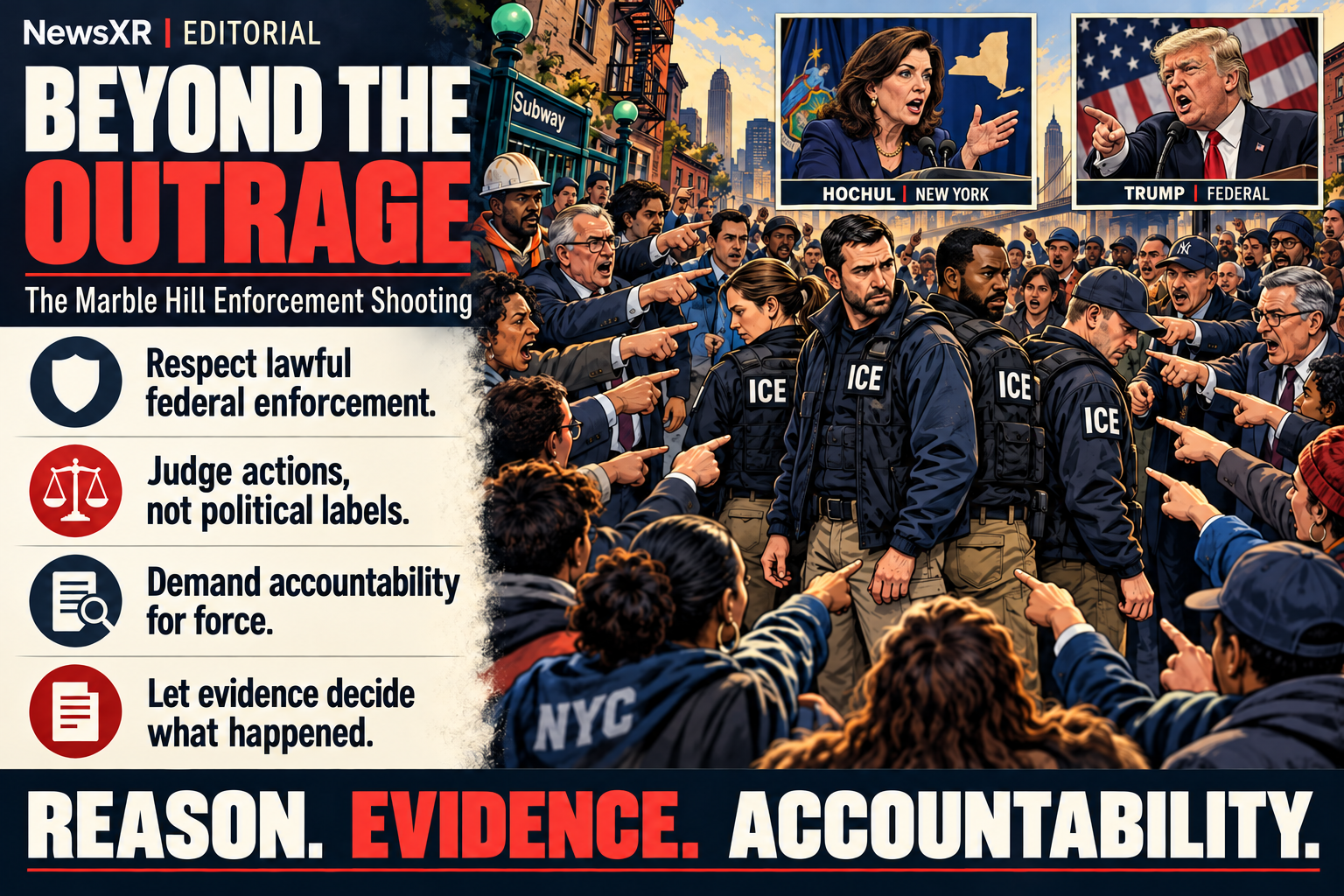
  • BEYOND THE OUTRAGE: SEEKING TRUTH AND REASON IN THE MARBLE HILL ENFORCEMENT SHOOTING

    BEYOND THE OUTRAGE: SEEKING TRUTH AND REASON IN THE MARBLE HILL ENFORCEMENT SHOOTING

    𝗕𝗘𝗬𝗢𝗡𝗗 𝗧𝗛𝗘 𝗢𝗨𝗧𝗥𝗔𝗚𝗘: 𝗦𝗘𝗘𝗞𝗜𝗡𝗚 𝗧𝗥𝗨𝗧𝗛 𝗔𝗡𝗗 𝗥𝗘𝗔𝗦𝗢𝗡 𝗜𝗡 𝗧𝗛𝗘 𝗠𝗔𝗥𝗕𝗟𝗘 𝗛𝗜𝗟𝗟 𝗘𝗡𝗙𝗢𝗥𝗖𝗘𝗠𝗘𝗡𝗧 𝗦𝗛𝗢𝗢𝗧𝗜𝗡𝗚
    ‎
    The intersection of federal immigration enforcement and local sovereignty has long been one of the most combustible fault lines in American civic life. Following the October 8 encounter in the Marble Hill neighborhood of Manhattan, where plainclothes U.S. Immigration and Customs Enforcement (ICE) agents discharged their weapons during an attempted vehicle stop, wounding a driver with a five-year-old child inside, that fault line has fractured into familiar and immediate recrimination.
    ‎
    Within hours of the incident, before a single forensic report could be compiled or a vehicle black box audited, the lines of political warfare were firmly drawn. Local municipal leaders swiftly denounced the operation as a reckless endangerment of a residential community, using the crisis to renew calls for the complete dismantling of federal immigration enforcement. Simultaneously, the Department of Homeland Security firmly defended the agents, characterizing the encounter as a textbook response to an active vehicular assault and pointing to New York’s strict sanctuary policies as the root cause of high-risk street confrontations.
    ‎
    Lost in this immediate crossfire of rhetoric is any commitment to the fundamental principles of due process, tactical clarity, and objective truth.
    ‎
    To evaluate this crisis with the reason it demands, the public must first acknowledge an institutional reality: a state or municipality does not possess the constitutional authority to rewrite national immigration policy, nor does it have the right to actively obstruct the lawful execution of federal enforcement. The U.S. Supreme Court has repeatedly affirmed that the federal government possesses exclusive, plenary power over the nation’s borders and naturalization laws. When local ordinances are weaponized to systematically frustrate federal operations or foster an environment of open defiance, it does not solve a policy crisis; it merely displaces the tension onto the civilian pavement.
    ‎
    Furthermore, the immediate blanket condemnation of these agents simply for enforcing immigration law represents a profound injustice to the men and women who serve in law enforcement. The individuals tasked with executing field operations are frequently career law enforcement professionals carrying out an incredibly difficult, legally complex, and deeply unpopular mandate. They do not draft the immigration statutes passed by Congress, nor do they dictate the administrative procedures of the executive branch. To overlay these civil servants with broad political contempt for their mission ignores the terrifying, split-second operational realities they encounter when a multi-ton vehicle begins moving in tight quarters.
    ‎
    At the same time, a strict commitment to justice demands an equally rigorous standard of accountability for federal operations, independent of any political noise. Law enforcement authority is not absolute; it is strictly bounded by the Constitution and the immutable laws of objective reasonableness. A badge does not grant a license to discharge a firearm into a vehicle simply to halt a fleeing suspect, a threshold clearly protected under both New York Penal Law and federal directives. The determination of whether this specific discharge of force was a legitimate act of self-defense or an unjustified escalation cannot be decided by a press release from the Department of Homeland Security any more than it can be decided by a press conference from the Mayor’s office.
    ‎
    As the Bronx District Attorney and federal oversight bodies proceed with concurrent investigations, the path forward requires an intentional retreat from ideological outrage. The ultimate resolution of this case will not and should not be found in the political alignment of an elected prosecutor or the defensive posture of a federal agency. It will be found in the silent, unalterable physics of the scene, specifically the ballistics trajectory mapping, the vehicle’s electronic data loggers, and the unedited operational video.
    ‎
    Immigration remains a deeply polarizing and painful national debate, but a nation governed by the rule of law cannot allow political anxiety to dictate criminal justice. The public, the state, and the agents themselves deserve an investigation anchored strictly in facts, conducted with patience, and insulated entirely from the theater of public outrage.
  • What Your Neighbors Are Actually Fighting About

    What Your Neighbors Are Actually Fighting About

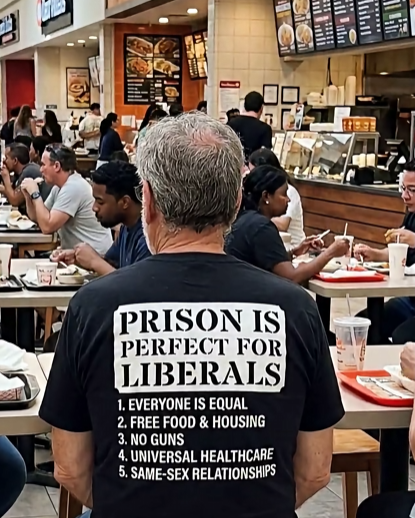
    We saw this picture, and we wondered if our younger neighbors even know what the divides and factions in this country are really about. So, let us sum it up for you:

    The Right’s warning: If you rely on the government for your rent, food, and healthcare, you surrender your freedom. The moment an authority feeds you and houses you, it controls you. In exchange for zero risk, you get zero independence – which is exactly how a prison operates. True freedom is hard, risky, and requires taking care of yourself.

    The Left’s warning: If a medical emergency bankrupts you and your entire paycheck goes to rent and groceries, you aren’t free either. Working 60 hours a week just to stay off the street isn’t independence; it’s exploitation. True freedom requires a basic floor – healthcare, fair pay, and housing – so you actually have the power to live your life.

    One side sees dependence on the state as the ultimate trap. The other sees poverty and corporate greed as the ultimate trap.

    And neither side is wrong, but the only right way forward is a compromise everyone can live with.

  • The Great Smoke Out or the Biggest Government Gangster Move of All Time

    The Great Smoke Out or the Biggest Government Gangster Move of All Time

    The Great Smoke Out or the Biggest Government Gangster Move of All Time

    A NewsXR Editorial by Russty Milano

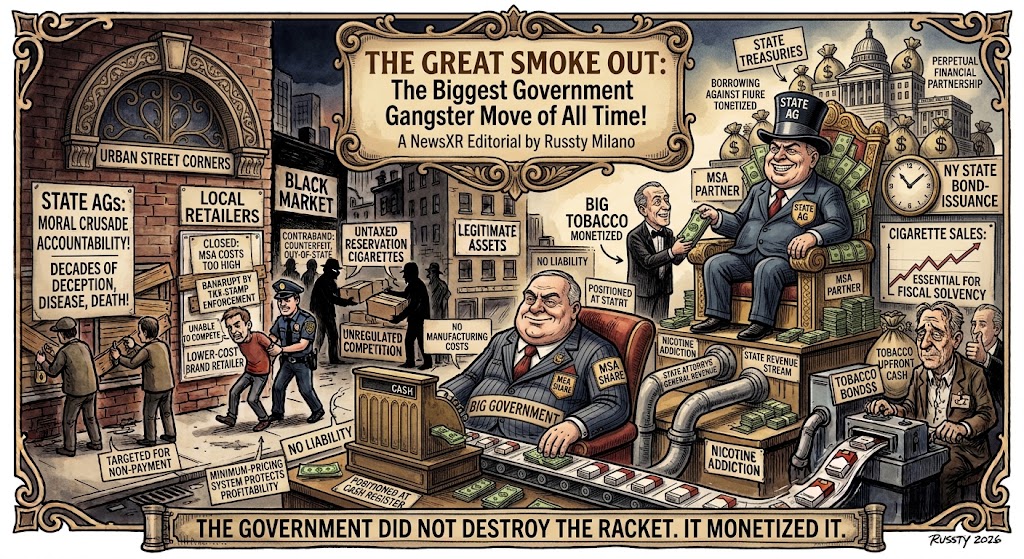
    The conventional historical narrative portrays the 1998 Tobacco Master Settlement Agreement (MSA) as a triumphant moral crusade that finally brought Big Tobacco to its knees. The raw economic reality tells a very different story: one of the largest government shakedowns ever executed under the banner of a public-health victory. State attorneys general aggressively vilified the tobacco industry, declaring that they were holding corporate predators accountable for decades of deception, addiction, disease, and death. That moral outrage became the justification for forcing the major tobacco manufacturers into a multi-billion-dollar financial arrangement unlike anything seen before. Yet once the settlement was signed and the money began flowing, the supposed war of eradication became something else entirely. The government did not destroy the tobacco racket. It forced its way into the revenue stream.

    In a very real economic sense, government became a partner in Big Tobacco. The states created a system in which billions of dollars would continue flowing into public coffers so long as Americans continued buying cigarettes, effectively tying government revenue to the continued existence of the very industry officials had spent years publicly condemning. Rather than simply punishing tobacco companies and walking away, the settlement established a permanent financial relationship between cigarette sales and state treasuries. The government carried none of the manufacturing costs, inventory risk, corporate liability, advertising expense, or operational burden of selling cigarettes, yet positioned itself to collect enormous sums generated by every legal pack moving through the system. Big Tobacco survived, but now it operated inside a financial structure in which government had secured its own permanent share.

    The hypocrisy became even harder to ignore when states began borrowing against that future tobacco money. New York and other states issued tobacco-settlement bonds, converting decades of anticipated payments into immediate cash and effectively placing a financial value on the expectation that substantial cigarette consumption would continue far into the future. Think about the contradiction. Government publicly declared smoking a deadly scourge while simultaneously constructing long-term financial instruments whose repayment depended upon continuing tobacco revenue. The same public institutions warning citizens to stop smoking were now financially exposed to what would happen if cigarette sales collapsed too quickly. Government had managed to transform nicotine addiction from merely a public-health crisis into a revenue stream with bondholders, budgets, appropriations, and political interests attached to it.

    Once billions of dollars in government revenue became intertwined with cigarette sales, the relationship between regulator and industry became fundamentally compromised. Tobacco taxation, minimum-pricing systems, settlement-payment requirements, and restrictions affecting lower-cost competitors helped create a heavily controlled cigarette market in which the established manufacturers remained dominant and government continued collecting enormous sums. What began as a punishment for Big Tobacco evolved into an economic structure that required Big Tobacco to remain sufficiently profitable to keep producing the money government had already incorporated into its fiscal machinery. The government did not need to own a tobacco factory, ship a carton, employ a salesman, or assume the liability of producing cigarettes. It simply positioned itself at the cash register.

    Then greed created another entirely predictable consequence. By steadily loading legal cigarettes with taxes, mandatory minimum prices, settlement costs, and regulatory expenses, government helped push the legitimate product beyond what many ordinary working smokers could reasonably afford. That enormous price gap did not make demand magically disappear; it helped create fertile ground for a thriving black market in untaxed, out-of-state, counterfeit, and otherwise illicit cigarettes. The result is a spectacular piece of self-inflicted economic damage: government loses the very tax revenue it was trying to maximize, while legitimate convenience stores, gas stations, neighborhood markets, and other licensed retailers are forced to compete against sellers operating outside the legal tax structure. New York itself acknowledges that contraband cigarette trafficking deprives communities of revenue and places law-abiding businesses at a competitive disadvantage. The state pushed the legal price so high that it helped create an underground competitor to its own carefully constructed revenue machine, injuring legitimate retailers while driving part of the market completely beyond the government’s reach.

    That is the part of the Tobacco Master Settlement Agreement that rarely fits comfortably inside the heroic version of the story. Government condemned the tobacco industry, extracted billions from it, built future budgets around those proceeds, borrowed against anticipated cigarette revenue, taxed the product relentlessly, and then maintained a regulatory environment in which the legal tobacco market continued generating the money everyone had come to depend upon. Big Tobacco was never truly destroyed. It was reorganized into a system in which government became one of the largest financial beneficiaries of its continued existence.

    The great smoke out never happened. The government did not eliminate the racket.

    It monetized it.


  • **The Fear I Have Never Had to Carry**

    **The Fear I Have Never Had to Carry**
    I have never had to plant my hands on a dashboard because I was afraid a police officer might shoot me.
    I have never had to wonder whether reaching for my identification would be the last movement I ever made. Whatever nervousness I might have felt about being pulled over, I have not had to experience it as a question of whether I would make it home alive.
    Many of my fellow citizens carry precisely that fear. The profound injustice of that makes me angry.
    Watching *The Hate U Give*, the 2018 film directed by George Tillman Jr. and based on Angie Thomas’s novel, brought that injustice home to me. The story follows Starr Carter, played by Amandla Stenberg, after she witnesses an officer fatally shoot her childhood friend during a traffic stop. But the moment that gripped me came before the gunfire, as she pleaded with her friend to put his hands on the dashboard. [Film background](https://www.20thcenturystudios.com/movies/the-hate-u-give), [the filmmakers’ account of the traffic-stop scene](https://theasc.com/…/the-hate-u-give-meticulously…/).
    I was angry that she had reason to be that afraid. Angry that a young person would feel responsible for managing an armed officer’s fear to keep someone she loved alive. Beneath her pleading was an even deeper injustice: being unarmed offers little reassurance when the person confronting you sees your Blackness itself as a threat. You can put your hands on the dashboard. You can move carefully and speak calmly. You cannot set aside the color of your skin to prove that you are harmless.
    This is a point too much of white America keeps missing: unjustified racial fear ‘is’ racism. Racism does not require a slur, an admission of hatred, or a conscious desire to discriminate. It can appear as suspicion you never question, a threat you imagine, or a fear you consider reasonable without examining why you feel it.
    When white America accepts an officer’s fear without asking what justified it, we risk accepting the racial prejudice that produced it. What did this person actually do to pose a danger? What evidence supported that conclusion? Those questions cannot disappear beneath the words “I was afraid.” A Black citizen’s life cannot count for less than an officer’s unquestioned fear.
    I have never had to wonder whether my appearance alone would make an officer afraid of me. Recognizing that difference made her fear all the more disturbing. The film was giving expression to a burden real people carry, and no amount of instruction about how they should behave can excuse an officer from the responsibility to see a human being rather than a racial threat.
    No citizen should have to live that way.
    Get it right. Get every bit of it right. Your life may depend on someone else’s interpretation. How have we accepted a situation in which the person being stopped feels responsible for preventing the trained professional from making a fatal mistake?
    For parents who fear this possibility, even preparing a child to drive can carry a terrible additional responsibility. Alongside the ordinary lessons about traffic signals and seat belts comes the question of what to say about an encounter with the police.
    How do you teach someone to trust public authority while warning them that they may have to manage it carefully to survive?
    In 2016, Philando Castile was fatally shot during a Minnesota traffic stop after telling Officer Jeronimo Yanez that he had a gun. Castile had a permit for the firearm. His girlfriend and her young daughter were in the car. Yanez was acquitted of manslaughter. Associated Press reporting on the case.
    Years later, in a separate teaching-license proceeding, Minnesota’s licensing board found that Yanez had racially profiled and prejudged Castile and that firing seven shots into the vehicle was wrongful and unjustified. In 2024, the Minnesota Court of Appeals upheld the denial of his teaching-license application. Those administrative findings were distinct from the criminal verdict, but they directly addressed the failures of judgment and prejudice at the heart of this fear. Minnesota Court of Appeals decision.
    In South Carolina in 2015, Officer Michael Slager stopped Walter Scott over a broken brake light. After a pursuit and an encounter involving a Taser, Scott was unarmed and running away when Slager fired eight shots. Five struck Scott, all entering from behind. Slager pleaded guilty to a federal civil rights offense and received a 20-year sentence. The sentencing judge determined that the shooting constituted second-degree murder under the federal sentencing guidelines. U.S. Department of Justice account.
    A broken brake light. A man shot in the back. A family left to live with the result.
    In Dallas in 2018, Botham Jean was in his own apartment when off-duty Officer Amber Guyger entered, believing it was hers, and shot him. She was convicted of murder and sentenced to ten years in prison. Jean was killed inside the home where he had every right to feel safe. Associated Press account.
    These people had lives before they became names in a national argument. They had families, responsibilities, routines, and plans. They were entitled to a future. Their loved ones were entitled to expect another conversation, another meal together, another ordinary day.
    When I was a kid, I understood police officers to be people of courage. They were the people who would run into a burning building to save children. We expected them to face danger because protecting others was the job.
    Where is that courage when the driver is Black?
    Where is the discipline to control your own fear before making someone else pay for it? Where is the judgment to recognize that a frightened person, a confused person, or a person making an innocent movement is not automatically a threat?
    We give officers extraordinary power over other people’s lives. With that power comes an extraordinary obligation to distinguish what is actually happening from what they fear might happen. An officer’s fear cannot be treated as sufficient justification simply because the officer felt it.
    Why should a Black citizen have to demonstrate more composure than the armed professional approaching the window? Why should someone’s survival depend on remaining perfectly calm while being afraid for their life?
    The unfairness of that is staggering.
    I have been able to take for granted that a traffic stop would end with me alive. Someone else, equally entitled to protection, may feel compelled to prepare for the possibility that it will not. We live under the same laws. We are entitled to the same protection. Yet the burden of fear falls so differently.
    That difference is so wrong 🤕
    Why is a black man reaching into a window a threat and a white man not?
    That difference follows people beyond the roadside. It enters conversations between parents and children. It changes how a person experiences flashing lights, a knock at the door, or an officer walking toward them. It takes an ordinary moment and fills it with calculations other people never have to make.
    Those of us who have never carried that burden should be furious that anyone does.
  • Opinion: Why Circumstantial Convictions Demand Life, Not Death

    Opinion: Why Circumstantial Convictions Demand Life, Not Death

    The Cost of Certainty: Why Circumstantial Convictions Demand Life, Not Death

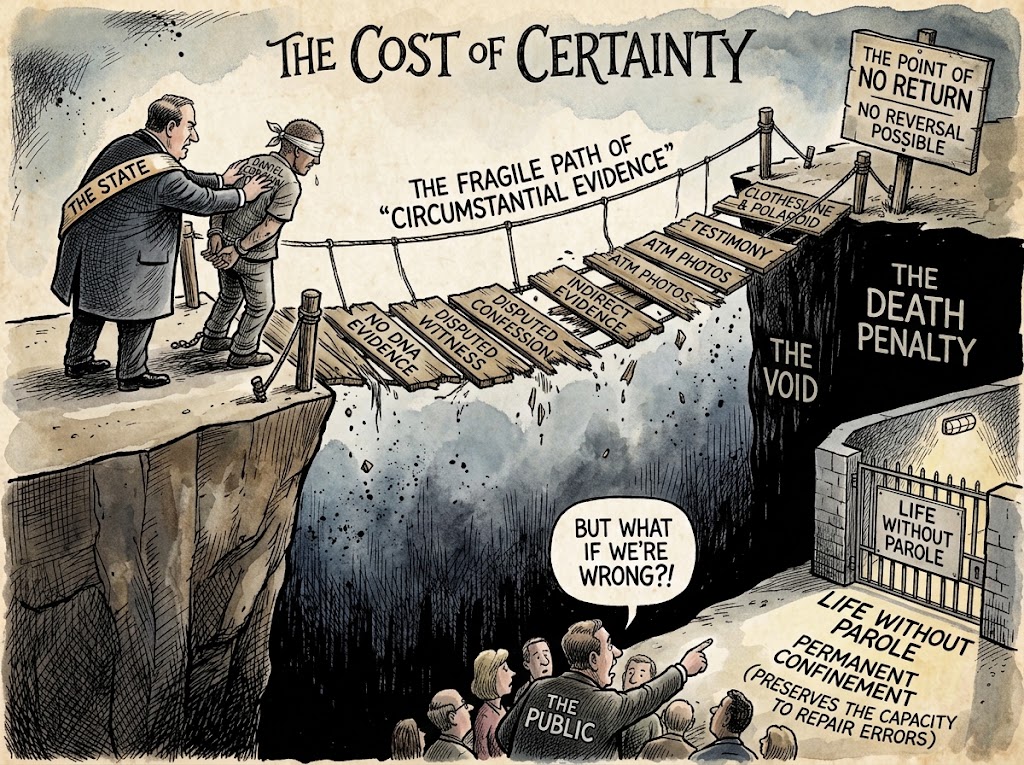
    Florida executed Daniel Conahan on September 10, 2026, for the kidnapping and murder of Richard Allen Montgomery. The state has carried out its sentence. The man authorities suspected in the “Hog Trail” killings is dead, and the opportunity to choose a different punishment is gone. We think justice was served. We certainly hope so. Given the brutality of Montgomery’s death and the evidence presented against Conahan, there is every human reason to want to believe the system reached the right conclusion. But we may have gotten this one wrong entirely. That possibility is not a declaration of his innocence. It is the dilemma that lives within the hypotheticals of a circumstantial case: we can find the accumulated evidence convincing, accept the verdict, and still have to acknowledge that the explanation we accepted could be wrong. Florida has now made the consequences of that possibility irreversible. Associated Press

    Conahan’s conviction rested on a substantial circumstantial case. The record included purchases of clothesline and Polaroid film, ATM photographs, paint evidence, and testimony describing a similar assault. The Florida Supreme Court’s September 2026 opinion acknowledged that no recovered crime-scene items contained Conahan’s DNA, while concluding that the combined evidence supported his conviction and sentence. Those circumstances cannot honestly be dismissed as nothing. They also cannot be transformed into infallibility simply because a court found them sufficient. Our objection begins at that distinction: evidence sufficient to sustain a conviction does not automatically settle whether the government should impose a punishment it can never undo. Florida Supreme Court opinion

    The witness evidence requires the same discipline. Stanley Burden testified about an earlier attack; he did not witness Montgomery’s murder. Floridians for Alternatives to the Death Penalty reported that Burden later acknowledged promised support for parole, and that another prisoner disputed jailhouse informant John Neuman’s account of an alleged confession. These are attributed challenges, not findings that the prosecution fabricated its case. They nevertheless identify the concern that belongs at the center of this discussion: when testimony is disputed and a witness may benefit from cooperation, the state must confront how those incentives could affect the account it asks a court to believe. Floridians for Alternatives to the Death Penalty

    We should not need proof of a secret bargain before recognizing why such arrangements demand scrutiny. A witness’s expectation of help can matter even when no signed agreement exists. That does not establish that the witness lied. It establishes why confidence in the witness must be examined rather than assumed. Where a prosecution depends on connecting physical circumstances with contested human accounts, the possibility of error remains a matter of public responsibility. The seriousness of the crime makes that responsibility greater.

    Florida could have preserved the punishment without making a possible mistake permanent.

    Life without parole would have respected the verdict, kept Conahan confined, and preserved the possibility of meaningful relief if the conviction were later overturned. That was a severe punishment available to a state determined to protect the public. It would not have required officials to declare him innocent or dismiss Montgomery’s suffering. It would have required them to acknowledge that a justice system administered by human beings must retain some capacity to repair what human beings get wrong.

    Execution eliminated that capacity in the most consequential sense. The record can still be investigated. Evidence can still be reexamined. A future finding could still change the public understanding of this case. But no finding can restore Conahan’s life. This is the failure we are criticizing after the fact: Florida chose a punishment that foreclosed a living remedy when permanent confinement could have preserved both public protection and the possibility of correction.

    Contextualizing the History: Precedents, Pitfalls, and Regional Variations

    1. Residual Doubt: What the Law Permits and What Responsibility Demands

    The distinction between legal guilt and lingering uncertainty has appeared repeatedly in capital punishment litigation. In Franklin v. Lynaugh in 1988, the Supreme Court rejected the claimed entitlement to the requested treatment of residual doubt at sentencing. In Oregon v. Guzek in 2006, the Court explained that its precedents had not established an Eighth Amendment right to introduce sentencing evidence designed to cast residual doubt on the underlying conviction. We should therefore be precise: lingering doubt is not a universal constitutional prohibition against execution. Our position is that it should carry greater weight in deciding whether execution is justified. Oregon v. Guzek, discussing Franklin

    That is a criticism of the standard the government applies, rather than a claim that an existing rule automatically required a different result. A state can satisfy its legal procedures and still make a decision worthy of condemnation. The fact that an execution survived appellate review tells us what the courts permitted. It does not relieve the public of deciding whether the punishment was necessary, proportionate, or responsible in light of the uncertainty that remained.

    Nor should we pretend that direct evidence is automatically unassailable. An eyewitness can be mistaken. A confession can be false. Circumstantial evidence can be exceptionally strong. Our argument for life sentences in circumstantial capital cases must rest on the danger of irreversible punishment, rather than an artificial claim that one category of evidence is always reliable and another always defective. When guilt depends on reconstructing events through inference and disputed testimony, the government should preserve the opportunity to act on a later correction.

    2. Kirk Bloodsworth: What a Wrongful Conviction Leaves Behind

    Kirk Bloodsworth’s case demonstrates why that opportunity matters. In 1985, he was convicted and sentenced to death in Maryland for the rape and murder of nine-year-old Dawn Hamilton. Witness identifications helped secure the conviction. After that conviction was overturned, he was convicted again in 1987 and sentenced to life. DNA testing eventually excluded him, and he was released in June 1993 and pardoned on the basis of innocence that December. He became the first person in the United States exonerated by DNA after having been sentenced to death. Innocence Project case record

    Bloodsworth’s exoneration does not establish Conahan’s innocence, and the cases should not be presented as identical. Its relevance is more fundamental. A conviction that survived a courtroom’s scrutiny proved wrong when better evidence became available. The institution’s confidence did not protect Bloodsworth from wrongful imprisonment. His survival preserved the possibility that the error could be exposed and that he could experience freedom again.

    We cannot return the years a wrongly convicted person spends in prison. That injury is real even when an exoneration follows. But the difference between an imprisoned person who can be released and an executed person who can only be vindicated posthumously is enormous. Any serious assessment of capital punishment has to account for that difference before the execution, because afterward the state can offer acknowledgment without restoration.

    3. Regional Variations: Different Procedures, the Same Irreversible Consequence

    Capital sentencing rules vary across jurisdictions, but those differences should not be misrepresented as a general requirement for direct evidence. Florida’s current statute requires specified findings concerning aggravating factors and consideration of mitigation. Texas requires, among other findings, a determination concerning the probability of future violent conduct constituting a continuing threat to society. Federal law provides its own process for establishing and weighing aggravating and mitigating factors, including a unanimous jury recommendation for death. These are different procedures for authorizing punishment. None should be confused with a guarantee against factual error. Florida statute, Texas statute, Federal capital sentencing law

    The relevant criticism is that these systems can authorize death without eliminating the possibility that a conviction will later unravel. Procedural compliance has value, but it cannot accomplish what the evidence itself does not accomplish. A state should be able to explain why permanent confinement was insufficient before choosing to extinguish the possibility of a living remedy. The horror of the offense explains the demand for severe punishment. It does not, by itself, explain why that punishment had to be irreversible.

    Florida has already made its decision, and Conahan has already paid with his life. We think the state punished the right man. We hope the evidence told the truth we believe it told. But if we got this one wrong entirely, our confidence will provide no remedy, and our good intentions will return nothing. Life without parole would have enforced the verdict while preserving the ability to respond meaningfully if the evidence changed. That is why we believe it was the responsible sentence. The dilemma of a circumstantial case does not disappear when the state executes the defendant. The state simply gives up the ability to repair its gravest possible mistake.