📰 NEWSXR NEWS NOW | Main Print Edition | Monday, October 26, 2026
NEWSXR NEWS NOW
Your World. This Morning. Just Facts.
BINGHAMTON, NEW YORK | NATIONAL NEWS DESK
Good morning, America.
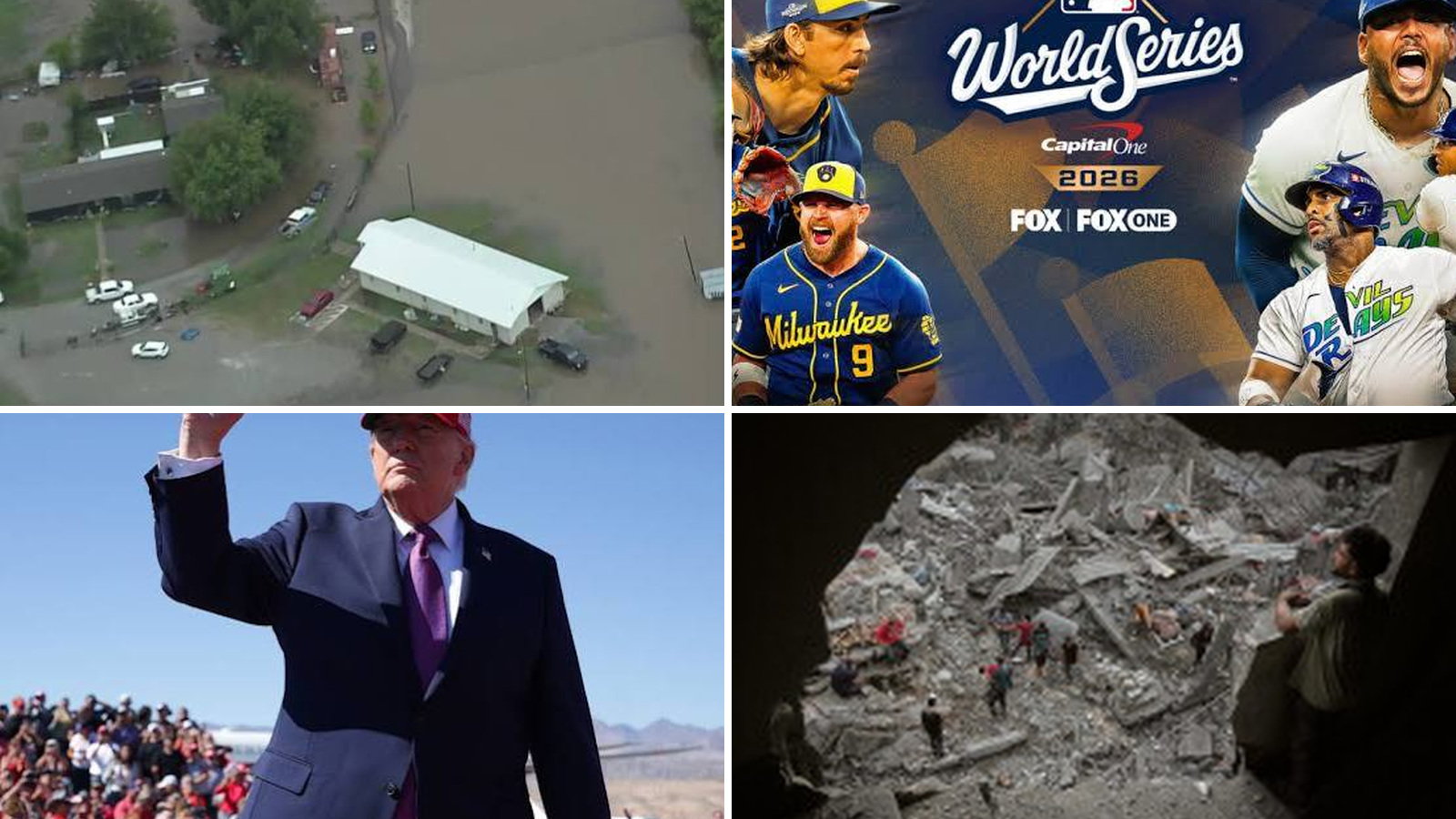
A critical diplomatic effort is unfolding in Tehran as the United States and Iran confront the possibility of another major military escalation. Across America, candidates are entering the final full week of campaigning before the November 3 midterm elections, with increasingly personal attacks raising questions about the direction of political debate.
In New York City, investigators are searching for a man accused of sexually assaulting a woman at knifepoint in Central Park. In Florida, police are seeking information about a shooting near Florida A&M University that injured 12 people, including six minors. Meanwhile, parents and educators are confronting renewed disputes over what American children are taught in public schools.
We’ll also examine the economic opportunities and community concerns surrounding artificial intelligence, provide the latest public-health information, and begin our national weather countdown to Halloween.
And later, in NEWSXR THEN, we’ll return to October 26, 1926, when America was following Harry Houdini’s desperate battle for survival and debating a Supreme Court decision about presidential power.
WORLD NOW
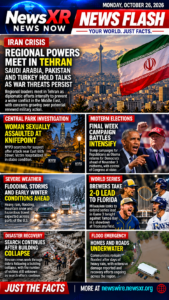
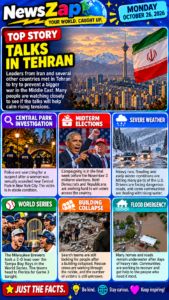
Tehran Diplomacy: Regional Powers Attempt to Prevent Another Iran War
A significant diplomatic effort is taking shape in Iran this Monday as senior representatives of Saudi Arabia, Pakistan, and Turkey meet with Iranian officials to discuss the escalating confrontation involving Tehran, Washington, and Israel.
The delegation includes Saudi Defense Minister Prince Khalid bin Salman, Pakistani Army Chief Field Marshal Asim Munir, and Turkish intelligence chief Ibrahim Kalin. The talks represent the first high-level engagement between Iran and all three countries of the Mecca Pact since Saudi Arabia became increasingly exposed to the regional conflict.
The meeting follows intensified missile and drone attacks by Yemen’s Iran-aligned Houthis against Saudi targets, continuing military preparations in the region, and increasingly aggressive statements from American and Iranian leaders.
The Mecca Pact is a regional defense agreement under which an attack on one participating country is treated as an attack on the others. Saudi Arabia and Pakistan have approved the agreement, while Turkey’s ratification process remains underway. Its developing role introduces another potential complication into a regional conflict already involving several governments and armed organizations.
President Donald Trump said Sunday that he was weighing a negotiated agreement with Iran against further military action. Although he ruled out an immediate strike that day, the president did not eliminate the possibility of renewed American attacks.
Iranian officials say indirect diplomatic communications remain active but have rejected demands they characterize as requiring their government’s surrender.
These competing positions underscore the difficulty confronting mediators: Washington wants enforceable security guarantees, while Tehran is resisting terms it considers incompatible with its sovereignty.
The talks could provide an opportunity to reduce tensions, but a meeting alone does not establish that the participants have reached an agreement or that military operations have been permanently ruled out.
Israel Prepares for Election Amid Warnings About Iran
Israel is approaching its October 27 general election amid intense debate over national security, the war involving Iran, and Prime Minister Benjamin Netanyahu’s leadership.
Netanyahu has emphasized the possibility of renewed Iranian attacks and has presented his government’s military posture as central to Israel’s security. His campaign has also focused on Iran’s nuclear ambitions, including warnings about the consequences of Tehran obtaining a nuclear weapon.
Opposition figures, including former military chief Gadi Eisenkot, have argued that the country needs a different direction after years of political division and security crises.
Reports of disagreements between Netanyahu and senior military officials have added to the campaign’s intensity. Netanyahu has disputed accounts suggesting a serious confrontation with military leadership over possible operations against Iran.
Both the military confrontation and the election create uncertainty. Political leaders must weigh the consequences of renewed hostilities while voters decide who should lead the country through the next phase of its security challenges.
The distinction between a reported military option and an approved military operation remains essential. The existence of contingency plans does not mean an attack has been ordered.
Saudi Arabia and Yemen: Houthi Attacks Raise Regional Stakes
Saudi Arabia is facing intensified attacks from Yemen’s Houthi movement as the regional confrontation involving Iran continues.
The attacks have increased concern about the vulnerability of airports, energy facilities, commercial shipping, and civilian infrastructure. Saudi-led forces have also conducted airstrikes against Houthi-held areas of Yemen.
These developments complicate the diplomatic effort in Tehran because Saudi Arabia has become more directly exposed to the conflict.
The Strait of Hormuz remains another major concern. The narrow maritime passage connects Persian Gulf oil producers with international markets, making any disruption consequential for countries far beyond the Middle East.
For American consumers, the most immediate effects can appear in gasoline, diesel, transportation, and heating costs. Even when oil shipments continue, the possibility of an interruption can affect prices through higher insurance, shipping expenses, and market uncertainty.
Gaza and the West Bank: Civilian Casualties and Security Operations Continue
Israeli military operations in Gaza and the occupied West Bank continue as international diplomatic efforts focus heavily on Iran.
Palestinian civil defense officials reported additional casualties in Gaza on Monday, including deaths during attacks affecting areas sheltering displaced civilians. Israeli security operations have also affected Hebron and other locations in the West Bank.
The latest Palestinian casualty reports require continued reconciliation as hospitals, civil defense organizations, and other agencies update their figures.
The humanitarian consequences remain substantial. Displaced families face insecurity, damaged infrastructure, and limited access to essential services, while Israel continues to cite security threats in explaining military operations.
Any assessment of the fighting must distinguish confirmed civilian losses, military claims, and allegations that remain under investigation.
Ukraine: Diplomacy Continues Alongside the War
Diplomatic preparations involving Ukraine, Russia, and the United States remain an important international development as negotiations seek ways to reduce the continuing conflict.
Recent exchanges involving detainees and prisoners demonstrate that limited agreements remain possible even when broader peace negotiations are unresolved.
However, humanitarian exchanges and localized arrangements should not be confused with a comprehensive ceasefire.
The central obstacles remain territorial control, security guarantees, the future of occupied areas, and the enforcement of any eventual settlement.
The coming negotiations will be measured not simply by whether representatives meet, but by whether their discussions produce commitments that can be independently verified and implemented.
Japan: U.S. Marine Indicted in Okinawa Killing
Japanese prosecutors have indicted a United States Marine stationed in Okinawa on charges connected to the death of a woman in Naha.
Japanese media identified the Marine as Lance Corporal Devin Jacob Ballard. Prosecutors allege that he killed 39-year-old Anna Yagi and stole property from her.
Ballard has denied the allegations and retains the presumption of innocence.
The case has renewed public concern about criminal allegations involving American military personnel stationed in Okinawa, where the extensive U.S. military presence has long been controversial.
American military representatives have acknowledged the seriousness of the case and pledged cooperation with Japanese authorities.
The indictment is a formal criminal accusation, not a conviction.
Other International Developments
Sudan’s continuing conflict remains a major humanitarian emergency, with reports of renewed clashes, civilian casualties, and communications interruptions affecting areas of Khartoum and Darfur. The scale of recent casualties and the operational status of emergency services require continued confirmation.
European energy security remains under scrutiny as governments confront the possibility of infrastructure disruptions during the approaching winter.
Trade negotiations across the Asia-Pacific region also remain vulnerable to disputes over tariffs, agricultural access, and technology supply chains.
These developments illustrate how military conflict, infrastructure security, and international trade are increasingly connected to household economic conditions.
THE NATION NOW
TOP NATIONAL STORY: Woman Sexually Assaulted at Knifepoint in Central Park
New York City police are searching for a man accused of sexually assaulting a 39-year-old woman at knifepoint Saturday evening near the eastern edge of Central Park.
The attack occurred shortly after 8:30 p.m. near East 66th Street and Fifth Avenue, according to police accounts.
Investigators say the woman was approached by an unidentified man carrying a knife. She was sexually assaulted before the suspect fled the area.
Emergency personnel transported the woman to a hospital, where she was reported to be in stable condition.
Police have not announced an arrest.
Investigators are seeking information from people who may have witnessed suspicious activity near the park around the time of the assault. Reports describe the person being sought as a man believed to be in his 30s who was last seen wearing dark clothing and carrying a backpack.
The incident has renewed concerns about public safety in one of America’s most recognizable urban parks.
Central Park serves residents and visitors throughout the day and evening. Its extensive network of walking paths, wooded areas, entrances, and quieter locations presents distinct challenges for patrol officers and investigators.
Public officials have condemned the attack and expressed support for the survivor.
The New York City Police Department is encouraging anyone with relevant information to contact investigators. Tips may be submitted through NYPD Crime Stoppers at 800-577-TIPS.
The victim’s identity is being withheld in accordance with NewsXR’s policy protecting survivors of sexual violence.
Anyone accused in connection with the investigation retains the presumption of innocence unless proven guilty in court.
SECONDARY NATIONAL LEAD: Midterm Campaigns Enter Their Final Full Week
With Election Day approaching on November 3, America’s midterm campaigns are entering a particularly consequential period.
President Donald Trump has been campaigning for Republican candidates while urging voters to treat the elections as a referendum on his administration and the direction of the country.
Former President Barack Obama returned to the campaign trail over the weekend, appearing in Ohio and Michigan to support Democratic candidates and criticize the Trump administration.
In Michigan, Obama supported Democratic Senate candidate Abdul El-Sayed, who is competing against Republican Mike Rogers.
Vice President JD Vance has also appeared in Michigan on behalf of Rogers, criticizing El-Sayed as Republicans and Democrats compete for voters in a closely watched contest.
Michigan Governor Gretchen Whitmer has participated in the broader political debate, challenging Republican arguments and emphasizing Democratic priorities.
The campaign has become increasingly personal, with candidates and their supporters trading accusations over integrity, leadership, economic policy, immigration, and national security.
The disputes are not confined to Michigan.
In Ohio, a controversial advertisement involving Democratic gubernatorial candidate Amy Acton’s estranged mother has attracted national attention. Republican candidate Vivek Ramaswamy has faced criticism over the advertisement, including from figures within his own party.
Meanwhile, in Texas and other states, campaigns are using increasingly aggressive advertising, including AI-generated material that raises additional questions about accuracy and political persuasion.
The central issue for voters remains unchanged: who will represent them in Congress and state government, and what those officials will do once elected.
MIDTERMS NOW
What Is Actually at Stake on November 3?
For younger Americans voting in their first election, or following national politics for the first time, the 2026 midterms are about much more than campaign advertisements and political personalities.
A midterm election takes place halfway through a president’s four-year term.
Although Americans will not elect a president on November 3, they will decide which party controls the House of Representatives and Senate, as well as numerous state and local offices.
Every seat in the U.S. House of Representatives is up for election. Senators serve six-year terms, so only a portion of Senate seats are normally contested during each election cycle.
The outcomes determine which lawmakers will write legislation, approve federal spending, conduct congressional investigations, and consider presidential appointments.
If Republicans retain control of both chambers, President Trump could have a more favorable legislative environment, although individual lawmakers would still make their own decisions.
If Democrats gain control of one or both chambers, they could gain additional power to investigate the administration, challenge its proposals, and influence federal spending.
However, winning either chamber does not give a political party unlimited authority.
Legislation must pass through the constitutional process, and major bills often require cooperation between the House, Senate, and president.
The Senate also has responsibilities involving federal judges, executive appointments, and treaties.
That means the election could influence the federal courts, the federal budget, immigration policy, healthcare, education, environmental regulation, and American foreign policy.
For younger adults, the consequences may eventually appear in college costs, student financial assistance, employment opportunities, housing affordability, healthcare access, and the economy they enter after graduation.
And for voters who care about international affairs, the balance of power in Congress can influence military funding, diplomatic oversight, foreign assistance, and the examination of presidential decisions.
The important distinction is that congressional elections decide who holds legislative power, not who occupies the White House.
Campaign Advertising: When Attacks Replace Policy Discussions
The final days of the campaign are being marked by increasingly negative advertisements and personal accusations.
In several races, advertisements have focused on candidates’ family relationships, past associations, alleged misconduct, and statements made years earlier.
Some advertisements have also used artificial intelligence to generate imagery or presentations intended to influence voter perceptions.
The existence of an allegation in a campaign advertisement does not establish that it is true.
Likewise, an accusation made by one campaign against another does not automatically become a verified news event simply because it receives widespread attention.
Political advertising is designed to persuade. Journalism is responsible for establishing what can be demonstrated.
NewsXR will continue examining claims from candidates of both major parties using the same evidentiary standards.
Early Voting and Election Administration
Millions of Americans are participating in early voting ahead of November 3.
Procedures vary significantly among states, including registration requirements, early voting availability, absentee voting rules, and deadlines for returning ballots.
Voters should consult their official state or local election authorities for the rules applicable to their jurisdiction.
Election-related litigation is also intensifying.
Federal officials have pressed California election administrators to provide information intended to identify potentially ineligible noncitizen voters.
State and local officials have raised concerns about the accuracy of the federal government’s information and the practical consequences of making eligibility determinations so close to Election Day.
These disputes raise questions about federal and state authority, election security, due process, and the risk of improperly affecting eligible voters.
Election security and protecting the lawful voting rights of eligible citizens are both legitimate responsibilities. The relevant legal question is whether the procedures being demanded are authorized, accurate, and consistent with applicable election law.
Education Becomes Another Major Political Battleground
The controversy over public school curricula is emerging as another issue of intense partisan concern.
At the center of a recent congressional investigation are Philadelphia public school social studies materials that a House committee report says included assignments involving the United States, Israel, and politically controversial movements.
According to the committee, one assignment asked students to identify the United States and Israel as terrorist states. Another presented a movement associated with demonstrations at the Gaza-Israel border among examples students could honor.
The committee’s findings have intensified objections from parents and advocacy organizations concerned about whether public schools are encouraging particular political conclusions rather than teaching students to evaluate evidence independently.
The School District of Philadelphia has maintained that its curriculum was not intended to indoctrinate students. The district has also described changes to its curriculum-development procedures and personnel actions.
The committee’s majority report presents a critical assessment of the district’s practices, but its conclusions should be distinguished from a neutral adjudication of every disputed classroom issue.
Why Both Sides Consider Curriculum So Important
The disagreement reflects two major concerns in American public education.
One centers on parental access, ideological neutrality, and accountability. Families want to know which materials their children are receiving, how politically sensitive subjects are presented, and whether classroom activities encourage students to adopt a specific position.
The other centers on academic independence, freedom of inquiry, and the potential consequences of political interference in teaching. Educators and their supporters argue that students must be able to study controversial events, competing historical interpretations, and difficult political subjects without those discussions automatically being treated as ideological misconduct.
These concerns are not necessarily incompatible.
Students can study the Israeli-Palestinian conflict, American foreign policy, controversial political movements, and allegations of wrongdoing by governments without being required to endorse any particular interpretation.
Similarly, greater public access to assignments and instructional materials does not require schools to abandon serious academic discussion.
The broader question is how American public schools can maintain intellectual independence while remaining accountable to the communities they serve.
As the midterms approach, education policy is likely to remain a prominent issue in state and local races.
THE WHITE HOUSE NOW
Trump Faces Decisions on Iran While Campaigning for Congressional Control
President Trump enters the final full week before the midterm elections confronting two closely connected challenges: the possibility of renewed military action against Iran and the political consequences of elevated energy prices.
The president has publicly entertained additional strikes while leaving open the possibility of an agreement.
The military and diplomatic choices are substantial.
A renewed campaign could target Iranian missile capabilities, military installations, maritime threats, or other facilities. Military analysts warn that even limited operations could provoke retaliation against American forces, regional allies, or international shipping.
A Bloomberg discussion supplied to NewsXR featured defense analyst Becca Wasser and Middle East correspondent Dan Williams examining possible military scenarios and the political considerations facing both Washington and Israel.
Wasser cautioned that military strikes would not necessarily produce a lasting peace or eliminate Iran’s capabilities. Williams emphasized the uncertainty surrounding leadership calculations before the American and Israeli elections.
Their assessments are analysis rather than announcements of government decisions.
The approaching midterms add political pressure because higher energy prices can influence household spending and voter perceptions of economic management.
At the same time, national security decisions involve responsibilities extending beyond election strategy.
What the administration ultimately decides will depend on military assessments, diplomatic progress, allied consultations, and the president’s judgment.
Administration’s Manufacturing Agenda: Audi Factory Announcement
A proposed multibillion-dollar Audi manufacturing investment in Georgia has become another example of the administration’s efforts to encourage industrial production in the United States.
Trump has presented domestic manufacturing investments as evidence that his trade and economic policies are helping attract international companies.
For Georgia, a major automotive facility could bring construction employment, industrial investment, and opportunities for suppliers.
The final economic impact would depend on the project’s completion, production commitments, hiring, supply chain development, and long-term operating conditions.
Announcements of proposed investments should be distinguished from completed factories and realized employment figures.
CAPITOL HILL NOW
Congress Approaches Election Day With Spending, Oversight, and Defense Questions Unresolved
With lawmakers focused heavily on the November elections, Congress faces an important period for determining the direction of federal policy.
The House and Senate continue to confront questions involving federal spending, national defense, government accountability, and the limits of executive authority.
A central election issue is whether the next Congress will support the president’s policy agenda or subject it to stronger opposition and oversight.
Congress can conduct hearings, request records, investigate executive agencies, and examine how federal money is spent.
The Senate has the additional responsibility of evaluating presidential nominees for many senior government positions and federal judgeships.
The political balance that emerges from November 3 could therefore have consequences extending well beyond the immediate election cycle.
Defense Department Name Change Moves Toward Congress
Another issue concerns the Trump administration’s effort to restore the historical name Department of War.
The administration has authorized the use of that designation through executive action, but permanently changing the department’s statutory name requires congressional action.
According to an October 26 opinion article by senior defense official Sean Parnell, relevant House and Senate defense committees have supported restoring the name through this year’s defense legislation.
The historical and institutional implications of that proposal are examined in today’s Community Spotlight feature.
COURT BEAT NOW
Federal Election Litigation Intensifies
The Department of Justice’s involvement in voter-registration and election-administration disputes is drawing heightened attention as voting continues around the country.
In California, federal officials have demanded assistance from county election administrators in identifying suspected noncitizens on voting rolls and reviewing related mail ballots.
The dispute raises questions about the standards required to challenge a voter’s eligibility and the authority of federal officials to direct state and local election processes.
A separate legal controversy involving Alaska’s Senate election has also drawn allegations of federal interference, which administration officials reject.
The legal significance of these cases depends on the underlying filings, applicable election statutes, and orders issued by the courts.
NewsXR will distinguish the government’s legal allegations, responses from state officials, and judicial findings rather than treating either side’s characterization as an established legal conclusion.
Philadelphia Curriculum Investigation Raises Questions Beyond Politics
The congressional investigation into Philadelphia’s social studies curriculum also raises potential legal and administrative questions.
Public school districts operate under state education laws, local governance structures, constitutional protections, and applicable federal requirements.
Disagreements about classroom materials can involve parents’ access to public records, district policies, employment actions, student rights, and the responsibilities of school boards.
A congressional investigation may uncover records and influence public debate, but a committee report is not itself a judicial ruling.
Any allegations of misconduct must be evaluated according to the evidence and the legal standards applicable to the individuals and institutions involved.
ECONOMY & BUSINESS NOW
Oil Near $115 as Global Supply Concerns Persist
International oil prices remain elevated as markets weigh the possibility of renewed fighting in the Middle East and disruptions to international shipping.
Benchmark Brent crude was trading near $115 per barrel early Monday, reflecting continued concerns about supply and maritime security.
Prices had retreated somewhat from recent highs as diplomatic talks offered the possibility of reduced tensions.
For consumers, changes in crude prices can eventually influence gasoline, diesel, heating oil, and transportation costs.
However, pump prices do not necessarily move at the same rate or immediately reflect changes in crude oil markets.
Refining costs, distribution expenses, regional supply conditions, taxes, and retail competition all affect what drivers ultimately pay.
The approaching winter adds another source of uncertainty as colder temperatures increase energy demand across parts of the Northern Hemisphere.
Artificial Intelligence Boosts Investment, but Economic Gains Remain Uncertain
Artificial intelligence is driving substantial American investment in computing facilities, electrical infrastructure, and related technology.
That spending is providing a measurable source of economic activity through construction, equipment purchases, and expanding demand for advanced computing systems.
But economists are debating whether the current investment surge represents the beginning of a sustained increase in national productivity.
A Reuters examination published Monday reports that the U.S. economy continues to show underlying growth broadly consistent with recent historical trends despite major investments in AI infrastructure.
The distinction matters.
Building data centers increases economic activity, but a lasting productivity breakthrough would require the technology to improve how businesses produce goods and services across a much wider range of industries.
The long-term results remain uncertain.
Wisconsin Data Center Divides a Community
In Port Washington, Wisconsin, construction of a massive data center has become a dispute about economic development, public infrastructure, and the future character of a community.
NPR reported Sunday that the project stretches along approximately two miles of highway and occupies an enormous former agricultural area.
Supporters, including local officials, argue that the development can generate substantial revenue and strengthen the community’s financial position.
Opponents are concerned about the loss of farmland, the scale of construction, energy demands, and the effect on surrounding properties.
The debate has also influenced Wisconsin’s gubernatorial campaign, with candidates responding to public concern about the rapid expansion of data center construction.
The issue extends well beyond Wisconsin.
Data centers require substantial electricity, cooling equipment, transmission infrastructure, and physical space.
Communities must consider who pays for infrastructure improvements, how electricity demand affects utility costs, and whether promised tax revenue and employment will justify the long-term public and environmental impacts.
The challenge for policymakers is not simply deciding whether technology investment is desirable.
It is determining how to encourage development while protecting local residents and ensuring that the promised benefits can be measured.
HEALTH NOW
CDC Reports More Than 4,500 Measles Cases in 2026
The United States continues to confront a significant measles outbreak.
According to the Centers for Disease Control and Prevention, 4,588 confirmed cases had been reported nationwide in 2026 as of October 22.
That figure substantially exceeds the 2,289 cases reported during all of 2025.
The CDC’s figures remain preliminary and may change as additional reports are investigated and confirmed.
Measles is a highly contagious viral disease that can cause serious complications, including pneumonia and inflammation of the brain.
Young children and people with certain underlying medical vulnerabilities face particular risks.
Vaccination remains the principal preventive measure.
The measles, mumps, and rubella vaccine provides protection against infection and helps reduce the likelihood of outbreaks spreading through communities.
Public-health officials recommend that people check their vaccination status and consult qualified healthcare professionals if they have questions about protection.
New York Expands Its Measles Response
New York State declared a disaster emergency related to rising measles cases on October 5.
The emergency declaration allows the state to expand aspects of its public-health response, including the range of qualified healthcare professionals authorized to administer vaccines.
New York health officials are encouraging residents to verify their immunization status and remain alert to symptoms.
People who develop a fever and rash after a possible measles exposure should contact a healthcare provider before arriving at a medical facility so appropriate precautions can be arranged.
Measles can spread through the air, making advance communication important for protecting other patients and healthcare workers.
The state’s response emphasizes vaccination, case identification, and preventing further transmission.
Respiratory Health as Colder Weather Approaches
As colder weather brings more people indoors, public-health officials continue encouraging preventive measures against respiratory infections.
Influenza, COVID-19, and other respiratory viruses can circulate more efficiently when people spend extended periods together in enclosed spaces.
Routine handwashing, staying home when ill, improving ventilation, and following appropriate vaccination guidance can reduce transmission risks.
People at increased risk of severe illness may benefit from additional precautions during periods of elevated respiratory virus activity.
For Americans who work in hospitals, schools, nursing facilities, and other settings involving close contact with vulnerable people, early recognition of symptoms is especially important.
SCIENCE & TECHNOLOGY NOW
AI Advances Raise New Questions About Access, Privacy, and Public Trust
Artificial intelligence continues expanding into fields ranging from medical research and education to finance, public administration, and national security.
The technology’s growing capabilities are creating substantial opportunities for automation, research, and improved access to information.
But its expansion also introduces concerns about accuracy, privacy, and the handling of sensitive data.
One emerging issue involves the ability of advanced AI systems to obtain or process information through digital interfaces in ways that may not match the expectations of the people operating those systems.
The implications extend to public agencies and election administration, where access controls, audit trails, and clear rules about sensitive information are essential.
Another growing concern is the use of AI-generated material in political advertisements.
Synthetic images, audio, and video can create convincing presentations that viewers may mistake for authentic recordings.
The appropriate response is careful verification of origin and context, particularly when a dramatic recording appears shortly before an election.
For the public, the central question is whether technology companies and institutions can demonstrate that their systems operate accurately, securely, and transparently.
PUBLIC SAFETY NOW
Tallahassee Shooting Injures 12 Near Florida A&M University
Police in Tallahassee, Florida, continue investigating Saturday evening’s shooting near Florida A&M University’s Bragg Memorial Stadium.
Authorities reported 12 injured people, including six minors.
Eleven victims suffered gunshot wounds. A twelfth person was injured while fleeing the violence.
Six people remained hospitalized as of Sunday morning, including one person in critical condition.
Investigators say preliminary evidence indicates that an altercation preceded the gunfire.
The shooting occurred during the university’s homecoming weekend, when substantial crowds had gathered around the stadium and nearby streets.
Police have requested photographs, videos, and witness accounts that could help establish what happened.
No arrests had been announced in the initial investigation reports.
The university said the incident occurred near its campus and emphasized that the campus itself remained safe.
The distinction between the number of people shot and the total number injured is important: 11 suffered gunshot wounds, while 12 people were injured overall.
Southwest Flooding and Severe Storms Continue to Threaten Communities
Emergency agencies remain concerned about flooding and severe weather in portions of the United States where recent storms have saturated the ground.
Heavy rainfall can create hazardous conditions even after the most intense precipitation ends.
Water may continue moving through drainage systems, creeks, rivers, and low-lying areas well after storms have passed.
Motorists should avoid flooded roads, particularly where the depth or condition of the pavement cannot be determined.
The National Weather Service continues monitoring changing conditions as storm systems move across the western and central United States.
Residents in affected areas should follow current local warnings rather than relying on earlier forecasts.
WEATHER NOW
A Changing Weather Pattern Brings Mountain Snow, Plains Rain, and Regional Temperature Differences
A broad storm system moving out of the Pacific Northwest is influencing weather across portions of the western and central United States.
The National Weather Service Weather Prediction Center reports that an upper-level trough is steering a frontal system eastward toward the Plains.
High-elevation snowfall is expected across parts of the Cascades, Northern Intermountain Region, and Northern Rockies.
Snow is also forecast to develop across portions of the Northern Plains, while rain affects areas farther south and east.
The resulting mixture of precipitation could create hazardous travel conditions, particularly across mountain passes and areas where wet snow accumulates.
The storm system is expected to continue influencing conditions through Tuesday and into Wednesday.
Regional Weather Outlook
Pacific Northwest and Northern Rockies: Rain is expected at lower elevations, with snow across higher terrain. Mountain travelers should prepare for changing road conditions and reduced visibility.
Northern and Central Plains: Areas of rain and wet snow will accompany the advancing system. Temperature changes may affect precipitation type and travel conditions.
Southwest and Southern Plains: Recent heavy rainfall remains a concern in communities already affected by flooding. Localized thunderstorms may create additional hazards where the atmosphere remains unstable.
Great Lakes and Northeast: Generally mild conditions are expected across portions of the region, although passing fronts may bring periods of cloud cover and cooler temperatures.
Southeast and Gulf Coast: Many locations are expected to experience relatively mild autumn conditions, but coastal flooding and localized rainfall risks must be evaluated according to current local forecasts.
COUNTDOWN TO HALLOWEEN
Five Days Until Halloween: Will the Weather Affect Your Costume?
Halloween falls on Saturday, October 31, and millions of American families are beginning to make their final plans for parties, community celebrations, and trick-or-treating.
This year’s preliminary forecast suggests that large sections of the eastern United States could enjoy relatively comfortable conditions, while portions of the West and central states face greater prospects for chilly temperatures and precipitation.
AccuWeather’s October 26 update identifies possible rain and thunderstorms across parts of the Southwest and central United States around Halloween.
The exact timing and locations remain uncertain because the relevant storm systems are still several days away.
Monday, October 26
Today begins the final five-day countdown.
The most active weather is associated with the Pacific Northwest and portions of the western and central United States.
Mountain snow, rain, and changing temperatures will be the primary concerns in those regions.
Families in the Northeast and parts of the eastern United States are experiencing generally more favorable conditions.
Tuesday, October 27
Wet snow and rain may continue across portions of the Northern Plains and nearby regions as the western storm system progresses eastward.
Areas behind the front should gradually experience cooler and drier air.
For Halloween planners, Tuesday will be an important day to monitor how quickly the developing systems move.
Wednesday, October 28
By midweek, the original western system is expected to continue evolving across the central United States.
Travel conditions and local temperatures will depend on the movement of low-pressure systems and their associated fronts.
Halloween forecasts should begin becoming more geographically specific as the atmosphere’s evolving pattern becomes clearer.
Thursday, October 29
The forecast will increasingly focus on whether another area of unsettled weather develops across the western and central states.
Rainfall timing will be particularly important for outdoor events scheduled Friday evening and Saturday.
Families planning outdoor activities should begin checking their local National Weather Service forecasts regularly.
Friday, October 30
The day before Halloween could bring unsettled weather to portions of the Southwest and central United States.
Rain or thunderstorms may affect some communities, depending on the eventual storm track.
Elsewhere, the primary consideration may be whether evening temperatures require additional clothing.
Saturday, October 31: Halloween
Current national outlooks favor relatively dry conditions for many eastern communities.
However, parts of the western and central United States may contend with rain, thunderstorms, or colder temperatures.
Higher elevations in the Rockies could experience snow.
For costume planning, the practical considerations are straightforward.
Light clothing may be comfortable in warmer regions, but children in colder areas may need additional layers beneath their costumes.
Rain jackets and waterproof footwear may be useful where precipitation is forecast.
And for families participating after dark, visibility remains important regardless of the weather.
These predictions will be updated as Halloween approaches. The national outlook is not a substitute for a local forecast.
Five days to Halloween, America. NewsXR will follow the forecast all the way to October 31.
SPORTS NOW
Sports Equinox Brings a Rare Night Across American Professional Sports
Monday, October 26, offers an unusually busy professional sports calendar, with Major League Baseball, the National Football League, the National Basketball Association, and the National Hockey League all contributing to the day’s action.
The occasion is commonly described as a sports equinox, when all four major North American professional leagues hold games on the same date.
The biggest attraction is Game 3 of the World Series, while basketball and hockey seasons are underway and Monday Night Football provides another major television event.
World Series: Milwaukee Carries a Two-Game Lead to Florida
The Milwaukee Brewers enter Monday night’s World Series Game 3 holding a 2-0 lead over the Tampa Bay Rays.
Milwaukee captured Friday’s opener 3-2 and followed with a dramatic 5-4 victory on Saturday.
The series now shifts to Tropicana Field in St. Petersburg, Florida.
Game 3 is scheduled for 8 p.m. Eastern.
The Rays face increasing pressure after losing both games in Milwaukee, while the Brewers have an opportunity to move within one victory of the championship.
Major League Baseball has scheduled Game 4 for Tuesday, October 27, with additional games later in the week if necessary.
If the series reaches a seventh game, it will be played on Halloween night.
NBA: Luka Dončić Scores 52 in Lakers Victory
Luka Dončić delivered the most spectacular individual NBA performance of the weekend, scoring 52 points as the Los Angeles Lakers defeated the Utah Jazz 132-123 on Sunday.
Dončić made eight three-point baskets and added 10 assists as Los Angeles overcame a substantial early deficit.
Austin Reaves contributed 29 points.
The Lakers improved to 3-0, continuing their strong opening to the new season.
Elsewhere, the Orlando Magic defeated the defending champion New York Knicks 111-102, leaving New York winless through its first three games.
Memphis also remained undefeated after defeating Sacramento 123-112, with Ty Jerome scoring 31 points.
The opening week of NBA competition is already producing unexpected results and standout performances.
Formula 1: Antonelli Wins United States Grand Prix
Kimi Antonelli strengthened his bid for the Formula 1 world championship with victory at the United States Grand Prix in Texas.
The result brought him closer to becoming the youngest world champion in Formula 1 history.
However, the title race remains unresolved.
The distinction is important: Antonelli’s victory significantly improved his championship position, but it did not itself secure the title.
NFL: International Competition and Monday Night Football
The NFL’s international schedule drew considerable attention over the weekend, including a game in Paris between the Pittsburgh Steelers and New Orleans Saints.
The event took place despite recent demonstrations in France, highlighting the league’s continuing efforts to expand its international audience.
Monday Night Football provides another major national showcase as teams compete for position approaching the middle of the regular season.
NewsXR will continue following standings, injuries, and developing playoff implications as the season progresses.
Soccer: Real Madrid Defeats Barcelona
Real Madrid strengthened its position in Spain’s La Liga title race with a victory over Barcelona at Camp Nou.
The result reduced the gap between the rivals in the league standings, adding significance to their next encounters.
Meanwhile, Liverpool secured an English Premier League victory as Manchester United experienced another setback.
WNBA: Championship Series Reaches a Critical Stage
The WNBA postseason continues with its championship series scheduled for a possible fifth game on Monday.
The league’s published postseason schedule lists Game 5 for October 26, if required, with additional potential games later in the week.
The championship series highlights the continuing growth and national visibility of women’s professional basketball.
NHL: Early-Season Competition Intensifies
The National Hockey League continues its regular-season schedule, with teams establishing early positions in the standings.
Edmonton star Connor McDavid remains one of the sport’s principal attractions as the Oilers seek to build momentum.
With hockey, basketball, football, and baseball all active, this Monday provides a wide-ranging evening for American sports fans.
COMMUNITY SPOTLIGHT
The Department of War: A Historic Name Returns to the National Debate
For generations, Americans have known the nation’s military headquarters as the Department of Defense.
That designation emerged from the major reorganization of the United States military following World War II.
Now, the Trump administration wants to restore an older name: the Department of War.
President Trump authorized the renewed use of the historical designation through executive action, and supporters are urging Congress to make the change permanent.
The proposal has attracted attention not only because of its historical significance, but because it raises questions about national identity, military priorities, government spending, and the language Americans use to describe the purpose of their armed forces.
A Name Dating Back to George Washington
The original War Department was established in 1789, during the administration of President George Washington.
It remained central to American military administration through much of the nation’s early history, including the Civil War and both world wars.
In 1947, the National Security Act reorganized the armed forces and created a new structure for coordinating the country’s military departments.
Further changes in 1949 established the Department of Defense as the familiar institutional designation.
The modern department oversees the armed forces and numerous civilian and military functions that support national security.
Restoring the historical name would therefore represent more than a change in signage.
It would be a decision about how the United States officially describes one of its most powerful institutions.
Why Supporters Want the Change
In an October 26 Fox News opinion article, Sean Parnell, a former Army infantry officer serving as a senior adviser to Defense Secretary Pete Hegseth, argued that the name Department of War states the military’s central mission more directly.
Parnell’s position is that the armed forces must be prepared to fight and win wars when necessary, and that the institution’s name should reflect that responsibility.
Supporters argue that clarity of mission can strengthen military readiness, deter adversaries, and reinforce the expectations placed on commanders and service members.
Parnell also describes a wider effort to improve military infrastructure, manufacturing capacity, and the ability of installations to operate during emergencies.
His article is explicitly an argument for the proposed name change, not an independent assessment of whether it will improve military performance.
What Critics Question
Opponents and skeptics question whether renaming the department would produce measurable improvements in national security.
They point to the potential administrative expense of changing government documents, signs, digital systems, institutional branding, and official references.
They also question whether emphasizing the word war over defense appropriately reflects the military’s responsibilities.
American service members do more than participate in combat operations.
They help respond to disasters, conduct humanitarian missions, protect international shipping, support allies, and perform numerous assignments involving deterrence and defense.
Critics therefore argue that the current designation reflects a wider range of military responsibilities.
Supporters counter that those duties ultimately depend on the armed forces being capable of prevailing in conflict.
What Congress Must Decide
The administration’s executive action does not by itself permanently change every statutory reference to the Department of Defense.
Congress has authority over the department’s legal organization and can decide whether to amend federal law to adopt the historical name.
According to Parnell’s article, both the House and Senate Armed Services Committees have supported the restoration as part of defense legislation.
Any permanent change would depend on the legislative process.
Lawmakers would also have to consider implementation costs and the practical consequences for federal agencies.
What This Means for American Communities
Military installations are deeply connected to communities throughout the United States.
Service members and civilian employees live, work, attend schools, and participate in local economies near bases across the country.
Their missions affect families, businesses, public infrastructure, and regional employment.
Whether the department is called Defense or War, its responsibilities remain matters of national consequence.
The debate ultimately asks Americans to consider what they expect their military to accomplish and how government institutions should communicate those expectations.
The name may carry symbolic significance, but the practical measure of the department’s performance will remain the readiness, safety, effectiveness, and lawful conduct of the people serving within it.
NEWSXR THEN
October 26, 1926 | America, Exactly 100 Years Ago
A century ago today, Americans were following stories that would eventually become part of the nation’s cultural, medical, political, and sporting history.
The headlines of October 26, 1926, included a famous magician fighting for his life, a major Supreme Court decision, and changes in American professional baseball.
Houdini’s Life Hangs in the Balance
Harry Houdini, the internationally renowned magician and escape artist, was seriously ill in Detroit after undergoing emergency surgery for a ruptured appendix.
Doctors had diagnosed peritonitis, a dangerous infection involving the lining of the abdominal cavity.
The medical crisis followed a period in which Houdini had continued performing despite significant pain and illness.
Reports published on October 26 described physicians attempting to treat the infection while acknowledging that his condition remained grave.
For Americans who knew Houdini as the seemingly unstoppable master of impossible escapes, the news was particularly alarming.
His extraordinary physical performances had made him a household name.
Yet the medical emergency confronting him was one that even the greatest illusionist could not overcome through skill or determination alone.
As of October 26, 1926, his ultimate fate remained uncertain.
He would die five days later, on October 31, 1926, at the age of 52.
A Medical Innovation Begins Transforming Surgery
In October 1926, pioneering neurosurgeon Dr. Harvey Cushing demonstrated the surgical use of an electrical cutting and coagulation device developed through collaboration with physicist William T. Bovie.
The demonstration took place on October 1 at the Peter Bent Brigham Hospital in Boston.
The technology allowed surgeons to cut tissue while using electrical energy to control bleeding.
That capability represented an important advance, particularly for delicate procedures where blood loss and visibility could determine whether an operation succeeded.
Although the demonstration did not occur on October 26 itself, the innovation was part of the medical developments transforming surgery during that period.
Electrosurgical technology would eventually become a standard tool in operating rooms around the world.
Supreme Court Rules on Presidential Removal Power
On October 25, 1926, the United States Supreme Court issued its decision in Myers v. United States.
By a 6-3 vote, the Court held that Congress could not require Senate approval before the president removed certain executive officers.
The case arose from the removal of a federal postmaster.
Chief Justice William Howard Taft, himself a former president, wrote the majority opinion.
The decision became an important development in the constitutional debate over executive authority.
Its consequences extended far beyond the particular postmaster involved, influencing future arguments about presidential control over executive-branch officials.
A century later, the relationship between presidential authority and congressional oversight remains an important subject of constitutional law.
Pittsburgh Pirates Turn to Donie Bush
Baseball fans in Pittsburgh were watching changes in their team’s leadership as former major league shortstop Owen Donie Bush became associated with the Pirates’ managerial future.
Bush had built an established reputation in professional baseball through his playing career and subsequent managerial work.
His appointment marked another transition for a franchise seeking continued success after a period of significant competition in the National League.
Professional baseball was already an important part of American culture in 1926, with newspaper sports pages closely following managerial appointments, player contracts, and league standings.
Chicago Prepares for International Livestock Exposition
In Chicago, preparations were underway for the International Live Stock Exposition, one of the country’s important agricultural showcases.
The event brought together livestock breeders, farmers, agricultural businesses, and visitors from across the country.
Cattle, horses, hogs, and other agricultural interests formed the center of the exhibition.
In an era when American agriculture played a particularly visible role in national economic life, such events helped connect producers, buyers, and emerging farming practices.
The exposition also reflected Chicago’s importance as a major center of livestock commerce and transportation.
One Century Apart
The America of October 26, 1926, was confronting questions involving medicine, presidential authority, entertainment, agriculture, and professional sports.
The America of October 26, 2026, faces many of those same underlying questions through very different technologies and institutions.
Medical innovation continues changing lives. Courts continue defining the limits of government power. Athletes and entertainers remain central to American culture. And communities continue adapting to economic transformation.
A century changes the headlines.
It does not eliminate the human questions behind them.
THE MORNING CLOSE
As America begins another week, decisions being made in Washington, Tehran, state capitals, courtrooms, and communities across the country will help shape what happens next.
The November elections are approaching. International diplomats are attempting to prevent another escalation of war. Families are confronting economic uncertainty, public-safety concerns, and decisions involving their children’s education.
And amid all those developments, Americans continue building businesses, advancing medicine, protecting their neighbors, and contributing to their communities.
NewsXR will follow the facts as these stories develop.
Have something to say about the issues shaping your community?
What say you, America?
NewsXR. Interactive News Network.
Just Facts.


© 2026 NewsXR. All Rights Reserved.

Leave a Reply