Tag: NewsXREditorial

  • Judicial Scribes in an Outdated Court: When Procedure Matters More Than Justice

    Judicial Scribes in an Outdated Court: When Procedure Matters More Than Justice

    Judicial Scribes in an Outdated Court: When Procedure Matters More Than Justice
    Smith v State of New York
    By NewsXR Editorial
    Terry Smith was incarcerated at Attica Correctional Facility when another incarcerated man punched him in the eye in 2006, fracturing his orbital socket and leaving him with blurred and double vision. Over the years that followed, Smith was seen by multiple providers and specialists, some of whom recommended surgery. Court of Claims Judge Stephanie A. Saunders later found that New York State failed to provide timely and adequate medical care, noting that Smith had no ability to choose his doctors, control when he was seen, or seek treatment elsewhere. She concluded that earlier intervention would likely have improved his outcome and awarded him $50,000.
    The State appealed, and the Appellate Division, Fourth Department, unanimously reversed the judgment and dismissed the claim. The court did not find that Smith had received proper care, that surgery had never been recommended, or that his injuries were insignificant. Instead, it ruled that Smith failed to present expert medical testimony proving that earlier treatment would have produced a better result. Under longstanding New York malpractice law, questions involving diagnosis, treatment, and medical causation generally require an expert. Smith, representing himself, did not have one, so he lost everything.
    That is the legal foundation of the decision, and NewsXR does not pretend the Fourth Department invented that rule for Terry Smith. But a rule can be longstanding and still operate unjustly. The State controlled Smith’s medical care while he was incarcerated, controlled his access to specialists, and controlled much of the medical record later used in litigation. Years later, when he tried to hold that same State accountable, the system demanded something he was poorly positioned to obtain: an independent medical expert willing to review the case and testify on his behalf.
    That imbalance is the real problem. A well-funded litigant can hire experts, lawyers, investigators, and specialists. A former prisoner representing himself may struggle simply to understand what kind of expert is required, much less afford one. New York’s own Court of Claims has recognized that incarcerated and formerly incarcerated people face serious barriers to obtaining counsel and pursuing potentially meritorious claims. Yet Smith’s case was ultimately defeated by precisely that kind of barrier.
    NewsXR believes this decision reflects an outdated judicial mentality. The Fourth Department may not be uniformly hostile to incarcerated litigants, but its approach in cases like this places rigid procedural compliance ahead of practical access to justice. It treats profoundly unequal litigants as though they possess equal resources and equal ability to satisfy complex evidentiary requirements. That may be technically consistent. It is not necessarily fair.
    The court acted less like a tribunal seeking justice and more like a panel of judicial scribes guarding the rulebook. Smith persuaded a trial judge that the State failed him. He lost not because the appellate court proved otherwise, but because he could not provide the kind of expert testimony the system demanded. When procedure becomes more important than whether the underlying wrong actually occurred, the justice system risks becoming little more than a maze that only the well-resourced know how to navigate.
    NewsXR hopes this case does not end with the Fourth Department. If further review is available, we hope the New York Court of Appeals accepts the case and asks a broader question: whether rules designed to ensure reliable evidence are instead becoming barriers that make justice unreachable for people without money, lawyers, or expert witnesses.
    Our prayer is simple: may Terry Smith reach a court willing to decide not only whether the rules were followed, but whether those rules actually served justice.
  • Shouldn’t compassion be among its most recognizable characteristics?

    Shouldn’t compassion be among its most recognizable characteristics?

    TODAY’S QUESTION | FAITH & POLITICS

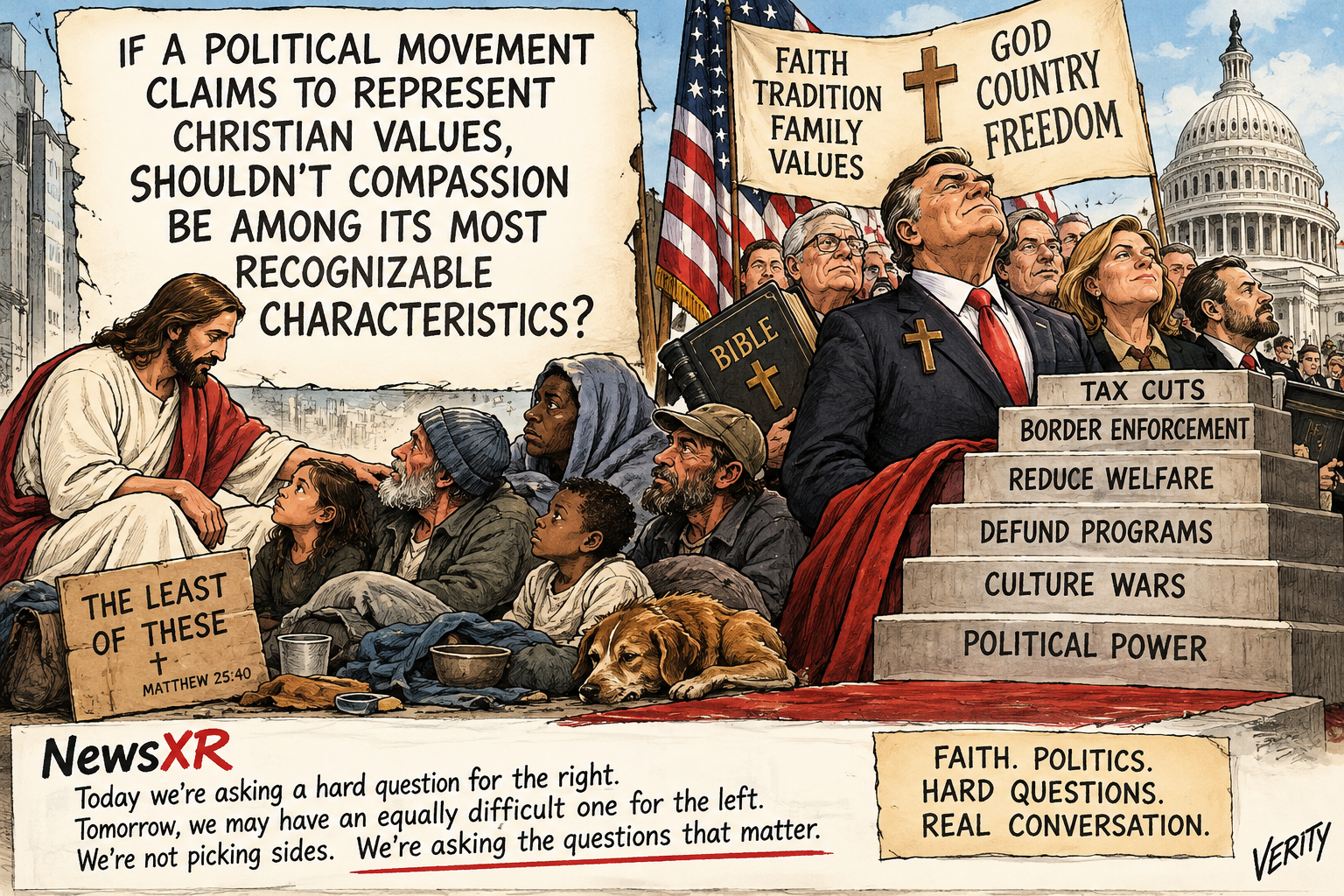
    If a political movement claims to represent Christian values, shouldn’t compassion be among its most recognizable characteristics?

    Today, we’re asking an honest and difficult question of the American political right, particularly those who place Christianity, faith, and traditional religious values at the center of their political identity.

    Jesus Christ taught compassion, humility, mercy, forgiveness, and care for the poor, the sick, the imprisoned, and the stranger. These teachings occupy a central place in Christianity and raise legitimate questions about how religious convictions should influence political leadership and public policy.

    Many conservative leaders and their supporters sincerely embrace the principles of God and country. But when a political movement identifies itself so closely with Christianity, shouldn’t its policies, priorities, and treatment of vulnerable people reflect the compassion at the heart of that faith?

    This is not an attack on conservatives or Christianity. It is a legitimate question about the relationship between professed religious values and political conduct.

    Today, that question is directed at the right. Tomorrow, we may have an equally difficult question for the left.

    That’s how independent journalism should work. NewsXR does not exist to protect one political party from criticism while subjecting another to scrutiny. We examine issues on their merits, ask difficult questions wherever they arise, and hold competing political movements to consistent standards of accountability.

    We are not choosing sides. We are opening a discussion that deserves to be had.

    So we ask our readers: If Christian values are central to a political movement’s identity, how prominently should compassion, mercy, and care for the vulnerable be reflected in its leadership and policies?

    We welcome thoughtful, respectful perspectives from across the political and religious spectrum.

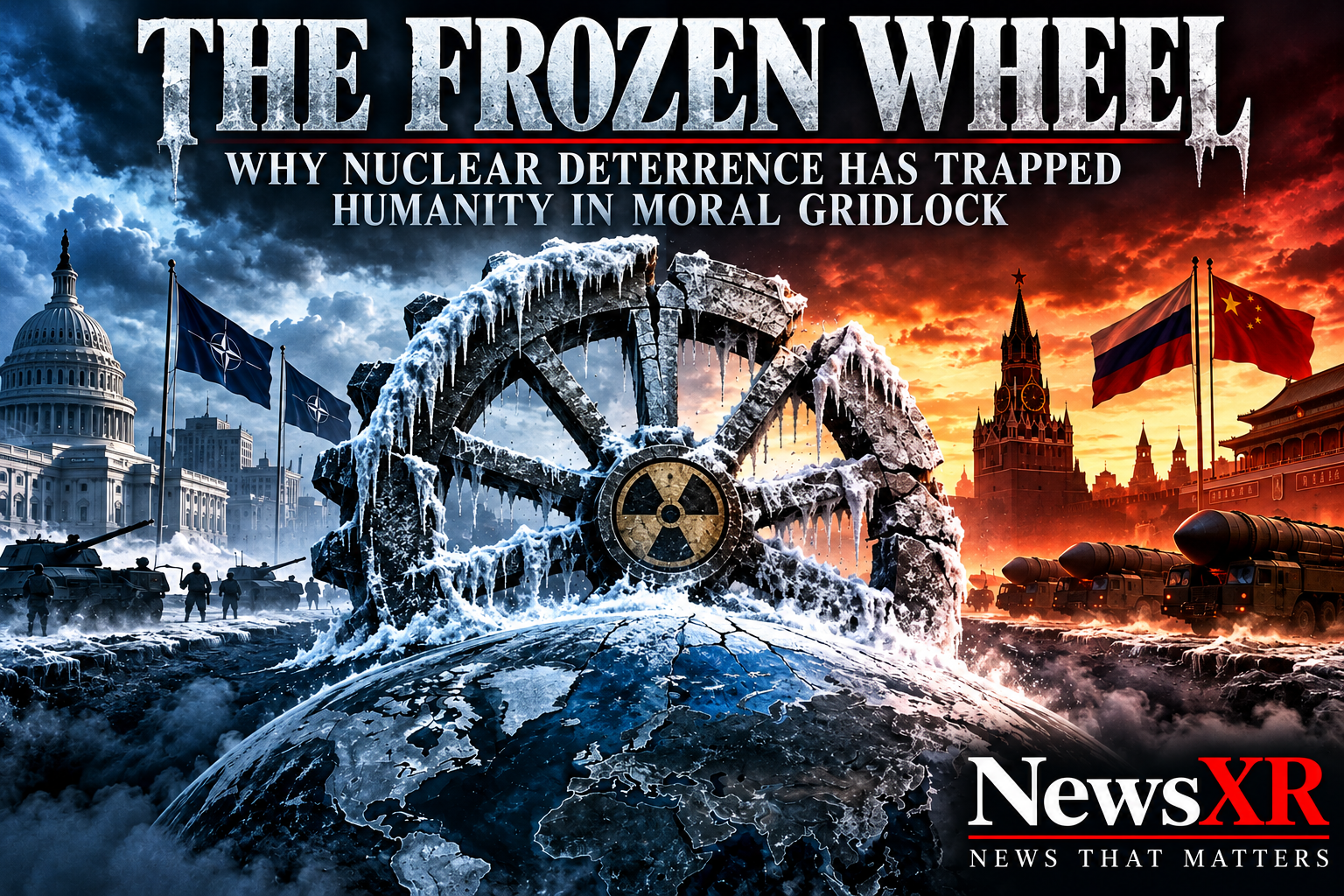
  • The Frozen Wheel: Why Nuclear Deterrence Has Trapped Humanity in Moral Gridlock

    The Frozen Wheel: Why Nuclear Deterrence Has Trapped Humanity in Moral Gridlock

    The Frozen Wheel: Why Nuclear Deterrence Has Trapped Humanity in Moral Gridlock

    For centuries, human history moved to a brutal but predictable rhythm, defined by the cyclical buildup and destruction of global orders. Empires would rise, expand their resources, and eventually clash when their borders and spheres of influence overlapped. These historic friction points inevitably ignited a hegemonic war. This was a total conflict that, despite its horrific human cost, decisively shattered the old status quo, punished the vanquished, and cleared the ground for a new geopolitical architecture.

    In 1945, that ancient wheel of history ran directly into an immovable wall.

    The advent of nuclear weapons did not alter human nature, nor did it erase the friction between competing civilizations. Instead, it did something far more unnatural by artificially damming the river of history. By introducing the absolute certainty of Mutual Assured Destruction, atomic arsenals forced a permanent pause on the natural cycle of total war. For more than eighty years, this nuclear peace has successfully averted a direct battlefield clash between the world’s most powerful nations. But we are beginning to see the profound, tragic cost of this permanent freeze.

    By keeping the natural buildup and destroy cycle at bay, nuclear weapons have made the resolution of global moral conflicts permanently unattainable.

    In previous eras, a defining moral crisis like the global fight against fascism could be brought to an absolute conclusion. The oppressive regime was physically dismantled, its leaders were tried at Nuremberg, and the international order was forcefully rewritten toward a shared standard of justice. The victory was definitive because the material capability to enforce it existed.

    Today, the nuclear shield has transformed sovereignty into an absolute sanctuary for structural evil. When a nuclear-armed superpower decides to redraw historical borders, absorb its neighbors, or systematically violate human rights, the international community finds itself completely paralyzed. Traditional international law becomes a toothless illusion. The West is left with an agonizing, impossible choice between attempting to forcefully resolve the moral conflict and triggering a thermonuclear third world war, or accepting a deeply fractured reality where powerful autocracies bully smaller nations with total impunity.

    Faced with this gridlock, the modern world is fracturing along its natural, civilizational fault lines. Non-Western blocs, recognizing that the United States holds the keys to the global financial system, are actively building a parallel economic world order. They are hoarding gold, bypassing Western communication networks, and settling trades in local currencies. They are deliberately insulating themselves so they can operate freely within their regional domains without fear of Washington’s financial sanctions.

    This brings us to the core truth that the modern rules-based international order refuses to acknowledge, which is that global stability may only be possible when we return to respecting the natural spheres of influence of superpower nations.

    From the perspective of great-power realism, the current global tinderbox is not the result of regional aggression, but the consequence of the West violating the natural geography of power. Pushing military alliances and political influence directly into the historic backyards of other nuclear states, whether in Eastern Europe or the Taiwan Strait, creates an existential panic that forces those states to lash out. If the United States expects foreign rivals to honor the Monroe Doctrine and stay out of the Western Hemisphere, it must eventually concede that other superpowers will dominate their own neighborhoods based on shared history, language, and geography.

    Honesty demands that we look directly at where this path leads if humanity fails to find a new way to resolve its differences. We must strip away the sanitized language of diplomatic strategy and face the unvarnished reality. In statistics and systems engineering, if a high-risk system runs indefinitely, the probability of a catastrophic failure eventually approaches absolute certainty. Nuclear deterrence relies on human leaders making perfectly rational, flawless decisions under extreme pressure forever.

    If we continue down the current path, the system will eventually fail. A third world war will not look like the prolonged industrial mobilization of the 1940s. It will be an automated, hypersonic exchange of thermonuclear weapons. Within a matter of hours, major global cities will be obliterated, followed by an artificial winter that collapses global agriculture, effectively ending human history.

    The only alternative to extinction is a fundamental, unprecedented evolution in how our species handles competition. If we cannot fight all-out wars to reset the global order, we must transition to new arenas to settle who leads. We are seeing the early stages of this shift as superpowers compete for dominance through artificial intelligence, quantum computing, space exploration, and alternative financial architectures. The winner of the global order will not be the nation that drops the most bombs, but the one that builds the most resilient, independent system.

    We are trapped in a terrifying paradox. The very weapons that prevent humanity from destroying itself also prevent us from correcting global injustices. The tectonic pressure of our paused history continues to build behind a nuclear dam, while the world slowly splits into competing financial and political hemispheres. If we continue to ignore the natural order of regional spheres and fail to build a strictly managed alternative for technological and economic competition, we risk breaking the dam entirely, leaving no world left to save.

  • What Your Neighbors Are Actually Fighting About

    What Your Neighbors Are Actually Fighting About

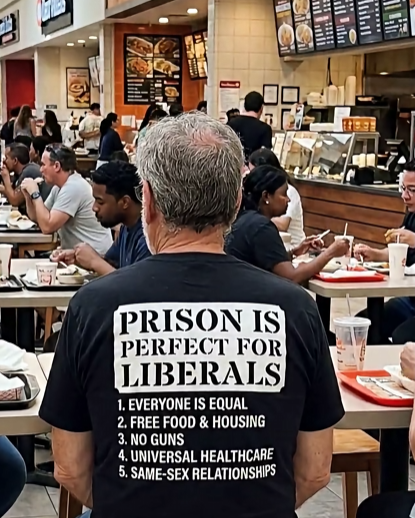
    We saw this picture, and we wondered if our younger neighbors even know what the divides and factions in this country are really about. So, let us sum it up for you:

    The Right’s warning: If you rely on the government for your rent, food, and healthcare, you surrender your freedom. The moment an authority feeds you and houses you, it controls you. In exchange for zero risk, you get zero independence – which is exactly how a prison operates. True freedom is hard, risky, and requires taking care of yourself.

    The Left’s warning: If a medical emergency bankrupts you and your entire paycheck goes to rent and groceries, you aren’t free either. Working 60 hours a week just to stay off the street isn’t independence; it’s exploitation. True freedom requires a basic floor – healthcare, fair pay, and housing – so you actually have the power to live your life.

    One side sees dependence on the state as the ultimate trap. The other sees poverty and corporate greed as the ultimate trap.

    And neither side is wrong, but the only right way forward is a compromise everyone can live with.