NewsXR Goodnightly News
Sunday, October 25, 2026
Good evening, America. Here’s where things stand in our world tonight.
An election that could reshape South America, a bitter confrontation on the American campaign trail, and renewed warnings of a broader war in the Middle East are among the developments commanding attention this Sunday evening.
Brazil has reelected President Luiz Inácio Lula da Silva in a dramatic runoff, while Venezuela’s most prominent opposition leader has returned home after months abroad. In the United States, President Donald Trump has intensified his attacks on a Democratic Senate candidate in Michigan, and federal election litigation continues as the November 3 midterms approach.
Tonight, we’re also following a mass shooting in Florida, a proposed multibillion-dollar automobile factory in Georgia, significant developments in the courts, flooding threats in the Southwest, and an eventful weekend in American sports.
And before we say goodnight, we’ll remember a New York City firefighter whose final actions on September 11, 2001, embodied an extraordinary commitment to public service. His story marks the beginning of an enduring NewsXR tradition of honoring the emergency responders who gave their lives trying to save others.
Let’s get caught up on where things stand.
TONIGHT: TOP STORY
Trump Invokes September 11 in Attack on Muslim Senate Candidate
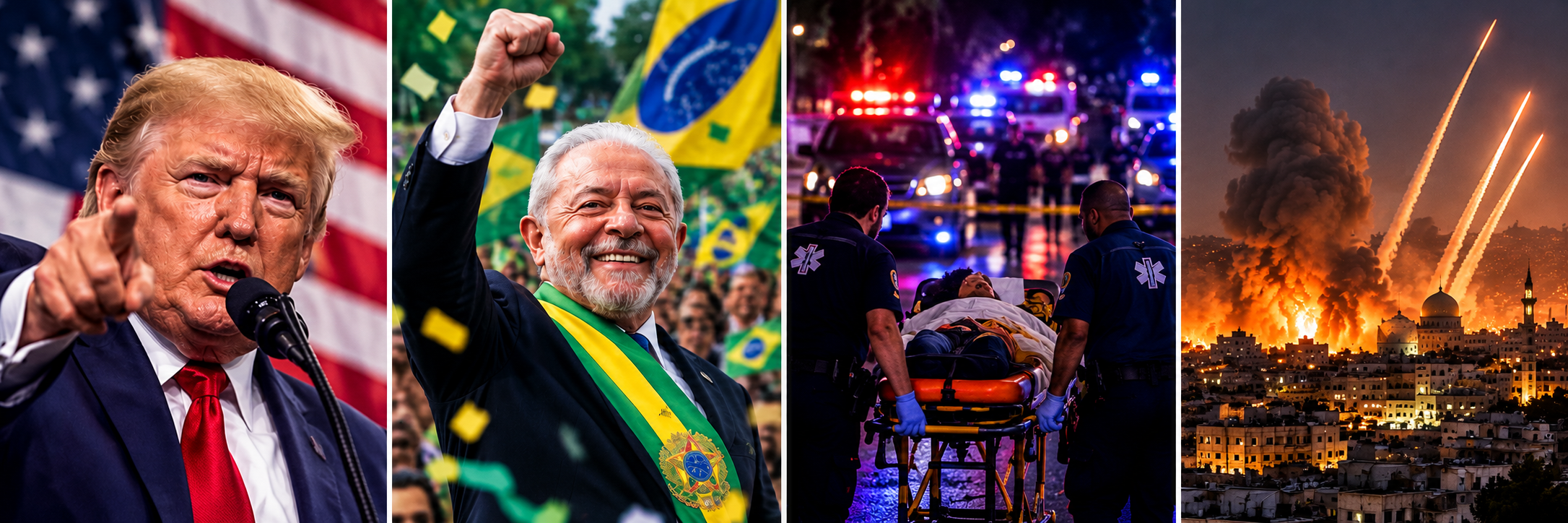
President Donald Trump brought the September 11 terrorist attacks into the closing days of Michigan’s Senate campaign Sunday, drawing a comparison between Democratic candidate Abdul El-Sayed and the extremists responsible for the attacks. Speaking at a campaign rally, Trump urged voters to reject El-Sayed, who is Muslim, while portraying Democrats as insufficiently committed to protecting the country from terrorism.
The president’s remarks represented a significant escalation in the Republican effort to define the Michigan contest around national security, religion, and American identity. Reuters reported that Trump compared El-Sayed to the hijackers aboard United Airlines Flight 93 and invoked passenger Todd Beamer, who helped lead resistance against the terrorists.
El-Sayed rejected the allegations and challenged the suggestion that his religion or political beliefs made him less committed to the United States. The Democratic candidate would become the first Muslim elected to the United States Senate if he wins in November.
Republican Senate candidate Mike Rogers also addressed the controversy, denying that he had called El-Sayed a terrorist while questioning his political associations. The dispute has become one of the sharpest confrontations in a campaign that could help determine which party controls the Senate.
The remarks came one day after former President Barack Obama campaigned for Democrats in Michigan, criticizing attempts to portray El-Sayed as somehow less American because of his background. Obama drew comparisons to the false claims about his own birthplace that became prominent during his political career.
The confrontation places questions of religious identity, political rhetoric, and electoral strategy directly before Michigan voters with just over a week remaining until Election Day.
Related News: Michigan’s Economic Concerns Remain Central to the Race
Michigan’s automobile industry remains a major source of political pressure for both parties. Manufacturing employment, cross-border commerce with Canada, and the effects of American tariffs on automobile production are all prominent concerns in the state.
Trump also told supporters Sunday that a tariff agreement with Canada could be coming soon. The statement offered the possibility of movement in a trade dispute that has complicated business planning across the automotive supply chain.
For voters, the immediate questions extend beyond campaign rhetoric. Automobile manufacturing supports jobs throughout Michigan, while cross-border trade affects suppliers, dealerships, transportation companies, and communities whose economies depend on the industry.
Strategic Impact: The Election Approaches Under Increasing Pressure
The November 3 midterms will determine control of Congress during the remaining two years of Trump’s current term. Republicans enter the election defending narrow congressional majorities, while Democrats are seeking to turn dissatisfaction over household costs and administration policies into electoral gains.
The conflict with Iran has added another dimension to the political debate. Rising energy costs, military commitments overseas, and concern about further escalation are now part of the economic and national security discussion.
With early voting underway in much of the country, both parties face a shrinking window to influence undecided voters.
TONIGHT: WORLD NEWS
Brazil: Lula Wins Historic Fourth Presidential Term
Brazilian President Luiz Inácio Lula da Silva has won an unprecedented fourth term, according to the country’s electoral court, completing a political comeback that once appeared unlikely.
The 80-year-old leftist defeated Senator Flávio Bolsonaro, the son of former President Jair Bolsonaro, in Sunday’s presidential runoff. The distinction is important: Lula faced Flávio Bolsonaro, not his father, who previously served as president.
The contest followed a deeply polarized campaign focused on economic conditions, corruption, social programs, and Brazil’s relationship with the United States. Bolsonaro sought to revive the conservative political movement associated with his father, while Lula appealed to voters on his record of poverty reduction and social protections.
The result also carries international implications. President Trump’s administration had supported the political return of the Bolsonaro movement, making Lula’s victory a setback for efforts to expand the influence of governments closely aligned with Washington across Latin America.
Lula’s new term will begin amid familiar economic challenges, including government debt, public spending pressures, and demands for stronger growth.
Venezuela: María Corina Machado Returns From Exile
Venezuelan opposition leader María Corina Machado returned to her country Sunday after months abroad, marking a major development in the nation’s uncertain political transition.
Machado, a Nobel Peace Prize laureate, announced her return publicly and received support from opposition figures demanding a new presidential election. Her arrival comes after the United States removed Nicolás Maduro from power in January.
Venezuela remains under the leadership of acting President Delcy Rodríguez, a longtime Maduro ally who has continued in office beyond the originally authorized interim period. No new presidential election has been scheduled.
Machado and fellow opposition leader Edmundo González have challenged the legitimacy of the country’s previous presidential election and argue that Venezuelans must be given a credible opportunity to choose their government.
Her return is an important symbolic victory for the opposition. Whether it produces meaningful democratic change will depend on the government’s response, the country’s institutions, and the willingness of political leaders to establish a legitimate electoral process.
Serbia: Student-Led Movement Defeats Longtime Ruling Party
A student-backed opposition movement has achieved a remarkable electoral victory in Serbia, where longtime leader Aleksandar Vučić conceded defeat in Sunday’s parliamentary election.
The result followed nearly two years of public demonstrations against corruption and government accountability failures. The protests were driven in part by public outrage over the deadly 2024 collapse of a railway station canopy in Novi Sad.
Preliminary projections indicated that the student-supported movement could secure a parliamentary majority, ending more than a decade of dominance by Vučić’s Serbian Progressive Party.
The electoral result represents a significant political transformation for the Balkan nation. However, the transition will require the formation of a new government and the implementation of reforms that opposition supporters have demanded for years.
The outcome could also affect Serbia’s relationship with the European Union, Russia, and neighboring countries.
Ukraine: Starlink Dispute Raises Questions About Battlefield Communications
Ukrainian officials have challenged Elon Musk’s claim that their military violated the terms of service governing SpaceX satellite communications.
The disagreement followed restrictions affecting communications used by Ukrainian forces during their continuing war with Russia. Ukraine disputed Musk’s explanation of the disruption.
The controversy highlights the extraordinary role that privately operated technology now plays in national defense. Satellite communications are vital to military coordination, intelligence sharing, and battlefield operations.
It also raises a broader question for governments: how much of a country’s military communications infrastructure should depend on decisions made by private companies?
Middle East: Iran Says Diplomatic Messages Continue Despite War Threats
Iranian officials said Sunday that communications with the United States are continuing through international intermediaries, despite the continuing military confrontation and fears of renewed large-scale attacks.
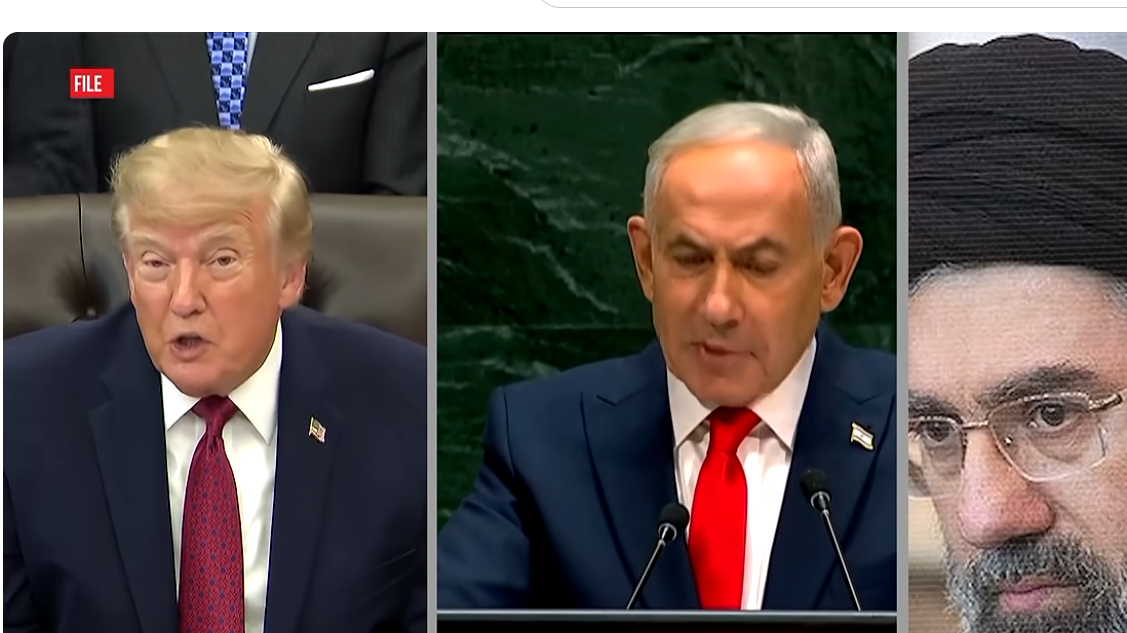
The disclosure provides a limited diplomatic opening at a time when political leaders on both sides have adopted increasingly forceful positions. President Trump has publicly weighed the possibility of further military action, while Israeli Prime Minister Benjamin Netanyahu has warned that Iran or allied groups could launch attacks ahead of upcoming elections.
Iranian officials have rejected demands they characterize as requiring complete surrender. The two sides remain divided over the conditions necessary for a more durable agreement.
The war has already disrupted shipping, energy markets, and regional security. Fighting involving Iranian-aligned groups has also created new dangers across Lebanon, Yemen, and the wider Middle East.
The continued exchange of messages does not establish that a settlement is imminent. It does, however, demonstrate that diplomatic channels have not been entirely abandoned.
Related News: Gaza, Saudi Arabia and Yemen Face Continuing Violence
Regional tensions remain high as renewed attacks threaten civilian populations and infrastructure.
Saudi Arabia has faced additional Houthi missile and drone attacks, while Israeli military operations in Gaza have produced further casualties, according to regional reporting.
In Yemen, humanitarian conditions remain severe after years of war, with civilians facing shortages of food, clean water, medical supplies, and other necessities.
The situation illustrates the danger that a broader confrontation involving Iran could intensify conflicts already affecting millions of people.
TONIGHT: NATIONAL NEWS
Florida A&M Homecoming Shooting Leaves Twelve Injured
Police in Tallahassee, Florida, are investigating a shooting near Florida A&M University that injured twelve people Saturday evening during the university’s homecoming weekend.
Authorities reported that eleven victims sustained gunshot wounds and another person was injured. Six of the injured were minors.
The shooting occurred near Perry Street shortly before 8 p.m., following a homecoming football game. Investigators said a physical altercation preceded the gunfire.
By Sunday, five victims had been released from the hospital. Six remained hospitalized, including one person in critical condition, according to police updates.
Tallahassee Police Chief Lawrence Revell expressed particular concern that children were among the victims. Police had not announced arrests in the reports available Sunday, and the investigation remained active.
Florida A&M said the safety of its students, faculty, and employees remained a priority. Police have appealed for information from witnesses who may help establish exactly how the violence began.
New York Archdiocese Abuse Settlement Reaches $800 Million
Survivors of clergy sexual abuse have approved an $800 million settlement with the Archdiocese of New York, according to attorneys involved in the agreement.
The settlement is intended to resolve claims brought by approximately 1,300 survivors, representing one of the largest financial agreements involving abuse allegations against an American Catholic institution.
The agreement represents a substantial development in a decades-long effort by survivors to obtain acknowledgment and accountability.
For those affected, the settlement cannot reverse the harm they experienced. It does, however, establish a significant financial resolution to claims that have remained unresolved for years.
TONIGHT: COURT BEAT
Federal Appeals Court Questions Justice Department’s California Election Lawsuit
A federal appeals court expressed skepticism Sunday toward a Justice Department lawsuit challenging California’s handling of voter registration records and mail-in ballots.
The Trump administration is seeking federal intervention concerning voters it suspects may be noncitizens. The Justice Department has identified approximately 20,000 people it believes warrant examination.
During an unusual Sunday hearing, judges on the Ninth U.S. Circuit Court of Appeals questioned the government’s legal arguments and the evidence supporting its requested intervention.
California officials maintain that the state’s election safeguards are substantial and argue that the administration is relying on questionable data.
The distinction between a suspected registration irregularity and a proven instance of unlawful voting is central to the dispute. The existence of a name on a government-generated list does not, by itself, establish that an individual voted illegally.
The appeals court indicated that it would attempt to issue a decision promptly, given the approaching election.
Alaska: Justice Department Defends Preemptive Election Certification Challenge
The Justice Department is also pursuing litigation involving Alaska’s Senate election, seeking to prevent certification under particular circumstances if the Republican incumbent loses a narrow contest.
The administration argues that similarities between the names of two Republican candidates could create voter confusion.
Attorney General Todd Blanche defended the lawsuit Sunday, rejecting suggestions that the president intends to take control of elections administered by the states.
The case raises questions about the appropriate role of federal authorities in election administration and whether speculative concerns about voter confusion justify judicial intervention before ballots have been fully counted.
The outcome could have consequences extending beyond Alaska, particularly as other closely contested Senate races approach Election Day.
Cornell Lawsuit: Judge Allows Accuser to Remain Anonymous
A federal judge has ruled that a woman bringing civil sexual assault allegations involving Cornell University students may continue using a pseudonym in her lawsuit.
The ruling addresses the plaintiff’s identity during litigation and does not determine the truth of the underlying allegations.
The civil proceedings remain subject to further judicial review, and allegations should not be presented as established facts before the legal process reaches its conclusions.
TONIGHT: WHITE HOUSE
Trump Announces Proposed $4 Billion Audi Factory in Georgia
President Trump has announced plans by German automobile manufacturer Audi to construct a $4 billion vehicle assembly plant in Georgia.
The proposed facility would produce approximately 200,000 SUVs annually and represent Audi’s first automobile assembly plant in the United States.
Audi Chief Executive Gernot Döllner appeared alongside Trump during the announcement and defended the company’s participation in the event. He said the proposed investment followed months of planning and negotiations.
The announcement comes amid significant pressure on European automakers from American tariffs and shifting international trade conditions.
However, the project is not yet an unconditional commitment. Reuters reported that Volkswagen’s supervisory board must still approve the final investment decision before construction can proceed.
The administration has promoted the proposed factory as evidence that its tariff policies are encouraging foreign manufacturers to establish production facilities in the United States.
Canada Trade Negotiations Could Bring New Tariff Agreement
Trump said Sunday that an agreement with Canada concerning tariffs could be announced soon.
The administration’s trade policies have produced tension with important American trading partners, particularly in sectors where production and supply chains extend across national borders.
For manufacturers in Michigan and other industrial states, changes to tariffs can affect both the cost of imported components and the competitiveness of finished American products.
No completed agreement was established by the president’s statement alone. Businesses and workers will be watching for formal terms and implementation details.
White House Faces Election-Year Foreign Policy Pressure
The administration is confronting the combined political consequences of the Iran war, expensive household energy, and international trade disputes.
The challenges intersect with the approaching midterms, when voters will determine whether Republicans retain their congressional majorities.
The president’s campaign appearances have emphasized manufacturing investment and national security, while Democrats have attempted to focus attention on economic pressures and the administration’s governing record.
TONIGHT: CAPITOL
Control of Congress Hangs Over Final Campaign Week
With Election Day approaching, the balance of power in both chambers of Congress remains a central national question.
Republicans are defending narrow majorities, while Democrats are targeting competitive races where changes in economic confidence, voter turnout, or independent support could determine the outcome.
A change in congressional control would influence the administration’s ability to advance legislation, obtain spending authority, and manage federal oversight.
It could also alter the political environment surrounding the Iran war, international trade, immigration enforcement, and the operations of federal agencies.
Congressional candidates are now making their final appeals to voters whose decisions will shape federal policymaking through the next two years.
SPECIAL FEATURE: MIDTERM COVERAGE
Obama and Trump Lead Competing Campaign Messages
Former President Barack Obama returned to the campaign trail over the weekend, campaigning for Democrats in closely contested states and sharply criticizing the Trump administration.
Obama focused on the administration’s governing record and challenged Republican rhetoric directed at Democratic candidates, including personal attacks questioning their loyalty or identity.
Trump, meanwhile, campaigned in Georgia and Michigan, promoting manufacturing investment and presenting Republicans as the stronger party on economic development and national security.
Both parties are relying on high-profile political figures to generate attention and turnout in states where narrow margins could decide Senate or House control.
The prominence of former presidents and national political leaders underscores how closely individual congressional contests are connected to broader public judgments about the direction of the country.
Turnout Becomes the Deciding Factor
Campaign organizations are increasingly concentrating on identifying supporters and ensuring they vote.
Early voting provides campaigns with opportunities to measure participation, but it does not necessarily indicate which party will prevail. Registration patterns, geographic participation, and the composition of the remaining electorate all matter.
In closely contested states, successful turnout operations can determine results even when broader political opinion appears relatively stable.
The final week will test each party’s ability to convert public support into actual ballots.
Household Costs and War Remain Major Voter Concerns
Economic conditions remain central to the campaign debate.
Heating oil prices, household expenses, international tariffs, and the costs associated with the Iran conflict are among the issues competing for voter attention.
The approaching winter has made energy expenses particularly significant in northern states, where families and businesses depend on reliable and affordable heating.
Campaign promises will ultimately be judged against the conditions voters experience in their own communities.
Election Litigation Adds Uncertainty
The Justice Department’s cases involving California and Alaska have intensified arguments about election administration and federal oversight.
Supporters of stronger federal intervention argue that election officials must enforce eligibility requirements and prevent unlawful voting.
Opponents contend that extraordinary intervention shortly before an election can threaten legitimate ballots and undermine established state procedures.
The courts must determine the applicable law and the evidence, separate from either side’s political objectives.
TONIGHT: ECONOMY & BUSINESS
Automobile Investment Highlights Changing Trade Landscape
Audi’s proposed Georgia factory illustrates how trade policy is influencing international manufacturing decisions.
The planned investment comes after tariffs increased costs for the German automaker, creating additional incentives to consider production inside the United States.
A domestic factory could create jobs and support suppliers, but the scale and timing of those benefits will depend on final corporate approval, construction, and the company’s future production plans.
The investment announcement also demonstrates how business decisions can become prominent campaign issues when made during an election season.
Heating Oil Prices Raise Concern Across the Northeast
Heating oil has become an increasingly important economic concern in northern states as colder weather approaches.
Disruptions associated with the Iran war have placed additional pressure on global energy markets, while households face the prospect of higher winter heating bills.
The federal government has considered emergency measures involving Northeast heating oil reserves, although the precise volume, timing, and impact of any release must be distinguished from broader claims about long-term price relief.
Even a temporary increase in available supplies cannot independently resolve all the pressures driving international energy prices.
Energy Markets Remain Exposed to Middle East Instability
The Strait of Hormuz remains one of the world’s most consequential maritime energy corridors.
Military confrontation, restrictions on shipping, and the possibility of additional attacks have increased uncertainty for companies transporting oil and other commodities.
The consequences can extend far beyond the region, influencing transportation costs, industrial production, and consumer fuel prices.
A sustained diplomatic breakthrough could ease some of that uncertainty, but the continuing possibility of escalation remains a significant market risk.
TONIGHT: HEALTH & SCIENCE
CDC Reports More Than 4,500 U.S. Measles Cases in 2026
The Centers for Disease Control and Prevention reported 4,588 confirmed measles cases nationwide as of October 22, according to its October 23 update.
The figure reflects a substantial public-health concern involving numerous states and jurisdictions.
Measles is highly contagious and can cause serious complications, particularly among young children and people at elevated medical risk.
Public-health authorities continue to emphasize vaccination, rapid identification of suspected cases, and measures to reduce exposure during outbreaks.
State and local case totals can change as laboratories confirm infections and health departments update their surveillance data.
Starlink Dispute Exposes Dependence on Private Satellite Networks
The disagreement between Ukraine and Elon Musk over SpaceX communications restrictions demonstrates a growing challenge in modern warfare.
Commercial satellite infrastructure can provide military and civilian communications over enormous distances without requiring extensive ground-based networks.
That capability has enormous practical value. But it also concentrates operational influence in companies that control the technology, service agreements, and access arrangements.
The dispute may encourage governments to reconsider how they safeguard essential communications against interruption, contractual disagreements, or decisions outside their direct control.
TONIGHT: NATIONAL PUBLIC SAFETY
Tallahassee Investigators Seek Answers After Homecoming Violence
The shooting near Florida A&M University remains a major public-safety investigation.
Authorities are examining the circumstances of the altercation that preceded the gunfire, including who was involved and how a confrontation in a crowded area escalated into violence.
The fact that six minors were among those injured has intensified concern surrounding the incident.
The immediate priority remains the recovery of the wounded and the identification of those responsible.
Oregon Industrial Fire Raises Hazardous-Material Concerns
Emergency concerns have also been reported in Oregon following a fire involving a seafood-processing facility where ammonia contamination was identified as a potential danger.
Ammonia is used in some industrial refrigeration systems. A release can create serious respiratory and other health hazards, particularly in enclosed or concentrated areas.
Emergency notifications and evacuation decisions are matters for local incident commanders responding to measured conditions at the scene.
Residents in affected areas should follow local emergency-management instructions rather than relying on unconfirmed reports about the extent of a chemical release.
WEATHER TONIGHT & TOMORROW
Southwest: Flood Threat Continues Across New Mexico
Heavy rainfall continues to create flooding concerns across portions of New Mexico, where saturated ground and additional precipitation threaten low-lying communities and travel routes.
The National Weather Service issued flood watches Sunday for areas including the Santa Fe metropolitan region, the Española Valley, and portions of north-central and eastern New Mexico.
A separate flood warning identified the Rio Puerco near Bernardo, where moderate flooding was forecast.
Additional rainfall could produce dangerous runoff in arroyos, normally dry washes, and other locations vulnerable to sudden rises in water levels.
Motorists should avoid flooded roadways, even when the water appears shallow.
Southeast: Coastal Conditions Require Continued Attention
Onshore winds and elevated water levels remain concerns along portions of the southeastern coastline.
Persistent coastal winds can contribute to hazardous surf, strong rip currents, and localized flooding during high tides.
Conditions can differ considerably between neighboring communities, particularly where barrier islands, inlets, and coastal terrain influence wave action.
Beachgoers, boaters, and coastal residents should consult current local National Weather Service advisories before making plans.
Northeast and Midwest: Autumn Conditions Continue
Much of the Northeast and Midwest is experiencing comparatively quieter weather than the Southwest.
Clearer skies can allow overnight temperatures to fall quickly in inland valleys, while fog may develop in some low-lying areas where sufficient moisture is present.
Across parts of the Plains, dry conditions and seasonal warmth may also contribute to elevated fire danger where vegetation is dry and winds increase.
Forecast temperatures and the timing of approaching fronts will vary by location as the new workweek begins.
OVERNIGHT & TOMORROW
Brazil’s Election: International reaction continues following Lula’s victory, with attention turning to his next administration and relations with Washington.
Iran and the Middle East: Diplomatic contacts remain active, but military threats and regional attacks continue to create uncertainty.
American Elections: Courts may issue important decisions in election-related lawsuits as candidates enter the final full week before the November 3 midterms.
Florida Shooting Investigation: Authorities continue working to identify those responsible for Saturday’s violence near Florida A&M University.
Southwest Flooding: Emergency officials will monitor river levels, additional rainfall, and hazardous travel conditions in New Mexico.
TONIGHT: SPORTS
World Series: Brewers Rally Past Rays to Take Two-Game Lead
The Milwaukee Brewers are halfway to a World Series championship after defeating the Tampa Bay Rays 5-4 Saturday night to take a two-games-to-none lead in the best-of-seven series.
The victory came despite a disastrous opening inning for Milwaukee.
Tampa Bay scored four runs in the first, placing the Brewers in an immediate deficit. But Milwaukee steadily recovered, cutting into the lead before Sal Frelick tied the game with a solo home run in the sixth inning.
Rookie Cooper Pratt delivered the decisive hit in the seventh, driving in the go-ahead run after an earlier throwing error had contributed to Tampa Bay’s opening surge.
Milwaukee’s bullpen played a central role in the comeback, providing six scoreless innings and preventing the Rays from regaining control.
The series moves to St. Petersburg, Florida, for Game 3 on Monday. Tampa Bay must find a way to respond at home, while the Brewers are now two victories away from the franchise’s first World Series title.
College Football: Miami Holds No. 1 as Rankings Shift Dramatically
The Associated Press college football rankings underwent another major reshuffling Sunday following a weekend of significant upsets.
Miami retained the No. 1 position after defeating Pittsburgh 52-23. The unbeaten Hurricanes received 59 first-place votes and remained the only team to hold its ranking from the previous week.
Ohio State moved into second place despite not playing, while Georgia climbed to third.
Indiana rose to fourth following an overtime victory against Michigan, and Notre Dame occupied fifth.
BYU suffered one of the weekend’s most significant setbacks, falling from second to eighth after losing to UCF in double overtime.
Utah and UCLA joined Miami as the only remaining undefeated teams in the Football Bowl Subdivision.
The new rankings demonstrate how quickly the championship picture can change when highly ranked teams suffer unexpected defeats.
Formula 1: Kimi Antonelli Wins United States Grand Prix
Mercedes driver Kimi Antonelli claimed victory Sunday at the United States Grand Prix in Austin, Texas.
Antonelli completed the 56-lap race at the Circuit of the Americas ahead of Ferrari’s Charles Leclerc and Red Bull’s Max Verstappen.
Leclerc finished 13.078 seconds behind the winner, while Verstappen took third place.
The victory strengthened Antonelli’s position in the Drivers’ Championship contest, although it did not secure the title outright.
His performance highlighted both the importance of tire strategy and the ability to maintain consistent pace throughout a demanding race.
NFL and NBA: Early-Season and Weekend Competition Continues
Week 8 of the NFL season has placed added pressure on teams competing for divisional position as the schedule moves deeper into autumn.
Injuries, quarterback availability, and late-game performances remain significant factors affecting teams preparing for the second half of the regular season.
The NBA is also entering its opening stretch, with teams beginning to establish their rotations and evaluate early performances.
NewsXR will continue tracking confirmed league results, injury designations, and standings as the schedules develop.
THAT’S WHAT’S UP, AMERICA!
Remembering a Real-Life Hero
September 11th Isn’t the Only Day We Remember.
Some of the greatest demonstrations of courage in American history came from ordinary public servants performing extraordinary acts of duty. They did not seek fame, political recognition, or public admiration. They went to work, answered an emergency, and placed the lives of others ahead of their own.
On September 11, 2001, Chief of Department Peter J. Ganci Jr. was the highest-ranking uniformed member of the New York City Fire Department. A veteran of the United States Army’s 82nd Airborne Division and a firefighter with more than three decades of service, Ganci was among the emergency commanders directing the response to the terrorist attacks on the World Trade Center.
When the South Tower collapsed at 9:59 that morning, the destruction overwhelmed emergency operations in the surrounding streets. Ganci survived the collapse, emerging from the debris as firefighters and other responders struggled to understand the scale of the catastrophe unfolding around them.
He had every reason to withdraw to a safer location.
Instead, according to the National September 11 Memorial & Museum, Ganci directed personnel to establish another command post farther away and instructed Mayor Rudy Giuliani to leave the immediate danger area. He obtained another radio and continued directing emergency operations near the North Tower.
He understood that the danger had not passed. Firefighters and civilians were still inside the building, and the effort to reach them continued.
At 10:28 a.m., the North Tower collapsed.
Chief Peter J. Ganci Jr. was killed while carrying out his duties.
He was one of 343 members of the New York City Fire Department who died in the September 11 attacks.
Twenty-three New York City Police Department officers and 37 Port Authority Police Department officers also lost their lives that day. Altogether, 2,977 victims were killed in the attacks, excluding the 19 hijackers. Those victims included 2,753 people in New York City, 184 at the Pentagon, and 40 aboard United Airlines Flight 93 in Pennsylvania.
Among those who died on September 11 were some of the finest Americans this nation has ever known.
They were firefighters, police officers, and emergency responders who understood the danger yet continued doing everything they could to save strangers. They had families waiting at home, lives to live, and futures ahead of them. But when their fellow Americans needed them, they answered.
And even after the first tower fell, emergency personnel continued their work.
Some were trying to escape. Others were attempting to reach people still trapped. Many did not know whether the remaining tower would collapse, or how much time they had left. But the responsibility to save lives continued to guide their actions in circumstances most of us can scarcely imagine.
Their sacrifice deserves more than an annual ceremony.
The loss also continued long after September 11. Rescue and recovery workers, volunteers, and others who served at Ground Zero have suffered illnesses associated with their exposure to the disaster. Their experiences remain part of the continuing legacy of that day.
Chief Ganci’s story represents something greater than a single act of bravery. It reflects a lifetime of public service brought to its final test under extraordinary circumstances.
He could have withdrawn.
Instead, he continued leading.
At NewsXR, we believe that courage of this magnitude must never disappear into the pages of history. The individuals who answered the call on September 11 deserve to be remembered as people, not merely as names included in an annual casualty count.
That is why NewsXR is establishing a permanent institutional commitment to honoring the emergency responders and public servants who lost their lives trying to save others on September 11, 2001.
Throughout the year, forever and in perpetuity, we will remember their service, tell their stories, and preserve their legacies for future generations.
September 11th isn’t the only day we remember.
Tonight, we remember Chief Peter J. Ganci Jr.
And we remember the many others who never made it home.
That’s what’s up, America.
Goodnight from all of us at NewsXR. God bless you all, and us too, and please keep inspiring! ❤️ Amen.
© 2026 NewsXR. All Rights Reserved.

NewsXR is looking for a Sponsor to mention RIGHT HERE. Contact advertise@newsxr.org